
Physical Therapy Software Market Overview
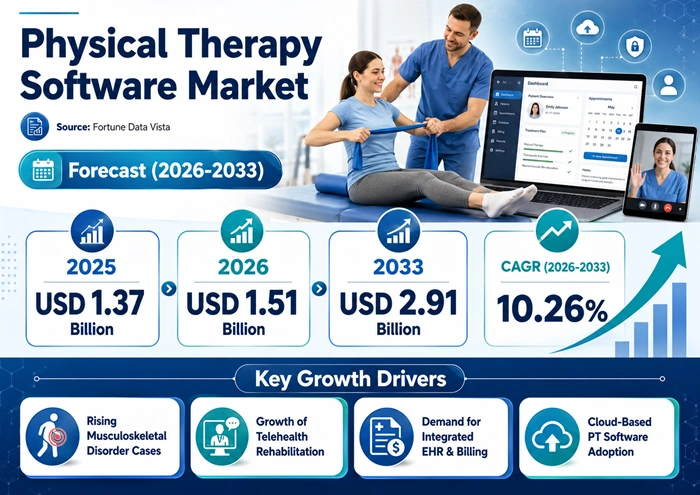
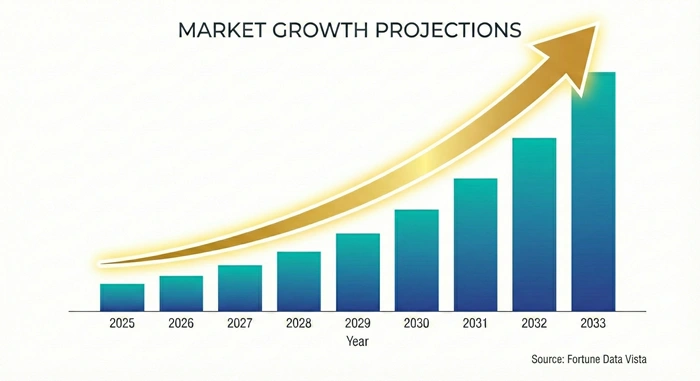
The global physical therapy software market size is valued at USD 1.37 billion in 2025 and is predicted to increase from USD 1.51 billion in 2026 to approximately USD 2.91 billion by 2033, growing at a CAGR of 10.26% from 2026 to 2033.
Physical therapy software encompasses a broad range of digital tools — including practice management, electronic health records (EHR), billing and coding, and patient engagement platforms — that help clinics and rehabilitation centers streamline operations, improve patient outcomes, and ensure regulatory compliance. Rising demand for operational efficiency in therapy practices, expanding telehealth and digital rehabilitation adoption, growing musculoskeletal disorder prevalence, and accelerating cloud-based software deployment are all driving consistent double-digit growth in the PT software category throughout the forecast period.
AI Impact on the Physical Therapy Software Industry
AI-Powered Clinical Decision Support, Automated Documentation, and Intelligent Patient Engagement Tools Are Fundamentally Reshaping the Physical Therapy Software Market from an Administrative Tool into a Fully Integrated Care Delivery Platform
Artificial intelligence is transforming the physical therapy software market by automating time-consuming clinical documentation tasks and enabling data-driven treatment decisions. AI-powered ambient documentation tools — which capture session notes in real time through voice recognition and natural language processing — are reducing the post-session documentation burden on physical therapists by up to 60%, freeing significant clinical time for direct patient care. Companies including WebPT and Net Health are actively integrating AI documentation assistants and outcome prediction tools into their platforms, positioning their software as intelligent care partners rather than passive record-keeping systems.
Beyond documentation, AI is enabling personalized home exercise program delivery, treatment response prediction, and early identification of patients at risk of non-adherence or delayed recovery. Machine learning models trained on large physical therapy outcome datasets can now predict which patients are likely to benefit most from specific treatment protocols — helping clinicians optimize care plans and payer approval timelines simultaneously. These capabilities are elevating the clinical value proposition of physical therapy software platforms beyond administrative efficiency into measurable patient outcome improvement — a shift that is driving adoption among quality-focused therapy organizations and making AI integration a key competitive differentiator in the market.
Growth Factors
The Rising Global Burden of Musculoskeletal Disorders and the Healthcare Industry's Accelerating Transition to Cloud-Based Digital Practice Management Are the Two Strongest Structural Growth Drivers in the Physical Therapy Software Market
The rising global prevalence of musculoskeletal (MSK) disorders — including back pain, arthritis, sports injuries, and post-surgical rehabilitation needs — is directly expanding the patient volume flowing through physical therapy practices worldwide. MSK conditions affect over 1.71 billion people globally and represent the leading cause of disability in high-income countries, with aging populations and sedentary lifestyles continuously adding new patients to therapy caseloads. Each incremental increase in therapy session volume translates directly into greater operational complexity for therapy practices — creating stronger demand for software that automates scheduling, documentation, billing, and outcomes tracking.
The healthcare industry's accelerating transition to cloud-based digital tools is the second structural driver reshaping the physical therapy software market. Cloud-based PT software eliminates the need for on-premise IT infrastructure, reduces upfront capital costs, enables real-time remote access across multiple clinic locations, and delivers automatic regulatory compliance updates — making cloud platforms significantly more attractive to both large therapy networks and independent small practices compared to traditional server-based systems. The shift of therapy delivery from hospital settings to ambulatory clinics, telehealth platforms, and home health environments is further amplifying cloud software demand by enabling physical therapists to access clinical records, deliver remote monitoring, and engage patients digitally regardless of care setting.
Market Outlook
The Physical Therapy Software Market Outlook Through 2033 Is Defined by Telehealth Integration, Interoperability with Hospital EHR Systems, and Value-Based Care Reimbursement Models Driving Outcome Tracking Software Adoption
The expansion of telehealth physical therapy — accelerated dramatically by the COVID-19 pandemic and now embedded as a permanent care delivery modality across major healthcare systems — is one of the most commercially important developments shaping the physical therapy software market outlook. Integrated telehealth functionality within physical therapy platforms enables video consultations, real-time remote exercise monitoring, digital home exercise program delivery, and virtual check-ins between in-person sessions — extending the value of PT software from a clinic management tool into a comprehensive remote care delivery platform. Payers including CMS, major commercial insurers, and employer health plans have established permanent reimbursement pathways for telehealth PT — sustaining the commercial case for platforms with robust telehealth capabilities.
The transition toward value-based care reimbursement models is creating a parallel demand driver that is reshaping software purchasing priorities across therapy organizations. Under value-based contracts, therapy providers are compensated based on patient outcomes, episode cost efficiency, and quality metrics rather than fee-for-service visit volumes — creating a strong organizational incentive to invest in software with robust outcomes measurement, functional status tracking, and population health analytics capabilities. Vendors including Raintree Systems, Optima Therapy, and Clinicient are developing advanced outcome analytics modules specifically designed to help therapy organizations demonstrate clinical quality and cost-effectiveness to payers — positioning these capabilities as essential components of the modern physical therapy software stack as value-based contracting expands across U.S. and European therapy markets.
Expert Speaks
-
"The digitization of physical therapy practice is accelerating at a pace we haven't seen before. Clinicians are increasingly choosing software platforms that do more than manage appointments and billing — they want tools that help them deliver better patient outcomes, reduce documentation time, and compete effectively in a value-based care environment. The companies building AI-powered clinical intelligence into their PT platforms are defining what the next generation of physical therapy software looks like." — CEO, UnitedHealth Group (Optum)
-
"Healthcare technology is moving toward deeply integrated, interoperable platforms — and physical therapy software is no exception. The ability to share patient data seamlessly between PT software and hospital EHR systems, payer portals, and remote monitoring platforms is becoming a fundamental purchasing criterion for therapy organizations of all sizes. We believe the platforms that prioritize open interoperability and data exchange will win the largest and most durable shares of the growing PT software market." — CEO, Oracle Health (Cerner)
-
"The combination of an aging global population, rising musculoskeletal disease burden, and growing clinician awareness of digital tools is creating a multi-year expansion opportunity in physical therapy software that we find highly compelling. Investments that improve clinician workflow efficiency, enhance patient engagement through digital touchpoints, and generate the outcomes data needed to succeed in value-based reimbursement environments are the ones that will generate the most sustainable commercial value in this category." — CEO, Philips Healthcare
Key Report Takeaways
-
North America leads the global physical therapy software market with approximately 42–43% revenue share in 2025, driven by the world's highest concentration of physical therapy practices using digital management tools, comprehensive EHR adoption mandates under HIPAA and Meaningful Use programs, strong venture capital and private equity investment in health technology companies, and the commanding commercial positions of WebPT, Net Health, and Raintree Systems in the U.S. outpatient therapy software market
-
Asia Pacific is the fastest-growing regional market, projected to expand at approximately 12.18% CAGR through 2033, powered by rapidly expanding private hospital physiotherapy departments in China and India, growing digital health investment from governments and private sector players, increasing awareness of evidence-based physical therapy among urban populations, and the entry of global software vendors partnering with regional healthcare IT distributors to serve the region's fragmented but rapidly growing therapy practice market
-
Practice management software leads the software type segment with approximately 37–38% revenue share in 2025, reflecting its foundational role in running therapy practices — covering scheduling, appointment management, staff coordination, billing workflow, and compliance — while EHR/EMR software is the fastest-growing type at approximately 11.23% CAGR, driven by U.S. interoperability mandates, outcome-based reimbursement requirements, and growing therapist preference for integrated clinical documentation platforms
-
Cloud-based deployment dominates with approximately 63–64% revenue share in 2025, reflecting strong therapy clinic preference for subscription-based platforms that eliminate on-premise IT requirements, deliver automatic compliance updates, and support multi-location access — while cloud adoption is also the fastest-growing deployment model at approximately 11.67% CAGR as remaining on-premise users migrate to cloud platforms during contract renewal cycles
-
Physical therapy clinics lead the end-user segment with approximately 45–46% revenue share in 2025, as standalone outpatient PT clinics represent both the largest installed user base and the primary commercial target for purpose-built physical therapy software vendors — while home health agencies are the fastest-growing end-user category at approximately 12.47% CAGR, driven by the rapid expansion of home-based rehabilitation services, aging-in-place care trends, and telehealth physical therapy reimbursement enabling remote monitoring and home exercise program delivery
-
Small and medium-sized enterprises (SMEs) represent the fastest-growing organization size segment at approximately 11.49% CAGR, driven by the expanding availability of affordable, easy-to-implement cloud-based PT software designed specifically for independent clinics and small group practices that previously operated without digital management tools — with vendors offering tiered subscription pricing models that make enterprise-grade documentation, billing, and outcomes capabilities accessible to solo practitioners and small clinic operators
Market Scope
Market Dynamics
Drivers Impact Analysis
Rising Musculoskeletal Disorder Prevalence Expanding Physical Therapy Patient Volume and Healthcare Digitization Mandates Accelerating Software Adoption Are the Two Strongest Growth Catalysts in the Physical Therapy Software Market
| Driver | ≈ % Impact on CAGR Forecast | Geographic Relevance | Impact Timeline |
|---|---|---|---|
| Rising musculoskeletal disorder prevalence expanding PT patient volume | ~32% | Global, strongest in North America, Europe, Asia Pacific | Long-term |
| Cloud-based digitization and EHR adoption mandates | ~27% | North America, Europe | Medium to long-term |
| Telehealth PT reimbursement expansion | ~22% | North America, Europe, Australia | Medium to long-term |
| Value-based care reimbursement driving outcomes software demand | ~13% | North America, Europe | Medium to long-term |
| Private equity consolidation of therapy practices driving enterprise software investment | ~6% | North America | Short to medium-term |
The MSK disease burden driver creates a self-reinforcing commercial dynamic in the physical therapy software market — as the global elderly population grows, sports participation increases, and sedentary work patterns proliferate, the pipeline of patients requiring physical therapy expands continuously. Greater patient volume increases per-practice scheduling complexity, documentation load, billing transaction volumes, and compliance requirements — all of which intensify the operational case for comprehensive software investment. The United States alone has over 340,000 licensed physical therapists and tens of thousands of outpatient therapy clinic locations — a large and growing installed base that represents the primary commercial market for purpose-built PT software vendors.
Healthcare digitization policy — including the 21st Century Cures Act's information blocking prohibitions, CMS interoperability rules requiring FHIR-compliant data exchange, and payer requirements for electronic claims submission and outcomes reporting — is creating regulatory compulsion for physical therapy practices to adopt or upgrade digital documentation and billing systems. These policy requirements act as non-discretionary adoption catalysts that generate software demand independent of individual practice preferences, particularly for the large proportion of smaller therapy practices that have historically operated with paper-based or minimally digital workflows. The private equity consolidation of physical therapy clinic networks — with PE-backed multi-site therapy organizations now accounting for a growing share of U.S. outpatient PT capacity — is accelerating enterprise software standardization across large therapy organization portfolios, creating high-value contract opportunities for vendors with scalable multi-location platform architectures.
Restraints Impact Analysis
High Implementation Costs for Small Independent Practices and Complex EHR Integration Requirements Are the Two Primary Barriers Limiting Physical Therapy Software Market Penetration
| Restraint | ≈ % Impact on CAGR Forecast | Geographic Relevance | Impact Timeline |
|---|---|---|---|
| High software implementation and training costs for small practices | ~36% | Global, strongest in emerging markets and rural settings | Medium to long-term |
| Complex EHR interoperability and system integration challenges | ~30% | North America, Europe | Medium to long-term |
| Data privacy and HIPAA compliance concerns among smaller operators | ~22% | North America, Europe | Medium to long-term |
| Resistance to workflow change among clinicians | ~12% | Global | Short to medium-term |
The cost and complexity of implementing physical therapy software — including subscription fees, staff training investment, data migration from legacy systems, and ongoing IT support requirements — creates a meaningful adoption barrier for small independent therapy clinics and solo practitioners that represent a large proportion of the total potential user base. Many small therapy operators continue using basic administrative tools, spreadsheets, or paper-based workflows not because they lack awareness of purpose-built software benefits, but because the perceived cost and workflow disruption of transitioning to a new platform outweighs the perceived operational benefit at their practice volume level. Software vendors targeting this segment must address this barrier through streamlined onboarding programs, intuitive user interfaces, and subscription pricing structures that demonstrate positive ROI at small practice scales.
EHR interoperability challenges represent a parallel technical restraint that limits the commercial potential of the physical therapy software market particularly in hospital-affiliated and multi-specialty care settings. Physical therapy platforms must exchange patient data with hospital EHR systems — predominantly Epic, Oracle Health (Cerner), and Meditech — to support integrated care coordination, episode of care tracking, and bundled payment reporting requirements. Achieving seamless, standards-compliant data exchange between specialized PT software and enterprise hospital EHR infrastructure requires significant API development investment, HL7 FHIR implementation expertise, and ongoing technical maintenance — creating a development burden that smaller PT software vendors may struggle to sustain at the pace required by evolving CMS interoperability mandates.
Opportunities Impact Analysis
AI-Powered Clinical Documentation Automation and the Expansion of Remote Therapeutic Monitoring Reimbursement Are the Two Highest-Value Commercial Growth Opportunities in the Physical Therapy Software Market
| Opportunity | ≈ % Impact on CAGR Forecast | Geographic Relevance | Impact Timeline |
|---|---|---|---|
| AI-powered documentation automation and clinical decision support | ~44% | North America, Europe, Advanced Asia Pacific | Medium to long-term |
| Remote therapeutic monitoring (RTM) reimbursement expansion | ~36% | North America, Europe | Short to medium-term |
| Emerging market digital health infrastructure development | ~20% | Asia Pacific, Latin America, MEA | Medium to long-term |
AI-powered documentation automation represents the highest-value near-term commercial opportunity in the physical therapy software market because it addresses the single most persistent clinical pain point in physical therapy practice — the excessive time burden of session documentation and clinical note creation. CMS data indicates that U.S. physical therapists spend approximately 35–40% of their working hours on documentation-related tasks, representing a massive opportunity for AI tools that can automate note generation, functional status documentation, and outcome measure recording. Vendors that successfully embed ambient AI documentation — using voice capture, NLP, and clinical template generation — into their core platforms will command premium pricing, stronger retention, and faster adoption among clinician users who prioritize time savings as the primary software ROI metric.
The expansion of CMS Remote Therapeutic Monitoring (RTM) reimbursement codes — introduced in 2022 and progressively refined — has created a new revenue stream for physical therapy practices that monitor patient exercise adherence and pain levels between in-person sessions using connected devices and patient-reported outcome tools. Software platforms with integrated RTM data collection, automated alert generation, and billing code documentation capabilities are positioned to capture this new reimbursement opportunity for their therapy practice customers — creating a powerful commercial adoption driver that links software investment directly to new practice revenue generation. Vendors including MedBridge, Clinicient, and WebPT are among those actively developing RTM functionality as a platform revenue driver and patient retention tool.
Segment Analysis
By Software Type
Practice Management Software Leads with Over 37% Revenue Share While EHR/EMR Software Is the Fastest-Growing Type at 11.23% CAGR as Interoperability Mandates Drive Integrated Clinical Documentation Adoption in the Physical Therapy Software Market
Practice management software holds the leading position in the physical therapy software market by software type, accounting for approximately 37–38% of total type segment revenue in 2025. This category covers the essential operational functions of running a therapy practice — patient scheduling, appointment reminders, staff management, billing workflow, insurance verification, and revenue cycle management — making it the foundational software layer that virtually all digitally operating therapy practices require. North America dominates practice management software revenue, where vendors including WebPT, Kareo, and Jane App have established commanding market positions through decades of product refinement, deep integrations with U.S. insurance billing systems, and strong brand recognition among outpatient therapy clinic operators.
EHR/EMR software is growing at the fastest CAGR of approximately 11.23% within the software type segment through 2033, driven by U.S. interoperability mandates requiring FHIR-compliant clinical data exchange, value-based care contracts requiring structured outcomes documentation, and clinician preference for integrated platforms that combine scheduling, documentation, and outcomes tracking in a single workflow. Asia Pacific is the fastest-growing region for EHR adoption within the therapy software market, where government digitization programs in India, China, and South Korea are driving rapid healthcare IT infrastructure investment that is bringing electronic documentation to previously paper-based therapy settings. Companies including Net Health, Clinicient, and Raintree Systems are actively expanding their clinical documentation capabilities and API integration portfolios to capture growing EHR adoption across both domestic U.S. and international markets.
By End User
Physical Therapy Clinics Lead with Over 45% End-User Revenue Share While Home Health Agencies Are the Fastest-Growing Segment at 12.47% CAGR as Remote Rehabilitation Services Expand in the Physical Therapy Software Market
Physical therapy clinics hold the dominant end-user position in the physical therapy software market at approximately 45–46% of total end-user revenue in 2025. Standalone outpatient PT clinics represent both the largest installed base and the primary target market for purpose-built physical therapy software — requiring comprehensive scheduling, documentation, billing, and outcomes capabilities that generic healthcare management tools cannot efficiently serve. The private equity-driven consolidation of independent therapy clinics into multi-location therapy networks in the United States and Europe is creating growing demand for enterprise-grade software platforms that can standardize operations, reporting, and compliance across dozens to hundreds of clinic locations — driving high-value platform contracts with vendors offering scalable multi-site architectures.
Home health agencies are growing at the fastest CAGR of approximately 12.47% within the end-user segment through 2033, driven by the rapid expansion of home-based physical rehabilitation services, aging-in-place policy trends across North America and Europe, and the permanent establishment of telehealth physical therapy reimbursement enabling remote monitoring and virtual session delivery. Software platforms serving home health therapy agencies require specialized features including mobile-first documentation for field-based therapists, GPS visit verification, remote therapeutic monitoring integration, and CMS home health conditions of participation compliance tools. Vendors including Optima Therapy, Kinnser (part of WellSky), and AlayaCare are among those building purpose-built home health therapy software capabilities to capture this high-growth market segment within the broader physical therapy software category.
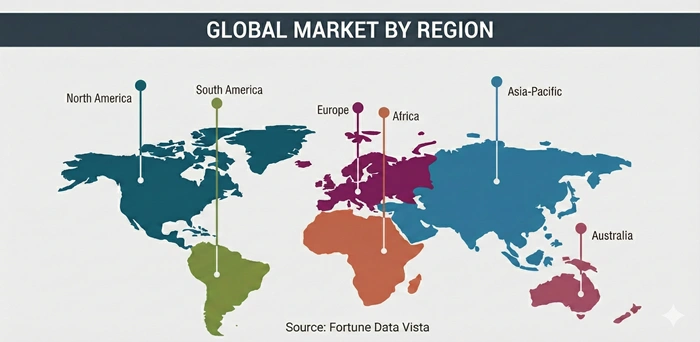
Regional Insights
North America
North America Commands Approximately 42–43% of Global Physical Therapy Software Revenue, Anchored by the World's Highest PT Software Adoption Rates, CMS Digitization Mandates, and a Mature Health Technology Vendor Ecosystem
North America holds approximately 42–43% of global physical therapy software market revenue in 2025, growing at a regional CAGR of approximately 9.73% through the forecast period. The United States is the dominant contributor, where HIPAA compliance requirements, CMS EHR incentive programs, and insurance payer requirements for electronic claims submission have created a regulatory environment that effectively mandates digital practice management across all but the smallest therapy operations. WebPT, Net Health, Clinicient, and Raintree Systems collectively serve the majority of U.S. outpatient therapy clinic software customers through purpose-built platforms designed around the specific workflows, billing code sets, and compliance requirements of U.S. physical therapy practice.
The U.S. market is also being reshaped by the rapid private equity consolidation of outpatient therapy clinic networks — with PE-backed organizations such as ATI Physical Therapy, Select Medical, and Upstream Rehabilitation operating hundreds of clinic locations under unified management. These large therapy organizations are driving enterprise software standardization projects that generate multi-year, multi-location platform contracts representing significant per-customer revenue for leading vendors. Canada's physical therapy software market is growing steadily, supported by provincial digital health strategies encouraging EHR adoption across allied health professions and expanding telehealth infrastructure investment in provincial healthcare systems.
Asia Pacific
Asia Pacific Is the Fastest-Growing Region in the Physical Therapy Software Market at 12.18% CAGR, Driven by Digital Health Investment, Expanding Private Hospital Physiotherapy Departments, and Government Healthcare IT Programs
Asia Pacific is projected to grow at the highest regional CAGR of approximately 12.18% through 2033 within the physical therapy software market, establishing it as the most commercially dynamic growth region for PT software globally. China represents the largest growth opportunity, where government-mandated hospital informatization programs, rapidly expanding private hospital physiotherapy departments, and a large aging population creating strong MSK care demand are combining to drive rapid healthcare IT adoption. India's expanding private healthcare sector — with major hospital chains including Apollo Hospitals, Fortis Healthcare, and Max Healthcare investing heavily in physiotherapy service capacity — is creating substantial demand for digital practice management and clinical documentation tools tailored to therapy workflows.
Japan and South Korea are the region's most mature healthcare IT markets, with advanced digital health infrastructure supporting higher penetration of specialty clinical software across therapy disciplines. Australia demonstrates strong physical therapy software adoption driven by private practice digital transformation trends and Medicare-linked telehealth item numbers supporting virtual PT consultation billing. The region's large number of fragmented independent physiotherapy clinics — particularly in India and Southeast Asia — represents a massive long-term addressable market for cloud-based PT software vendors willing to develop localized products with regional language support, local billing code integration, and price-sensitive subscription tiers appropriate for smaller emerging market practice sizes.
Customization Available for This Report
This report offers comprehensive region-wise and country-wise customization, providing tailored market intelligence on physical therapy software demand dynamics, regulatory frameworks, healthcare IT adoption trends, competitive landscape analysis, and digital health investment trends specifically aligned to your selected geography and market focus.
Customized versions of this report are available for each region and country listed below, offering detailed insights for software vendors, healthcare technology investors, therapy clinic operators, hospital administrators, and healthcare policy makers:
North America
-
U.S. — HIPAA regulatory framework, CMS EHR incentive program analysis, telehealth PT reimbursement landscape, private equity therapy consolidation impact, and competitive vendor landscape
-
Canada — Health Canada digital health strategy, provincial EHR adoption programs, physiotherapy regulation by province, and competitive market dynamics
-
Mexico — COFEPRIS regulatory requirements, private healthcare digital adoption trends, public sector PT software opportunity, and market entry assessment
Europe
-
U.K. — NHS digital transformation program impact, GDPR compliance requirements for health software, private physiotherapy practice digitization trends, and competitive market landscape
-
Germany — Digital health act (DVG) regulatory framework, statutory health insurer digitization requirements, hospital physiotherapy software adoption, and competitive vendor analysis
-
France — HAS digital health guidelines, hospital information system integration requirements, private PT practice market dynamics, and competitive landscape
-
Italy — National digital health plan impact, hospital physiotherapy department software adoption, private practice digitization trends, and market opportunity assessment
-
Rest of Europe — Eastern European healthcare IT investment programs and emerging PT software market opportunity analysis
Asia Pacific
-
China — NHSA regulatory framework, hospital informatization program analysis, domestic vs. international software vendor dynamics, and growth opportunity assessment
-
India — MoHFW digital health mission impact, private hospital physiotherapy expansion, ABDM interoperability requirements, and market entry opportunity analysis
-
Japan — MHLW regulatory standards, advanced healthcare IT adoption landscape, aging population physiotherapy demand, and competitive market analysis
-
South Korea — MOHW regulatory framework, national health information system integration, digital PT adoption trends, and competitive landscape
-
Australia — TGA regulatory standards, Medicare telehealth PT item number analysis, private practice digitization trends, and competitive market landscape
-
Rest of Asia Pacific — Country-level analysis for Thailand, Indonesia, Vietnam, Malaysia, and Singapore
Latin America
-
Brazil — ANVISA regulatory framework, SUS health IT digitization, private PT practice software adoption, and commercial opportunity assessment
-
Argentina — ANMAT regulatory standards, healthcare IT investment trends, market development stage, and opportunity analysis
-
Rest of Latin America — Colombia, Chile, Peru healthcare digitization programs and PT software market opportunity analysis
Middle East & Africa
-
UAE — MOH digital health strategy, private hospital physiotherapy software adoption, healthcare IT investment landscape, and competitive market analysis
-
Saudi Arabia — SDAIA and MOH digital health transformation programs, Vision 2030 healthcare IT investment, and PT software market opportunity
-
Rest of MEA — Gulf healthcare IT investment, Sub-Saharan Africa digital health development, and emerging PT software market opportunity analysis
Top Key Players
-
WebPT Inc. (United States)
-
Net Health Systems Inc. (United States)
-
Clinicient Inc. (United States)
-
Raintree Systems Inc. (United States)
-
Optima Therapy Solutions (United States)
-
NextGen Healthcare Inc. (United States)
-
Netsmart Technologies Inc. (United States)
-
MedBridge Inc. (United States)
-
Kareo Inc. — Tebra (United States)
-
Jane Software Inc. (Canada)
-
WellSky Corporation — Kinnser (United States)
-
AlayaCare Inc. (Canada)
-
Therabill — WebPT (United States)
-
Prompt Therapy Solutions Inc. (United States)
-
TheraPlatform (United States)
Recent Developments
-
In March 2026, WebPT announced the integration of an AI-powered ambient documentation assistant into its core practice management platform — enabling physical therapists to generate structured session notes automatically from voice capture during patient sessions, with early pilot users reporting documentation time reductions of approximately 50%, making it one of the most commercially significant product launches in the company's history
-
In January 2026, Net Health completed the acquisition of Tissue Analytics — a wound care AI imaging platform — significantly expanding its clinical AI capabilities and reinforcing its strategy of building integrated intelligent documentation and outcomes tools across physical therapy and post-acute care settings where clinical efficiency and outcome measurement are primary purchasing drivers
-
In October 2025, Raintree Systems announced a strategic partnership with Epic Systems to develop a certified bidirectional FHIR integration between its physical therapy platform and Epic's hospital EHR — enabling seamless patient data exchange for hospital-affiliated therapy departments and multi-specialty health systems operating therapy services within Epic-managed care networks
-
In August 2025, Prompt Therapy Solutions secured a significant Series B funding round led by a leading healthcare technology growth equity fund — with proceeds designated for accelerated product development across AI documentation, remote therapeutic monitoring, and payer analytics modules, reflecting growing investor conviction in the commercial opportunity within the physical therapy software SME market segment
-
In May 2025, Jane Software expanded its U.S. commercial operations with a dedicated sales and support team targeting independent physical therapy clinics and small group practices — leveraging its established Canadian market position and reputation for intuitive user experience to compete against legacy U.S.-focused vendors in the growing SME segment of the North American PT software market
Market Trends
Two Dominant Trends Are Reshaping the Physical Therapy Software Market: The Integration of Remote Therapeutic Monitoring Creating New Revenue Streams for Therapy Practices and the Emergence of All-in-One Platform Consolidation Replacing Point-Solution Software Stacks
Remote therapeutic monitoring integration is among the most commercially significant near-term trends reshaping the physical therapy software market. CMS RTM billing codes allow therapy practices to bill for monitoring patient adherence to home exercise programs and pain levels between in-person sessions — creating a new recurring revenue stream that is directly enabled by software platforms with integrated digital exercise prescription, patient-facing mobile apps, and automated outcome data collection. Vendors that can offer a seamlessly connected in-clinic and home monitoring experience within their existing software subscription are generating strong platform stickiness and opening conversations with practices about trading up to higher-tier subscription plans with RTM capabilities included.
The consolidation from multi-vendor point-solution software stacks toward comprehensive all-in-one platforms is the second major trend defining purchasing patterns in the physical therapy software market. Therapy practice operators who previously managed separate systems for scheduling, documentation, billing, outcomes tracking, and patient engagement are increasingly seeking unified platforms that eliminate integration complexity, reduce total software cost, and provide a single source of truth for practice performance data. Vendors that can demonstrate comprehensive capability depth across all clinical and operational workflow dimensions — while maintaining ease-of-use for front desk, clinical, and billing staff — are winning competitive evaluations over best-of-breed specialists that require complex third-party integrations to achieve comparable functional coverage.
Segments Covered in the Report
By Software Type
-
Practice Management Software
-
Scheduling, Appointment Management, and Staff Coordination
-
Revenue Cycle Management and Insurance Billing Workflow
-
-
EHR/EMR Software
-
Clinical Documentation and Functional Status Recording
-
Outcomes Measurement and Interoperability Tools
-
-
Billing and Coding Software
-
Medical Coding Automation and Claims Management
-
Denial Management and Reimbursement Optimization
-
-
Patient Engagement Software
-
Home Exercise Program Delivery and Digital Patient Communication
-
Remote Therapeutic Monitoring and Patient Outcome Portals
-
-
Others
-
Telehealth and Virtual PT Consultation Platforms
-
Analytics and Population Health Reporting Tools
-
By Deployment
-
Cloud-Based
-
SaaS Subscription Multi-Tenant Cloud Platforms
-
Hybrid Cloud Deployment with On-Premise Data Storage
-
-
On-Premise
-
Server-Based Legacy Installations
-
Enterprise On-Premise Deployments for Large Health Systems
-
By End User
-
Physical Therapy Clinics
-
Independent Outpatient PT Clinics
-
PE-Backed Multi-Location Therapy Networks
-
-
Hospitals and Health Systems
-
Hospital Outpatient Physical Therapy Departments
-
Multi-Specialty Integrated Health System Therapy Programs
-
-
Rehabilitation Centers
-
Inpatient and Outpatient Rehabilitation Facilities
-
-
Home Health Agencies
-
Home-Based Physical Rehabilitation Service Providers
-
Telehealth-Integrated Home PT Programs
-
-
Others
-
Sports Medicine Clinics and Corporate Wellness Programs
-
By Organization Size
-
Large Enterprises
-
Multi-Site Therapy Networks and Hospital-Affiliated Programs
-
-
Small and Medium-Sized Enterprises (SMEs)
-
Independent Clinics, Solo Practitioners, and Small Group Practices
-
By Region
-
North America (U.S., Canada, Mexico)
-
Europe (U.K., Germany, France, Italy, Rest of Europe)
-
Asia Pacific (China, India, Japan, South Korea, Australia, Rest of Asia Pacific)
-
Latin America (Brazil, Argentina, Rest of Latin America)
-
Middle East and Africa (UAE, Saudi Arabia, Rest of MEA)
❝ Built for Every Level — From Startups to Industry Giants ❞
Here Is Exactly How This Report Works for You
-
For tier 1 health technology companies, large therapy network operators, hospital system administrators, and institutional healthcare investors, this report delivers granular competitor revenue analysis for WebPT, Net Health, Raintree Systems, Clinicient, and emerging platform challengers — alongside a comprehensive regulatory and geopolitical intelligence framework covering how CMS interoperability mandates, RTM reimbursement expansion, HIPAA compliance requirements, EU GDPR obligations, and Asian government healthcare IT investment programs are reshaping competitive positioning, pricing power, and platform adoption dynamics within the physical therapy software market through 2033
-
For tier 2 and tier 3 PT software vendors, healthcare IT distributors, therapy clinic operators evaluating software investments, and mid-size technology companies targeting the healthcare vertical, this report maps the highest-growth segments including AI documentation, remote therapeutic monitoring, home health agency end users, and SME cloud-first platforms — providing the competitive intelligence and market sizing data needed to identify product investment priorities, geographic expansion opportunities, and partnership strategies aligned to the fastest-growing segments of the physical therapy software market
-
For all decision-makers across the physical therapy software value chain — from product managers and commercial directors to private equity healthcare portfolio managers and venture capital technology investors — this report translates complex signals including private equity therapy consolidation trends, value-based care reimbursement evolution, AI documentation adoption rates, and emerging market digital health infrastructure investment into actionable strategic intelligence that supports superior software development, pricing, distribution, and market expansion decisions through 2033
Frequently Asked Questions:
Answer: The global physical therapy software market was valued at USD 1.37 billion in 2025 and is projected to reach approximately USD 2.91 billion by 2033, growing at a CAGR of 10.26% from 2026 to 2033. This growth is driven by rising musculoskeletal disorder prevalence, accelerating cloud-based software adoption, expanding telehealth PT reimbursement, and growing demand for integrated EHR and outcomes management platforms.
Answer: The most important features in physical therapy software include integrated scheduling, HIPAA-compliant clinical documentation, billing and insurance claims management, outcomes tracking and functional status measurement, and patient engagement tools including home exercise program delivery and telehealth capabilities. Increasingly, AI-powered documentation automation, remote therapeutic monitoring integration, and FHIR-compliant EHR interoperability with hospital systems are becoming essential capabilities for practices seeking to compete effectively under value-based care reimbursement models.
Answer: North America leads the global physical therapy software market with approximately 42–43% revenue share in 2025, driven by high PT software adoption rates, CMS digitization mandates, and the commanding commercial positions of WebPT, Net Health, and Raintree Systems in the U.S. market. Asia Pacific is the fastest-growing regional market at approximately 12.18% CAGR through 2033, powered by expanding private hospital physiotherapy departments in China and India, government digital health programs, and growing awareness of evidence-based physical therapy.
Answer: The shift toward cloud-based physical therapy software is driven by the elimination of on-premise IT infrastructure costs, automatic regulatory compliance updates, multi-location access enabling therapists to manage records remotely, and the seamless integration of telehealth and remote monitoring capabilities that cloud architecture enables. Subscription-based cloud platforms also offer tiered pricing models accessible to small independent clinics that cannot justify the capital investment required for traditional server-based software implementations.
Answer: The leading companies in the physical therapy software market include WebPT, Net Health, Clinicient, Raintree Systems, and Optima Therapy — which collectively dominate the U.S. outpatient therapy software segment through established brand recognition, deep insurance billing integrations, and continuously evolving clinical documentation and outcomes management capabilities. Emerging challengers including Prompt Therapy Solutions, Jane Software, and TheraPlatform are gaining market share through modern cloud-native architectures, intuitive user experiences, and competitive pricing targeting the rapidly growing SME and independent clinic market segments.