
Recombinant Cell Culture Supplements Market Overview
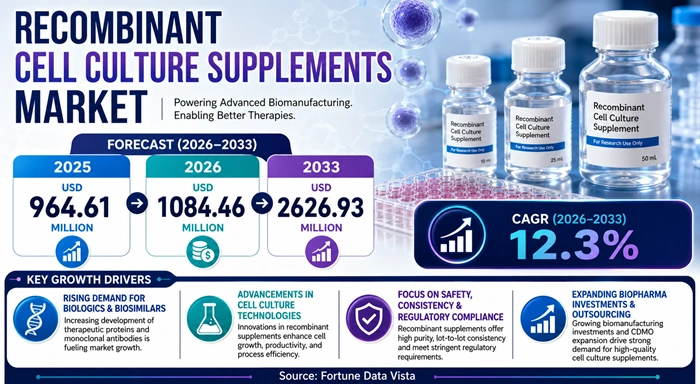
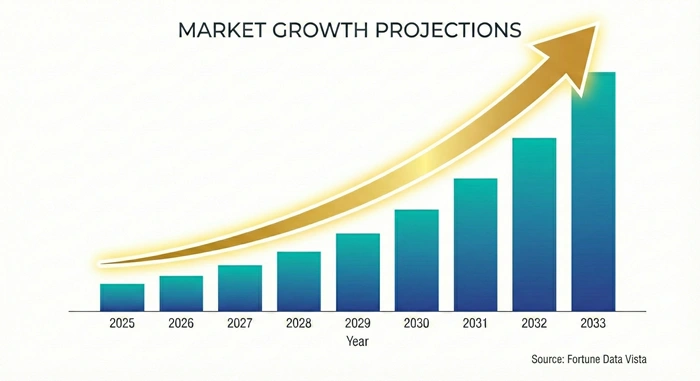
The global recombinant cell culture supplements market size is valued at USD 964.61 million in 2025 and is predicted to increase from USD 1084.46 million in 2026 to approximately USD 2626.93 million by 2033, growing at a CAGR of 12.3% from 2026 to 2033.
This strong growth trajectory reflects the dramatic expansion of biopharmaceutical manufacturing globally, the accelerating development of cell and gene therapies, and a fundamental industry-wide shift away from animal-derived culture components toward chemically defined, animal-free, and recombinant alternatives. Recombinant cell culture supplements — including recombinant albumin, recombinant insulin, recombinant transferrin, and recombinant growth factors — are now regarded as essential, non-negotiable inputs in modern biopharmaceutical upstream processing, clinical cell manufacturing, and advanced regenerative medicine applications.
AI Impact on the Recombinant Cell Culture Supplements Industry
Artificial Intelligence and Automation Are Fundamentally Reshaping How Recombinant Supplements Are Designed, Optimized, and Deployed Across Biopharmaceutical and Cell Therapy Manufacturing Platforms*
Artificial intelligence is rapidly transforming multiple dimensions of the recombinant cell culture supplements industry, from upstream process development to downstream quality verification. Machine learning algorithms are now being applied to optimize complex cell culture media compositions — identifying the precise concentrations of recombinant supplements such as albumin, insulin, and transferrin that maximize cell viability, proliferation rate, and target protein yield for specific cell lines and bioreactor configurations. What once required months of manual Design of Experiments (DoE) trials can now be modeled and predicted computationally in days, accelerating process development timelines for biopharmaceutical manufacturers and contract manufacturing organizations.
Beyond media optimization, AI-powered in-line monitoring and predictive quality control systems are dramatically reducing batch failure rates in supplement-dependent manufacturing processes. Real-time analytics platforms correlate sensor data from bioreactors — including dissolved oxygen, pH, glucose consumption, and metabolite profiles — with supplement dosing schedules to enable dynamic, adaptive feeding strategies that consistently improve product quality and yield. For manufacturers of recombinant cell culture supplements themselves, generative AI tools are now being used to design novel growth factors and cytokine variants with enhanced stability, potency, and shelf life — opening new product development pathways that were previously inaccessible through traditional protein engineering methods alone.
Growth Factors
The Global Biologics Pipeline, Cell and Gene Therapy Expansion, and the Animal-Free Manufacturing Transition Are the Three Most Powerful Structural Forces Driving Growth in the Recombinant Cell Culture Supplements Market*
The single most important growth driver in the recombinant cell culture supplements market is the explosive expansion of global biopharmaceutical production. Biologic medicines — including monoclonal antibodies, fusion proteins, vaccines, and recombinant therapeutic proteins — now represent the fastest-growing and highest-value segment of the global pharmaceutical industry. Each biologic drug requires a precisely defined cell culture environment in which recombinant supplements play critical roles as essential nutrients, growth promoters, and stability agents. PhRMA's January 2026 report noted that 438 cell and gene therapy treatments are currently under development in the United States alone, and innovative biopharmaceutical firms secured approvals for 52 new medicines in 2025 — all of which create direct, sustained demand for high-performance recombinant media additives. The broader life sciences sector's strength is further illustrated by Thermo Fisher Scientific reporting a full-year revenue of USD 44.56 billion in 2025.
The accelerating transition from animal-derived culture media components to fully chemically defined, animal-free recombinant alternatives represents the second major growth driver. Traditional animal-derived supplements such as fetal bovine serum (FBS) and bovine serum albumin (BSA) carry unacceptable regulatory, safety, and variability risks for modern biopharmaceutical and cell therapy manufacturing. Regulatory agencies including the FDA and EMA are increasingly mandating animal-free manufacturing conditions for advanced therapy medicinal products (ATMPs) and cell-based therapies. This regulatory direction, combined with growing industry consensus on the performance advantages of recombinant supplements — superior lot consistency, traceable sourcing, and reduced contamination risk — is driving systematic substitution of animal-derived components with recombinant alternatives across the global biomanufacturing supply chain.
Market Outlook
Expanding CAR T-Cell Therapy Pipelines, Increasing Biologics Outsourcing, and the Rise of 3D Cell Culture and Organoid Research Are Creating Long-Term Structural Demand for Premium Recombinant Culture Supplements Through 2033*
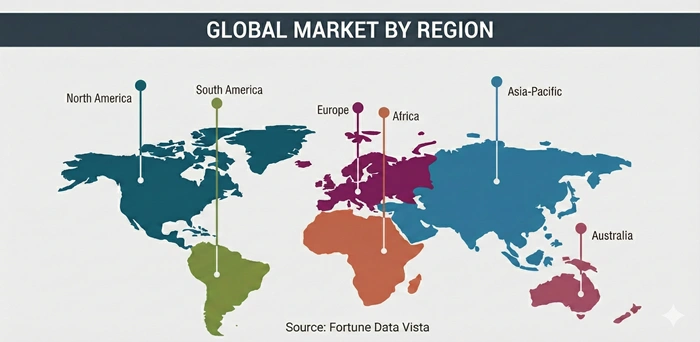
The long-term outlook for the recombinant cell culture supplements market is exceptionally strong and underpinned by multiple converging structural demand trends. North America currently leads the global market with approximately 39% share, a position built on the world's largest biopharmaceutical R&D and manufacturing base, the highest density of clinical-stage cell therapy programs, and the most advanced regulatory framework for biologics and ATMPs. Asia Pacific is the fastest-growing region, driven by rapid expansion of pharmaceutical manufacturing capacity in China, India, Japan, and South Korea, as well as rising government investment in biotechnology and life sciences infrastructure. As global outsourcing of biologics manufacturing to CDMOs and CMOs continues to accelerate, demand for standardized, high-quality recombinant supplements is expected to grow across multiple geographies simultaneously.
The growing adoption of organoid models, 3D cell culture platforms, and ex vivo cell expansion processes for advanced therapy manufacturing is creating a new and highly specialized demand category within the recombinant supplements market. These advanced in vitro platforms require precisely formulated recombinant growth factors and extracellular matrix proteins to maintain structural and functional integrity — a requirement that cannot be met by conventional animal-derived supplements. Sartorius's EUR 442 million investment in 2025, which included the strategic acquisition of Mattek (a specialist in organoids and micro-tissues), underscores the commercial significance of this trend. Manufacturers who invest in developing specialized recombinant supplement formulations for 3D culture and organoid applications will be well positioned to capture premium market segments as personalized medicine and organ-on-chip technologies scale through 2033.
Expert Speaks
-
"Thermo Fisher Scientific is deeply committed to enabling the global transition to animal-free, chemically defined cell culture systems. The demand for high-quality recombinant supplements is accelerating in lockstep with the biopharmaceutical industry's growth, and we are investing at scale in our biologics and cell culture reagents portfolio to ensure our customers can manufacture next-generation therapies with the highest possible consistency and regulatory confidence." — Marc Casper, CEO, Thermo Fisher Scientific
-
"At Merck KGaA, we see recombinant cell culture ingredients as one of the most strategically important growth areas in our life science business. The shift from undefined to fully chemically defined media is not just a regulatory imperative — it is a quality and competitive imperative, and we are accelerating our investment in recombinant proteins, growth factors, and media supplements that set the standard for biopharmaceutical manufacturing globally." — Belén Garijo, CEO, Merck KGaA
-
"Lonza's capital expenditure commitment of CHF 1.3 billion in 2025 reflects our conviction that cell and gene therapy manufacturing will be the defining growth segment in life sciences through the next decade. Premium recombinant supplements are at the heart of every CDMO manufacturing process we run, and we are continuously expanding our capabilities in this space to serve our customers' growing pipeline demands." — Wolfgang Wienand, CEO, Lonza Group AG
Key Report Takeaways
-
North America leads the global recombinant cell culture supplements market with approximately 39% of revenue share in 2026, driven by the world's largest concentration of biopharmaceutical R&D and manufacturing operations, a mature regulatory framework for biologics and advanced therapies, and the highest density of CAR T-cell and gene therapy clinical programs in the United States.
-
Asia Pacific is the fastest-growing regional market, projected to expand at a CAGR of approximately 15.4% from 2026 to 2033, fueled by rapid expansion of pharmaceutical and biologic manufacturing infrastructure in China and India, government-led biotechnology investment programs in Japan and South Korea, and growing outsourcing of biologics production to CDMOs across the region.
-
Pharmaceutical and biotechnology companies are the dominant end-user category, accounting for approximately 46% of global recombinant cell culture supplement demand in 2025, reflecting the critical dependence of biologics drug manufacturing on consistently performing, regulatory-compliant recombinant media additives for both clinical and commercial production.
-
The Biopharmaceutical Production application segment is the largest application category, contributing approximately 58% of total market revenue in 2025, driven by the expanding global pipeline of monoclonal antibodies, therapeutic proteins, and recombinant vaccines that all require high-quality, animal-free recombinant supplements in upstream cell culture processes.
-
Recombinant Albumin is the leading product segment, holding approximately 34% of global market share in 2025, owing to its essential role as a cell culture stabilizer, carrier protein, and membrane protectant in a wide range of biopharmaceutical and cell therapy manufacturing applications.
-
The Cell & Gene Therapy Manufacturing application is the fastest-growing segment, projected to grow at a CAGR of approximately 17.2% from 2026 to 2033, driven by the extraordinary clinical pipeline of CAR T-cell therapies, gene-edited products, and viral vector-based treatments that require strictly controlled, animal-free, GMP-grade recombinant supplements for safe and effective ex vivo cell manipulation.
-
The CMO/CDMO end-user segment is the fastest-growing buyer category, expected to grow at a CAGR of approximately 16.1% through 2033, as global pharmaceutical companies increasingly outsource biologic drug manufacturing to specialist CDMOs and CMOs that require standardized, premium-quality recombinant cell culture ingredients for multi-product manufacturing facilities.
Market Scope
| Parameter | Details |
|---|---|
| Market Size by 2033 | USD 2626.93 Million | Market Size by 2026 | USD 1084.46 Million | Market Size by 2025 | USD 964.61 Million | Market Growth Rate from 2026 to 2033 | CAGR of 12.3% | Dominating Region | North America | Fastest Growing Region | Asia Pacific | Segments Covered | By Product, By Form, By Application, By End User, By Distribution Channel | Regions Covered | North America, Europe, Asia Pacific, Latin America, Middle East & Africa |
Market Dynamics
Drivers Impact Analysis
Exploding Biologics and Cell Therapy Pipelines, Mandatory Regulatory Shift to Animal-Free Manufacturing, and Rapid CDMO Capacity Expansion Are the Primary Forces Accelerating Growth in the Recombinant Cell Culture Supplements Market*
| Driver | ≈ % Impact on CAGR Forecast | Geographic Relevance | Impact Timeline |
|---|---|---|---|
| Expanding biologics & biopharmaceutical production | ~35% | Global — North America, Europe, Asia Pacific | Short to Long Term |
| Growth of cell & gene therapy manufacturing | ~28% | North America, Europe | Short to Long Term |
| Regulatory shift to animal-free, chemically defined media | ~20% | EU, US, Japan | Medium to Long Term |
| Rising CDMO/CMO outsourcing of biologics manufacturing | ~12% | Asia Pacific, Europe, North America | Short to Medium Term |
| Adoption of 3D cell culture & organoid research platforms | ~5% | North America, Europe | Medium to Long Term |
The foundational driver of the recombinant cell culture supplements market is the extraordinary pace of expansion in global biopharmaceutical and biologics manufacturing. Monoclonal antibodies, recombinant therapeutic proteins, biosimilars, and next-generation vaccines all require highly controlled, animal-free upstream cell culture processes where recombinant supplements play an indispensable role. Leading pharmaceutical companies have committed over USD 370 billion to U.S. manufacturing and infrastructure projects over the next five years, directly translating into expanded demand for GMP-grade recombinant albumin, insulin, transferrin, and cytokines that form the backbone of modern bioreactor media formulations. The consistent entry of new biologic drug candidates into clinical trials ensures that this demand pipeline will remain robust through 2033 and beyond.
Cell and gene therapies represent the highest-growth demand frontier within the recombinant cell culture supplements market. CAR T-cell therapies, gene-edited products, lentiviral and adeno-associated viral (AAV) vector-based treatments, and CRISPR-based therapeutics all fundamentally depend on strictly regulated, fully defined, animal-free recombinant supplement formulations for ex vivo cell expansion, transduction, and differentiation. The clinical pipeline for these therapies is enormous — PhRMA reported 438 cell and gene therapy treatments under active development in the United States as of January 2026 — and each of these programs creates direct, sustained demand for premium recombinant media additives throughout preclinical development, clinical manufacturing, and commercial production phases.
Restraints Impact Analysis
High Production Costs of GMP-Grade Recombinant Supplements, Stringent Regulatory Validation Requirements, and Supply Chain Concentration Risks Represent the Most Significant Barriers to Accelerated Market Expansion*
| Restraint | ≈ % Impact on CAGR Forecast | Geographic Relevance | Impact Timeline |
|---|---|---|---|
| High cost of development & GMP manufacturing of recombinant supplements | ~42% | Global — especially emerging markets | Short to Long Term |
| Stringent regulatory compliance & GMP validation requirements | ~28% | EU, US, Japan | Short to Long Term |
| Limited supplier base & supply chain concentration risk | ~18% | Global | Medium Term |
| Complexity of media formulation & process transfer | ~12% | All regions | Short to Medium Term |
The single most significant restraint facing the recombinant cell culture supplements market is the exceptionally high cost associated with the development, production, and quality certification of GMP-grade recombinant proteins and biomolecules. Manufacturing recombinant albumin, insulin, transferrin, and growth factors to pharmaceutical grade requires advanced genetic engineering infrastructure, sophisticated fermentation or CHO cell expression systems, multi-step purification processes, and rigorous analytical testing that collectively represent substantial capital and operating costs. The European Federation of Pharmaceutical Industries and Associations (EFPIA) reported that Europe's research-focused pharmaceutical sector spent over EUR 55 billion on R&D in 2024 — costs heavily influenced by the use of expensive specialized biological materials. For smaller biopharmaceutical companies and academic institutions, the premium pricing of certified recombinant supplements relative to animal-derived alternatives remains a meaningful barrier to adoption.
Regulatory complexity represents the second major constraint shaping market dynamics. GMP-grade recombinant cell culture supplements must meet exacting purity, potency, identity, and safety specifications mandated by the FDA, EMA, and other national regulatory authorities. Each new supplement formulation or product specification change requires formal regulatory validation and updated documentation packages — a process that is time-consuming, resource-intensive, and particularly challenging for organizations managing multiple product lines simultaneously. The limited number of qualified suppliers globally also creates supply chain concentration risk, as biopharmaceutical manufacturers may face supply disruptions if a primary recombinant supplement supplier experiences a manufacturing issue, a quality deviation, or a regulatory hold — a scenario that directly threatens batch release timelines and clinical supply commitments.
Opportunities Impact Analysis
Personalized Cell Therapy Manufacturing, Geographic Expansion Into Emerging Biotech Markets, Process Intensification Technologies, and Biosimilar Production Growth Are Creating High-Value Growth Pathways for the Recombinant Cell Culture Supplements Market*
| Opportunity | ≈ % Impact on CAGR Forecast | Geographic Relevance | Impact Timeline |
|---|---|---|---|
| Expansion of personalized CAR T & autologous cell therapy manufacturing | ~38% | North America, Europe | Short to Medium Term |
| Biosimilar production growth requiring animal-free media | ~25% | Asia Pacific, Europe | Short to Medium Term |
| Process intensification & continuous bioprocessing adoption | ~20% | North America, Europe | Medium to Long Term |
| Geographic expansion of biotech manufacturing in Asia Pacific | ~17% | China, India, South Korea | Short to Long Term |
The rapid expansion of personalized and autologous cell therapy manufacturing represents the most transformative near-term growth opportunity in the recombinant cell culture supplements market. Unlike traditional biologics manufactured through well-defined batch processes, CAR T-cell therapies and other autologous products require fresh, individualized cell culture processes for each patient — multiplying the total volume of recombinant supplement usage per treatment program relative to conventional drug manufacturing. As more CAR T-cell therapies receive regulatory approval and commercial demand scales, the aggregate consumption of GMP-grade recombinant growth factors, cytokines, and albumin formulations is set to increase dramatically. Lonza's CHF 1.3 billion capital expenditure in 2025, specifically targeting enhanced cell and gene therapy programs, reflects the industry's recognition of this exceptional growth opportunity.
Biosimilar manufacturing presents another substantial opportunity for recombinant cell culture supplement producers. The global biosimilar market is expanding rapidly as patent expirations on major biologic drugs create openings for lower-cost biosimilar competition, particularly in the United States, Europe, and emerging markets. Each biosimilar program requires extensive upstream cell culture development using high-quality, consistently performing recombinant supplements to demonstrate biosimilarity to the reference product — a process that generates significant and sustained demand across multiple development phases. Asia Pacific — particularly China, India, and South Korea — is emerging as a global biosimilar manufacturing hub, creating a fast-growing regional demand center for competitively priced, quality-certified recombinant cell culture ingredients from both domestic and international suppliers.
Segment Analysis
By Product: Recombinant Albumin
Recombinant Albumin Holds the Commanding Lead in the Global Market, Reflecting Its Irreplaceable Multifunctional Role Across Virtually Every Category of Biopharmaceutical and Cell Therapy Manufacturing Process*
Recombinant albumin is the largest product segment in the recombinant cell culture supplements market, accounting for approximately 34% of global revenue in 2025. Its dominant position reflects the uniquely broad and essential set of biological functions it performs in cell culture systems — serving simultaneously as a stabilizer for growth factors and cytokines, a lipid and hormone carrier, a shear stress protectant in bioreactors, and a membrane integrity agent for sensitive cell types including CHO, HEK293, and primary human cells used in advanced therapy manufacturing. The shift away from animal-derived bovine serum albumin (BSA) toward yeast- or rice-derived recombinant human serum albumin (rHSA) has been accelerating steadily, driven by regulatory pressure to eliminate animal-origin materials from GMP manufacturing processes, and by the superior lot-to-lot consistency and full traceability of recombinant alternatives. North America is the largest regional consumer of recombinant albumin, led by companies including Thermo Fisher Scientific, Merck KGaA (MilliporeSigma), and Albumedix Ltd. (now part of Kedrion), which supply both GMP-grade and research-grade formulations across a wide range of concentration specifications and endotoxin profiles.
Asia Pacific is the fastest-growing region for recombinant albumin consumption, expanding at a CAGR of approximately 16.8% from 2026 to 2033, driven by the rapid build-out of biosimilar and monoclonal antibody manufacturing facilities in China and India, combined with growing adoption of chemically defined media by regional CDMOs seeking to align with international GMP standards. Chinese suppliers including Sino Biological and domestic biotech manufacturers are also entering the recombinant albumin production space, creating local competition and improving supply security for Chinese biopharmaceutical manufacturers. The segment is expected to maintain its leadership through 2033, supported by the expanding base of CAR T-cell therapy programs globally and the increasing use of recombinant albumin in cryopreservation formulations for cell therapy products — an application that is growing particularly rapidly as autologous cell therapy programs scale from clinical to commercial manufacturing.
By Application: Biopharmaceutical Production
Biopharmaceutical Production Dominates Application Demand, Anchored by the Non-Negotiable Need for Animal-Free, High-Performance Recombinant Supplements in Monoclonal Antibody and Therapeutic Protein Manufacturing*
The biopharmaceutical production application segment holds the largest share of the recombinant cell culture supplements market, contributing approximately 58% of total global revenue in 2025. This dominance reflects the central role of cell culture processes in the manufacturing of the world's most important and commercially significant biologic medicines — monoclonal antibodies, therapeutic proteins, recombinant vaccines, and biosimilars — all of which require precisely formulated recombinant supplements throughout their upstream manufacturing processes. Recombinant insulin is critical for promoting CHO and HEK293 cell proliferation in serum-free media; recombinant transferrin ensures adequate iron delivery to cells in chemically defined conditions; recombinant albumin stabilizes labile growth factors and protects cells from bioreactor shear stress; and recombinant cytokines and growth factors drive specific cell line behaviors required for consistent product quality. Key companies dominating supply to biopharmaceutical manufacturers include Thermo Fisher Scientific, Merck KGaA, Sartorius AG, and Lonza Group AG.
The biopharmaceutical production segment is projected to grow at a CAGR of approximately 11.8% from 2026 to 2033, with North America and Europe maintaining the highest total revenue contribution, while Asia Pacific records the fastest growth rate as the region's biologics manufacturing base expands. The cell and gene therapy manufacturing sub-application within this broader category is expected to grow at nearly double this rate — approximately 17.2% CAGR — driven by the commercialization of multiple CAR T-cell products and the entry of new gene therapy programs into commercial manufacturing phases. This dynamic is creating strong pull-through demand for specialty recombinant supplements specifically validated for human primary cell culture and ex vivo cell manufacturing, a category in which suppliers like Miltenyi Biotec, STEMCELL Technologies, and Bio-Techne hold leading positions within the recombinant cell culture supplements industry.
Regional Insights
North America: The Global Market Leader Anchored by Biopharmaceutical Innovation and Clinical Cell Therapy Leadership
North America Commands the Largest Revenue Share in the Recombinant Cell Culture Supplements Market, Backed by the World's Largest Biologics Pipeline, the Most Advanced Cell Therapy Clinical Ecosystem, and Unmatched Life Sciences Manufacturing Infrastructure*
North America holds the dominant position in the global recombinant cell culture supplements market, commanding approximately 39% of global revenue in 2026 and expected to grow at a CAGR of 11.8% through 2033. The United States is the world's single largest market for recombinant cell culture ingredients, a position cemented by its extraordinary concentration of biopharmaceutical companies, world-class academic medical centers, and the most extensive clinical pipeline of cell and gene therapy programs globally. Leading players including Thermo Fisher Scientific, Merck KGaA (MilliporeSigma), Bio-Techne Corporation, STEMCELL Technologies, and InVitria, Inc. collectively serve the majority of biopharmaceutical manufacturers operating in this region with a comprehensive range of GMP-grade and research-grade recombinant supplements. The FDA's supportive regulatory framework for biologics and ATMPs — combined with industry investment exceeding USD 370 billion in U.S. manufacturing infrastructure over the next five years — ensures that North American demand for recombinant cell culture ingredients will remain robust and structurally growing through 2033.
Canada contributes meaningfully to North American market performance, particularly through its strong cluster of cell therapy and regenerative medicine companies in Toronto, Vancouver, and Montreal, as well as through global headquarters operations of STEMCELL Technologies — one of the world's leading developers of specialty cell culture media and recombinant supplements. The region's dominance in continuous bioprocessing adoption, process analytical technology (PAT) implementation, and GMP manufacturing excellence further differentiates North American demand for premium, well-characterized recombinant supplement products. Academic research institutions across the United States also represent a significant and growing consumer base for research-grade recombinant supplements, as university-based life sciences research investment continues to expand in alignment with NIH and DOE funding priorities in biomanufacturing and regenerative medicine.
Asia Pacific: The Fastest-Growing Region Transforming the Global Competitive Landscape for Recombinant Cell Culture Supplements
Asia Pacific Is Emerging as the Most Dynamic Growth Market for Recombinant Cell Culture Supplements, Powered by Rapid Biosimilar Manufacturing Scale-Up, Government Biotechnology Investment, and a Surging Domestic Biopharmaceutical Industry Across China, India, and South Korea*
Asia Pacific is the fastest-growing region in the recombinant cell culture supplements market, projected to expand at a CAGR of approximately 15.4% from 2026 to 2033 — significantly outpacing all other global regions. The region currently accounts for approximately 24% of global market share in 2026 and is rapidly gaining ground on Europe and North America as regional biopharmaceutical manufacturing capacity scales. China is the dominant force within the region, accounting for nearly 42% of Asia Pacific's recombinant supplement demand, driven by government-backed biopharmaceutical development plans, a massive biosimilar pipeline, and the rapid expansion of CDMOs such as WuXi Biologics, Pharmaron, and Asymchem that serve both domestic and global pharmaceutical clients. Key suppliers active in China and the broader Asia Pacific region include Sino Biological, Thermo Fisher Scientific's regional operations, and STEMCELL Technologies' growing Asia distribution network.
India and South Korea are two increasingly important growth markets within the Asia Pacific recombinant cell culture supplements landscape. India's status as the world's largest producer of biosimilars, combined with government initiatives such as the Production Linked Incentive (PLI) scheme for pharmaceutical manufacturing, is creating strong demand growth for animal-free recombinant cell culture supplements among both domestic manufacturers and international CDMOs operating in the country. South Korea's highly advanced biotechnology and cell therapy ecosystem — led by companies including Samsung Biologics, Celltrion, and Yuhan Corporation — generates premium demand for GMP-grade recombinant supplements that meet the most stringent international quality standards. As the region's regulatory alignment with FDA and EMA standards deepens, and as local supplement manufacturing capacity develops further, Asia Pacific is well positioned to become the world's second-largest market for recombinant cell culture supplements by the end of the forecast period.
Top Key Players
-
Thermo Fisher Scientific Inc. (United States)
-
Merck KGaA (MilliporeSigma) (Germany)
-
Sartorius AG (Germany)
-
Lonza Group AG (Switzerland)
-
STEMCELL Technologies Canada Inc. (Canada)
-
Miltenyi Biotec B.V. & Co. KG (Germany)
-
Bio-Techne Corporation (United States)
-
Sino Biological, Inc. (China)
-
InVitria, Inc. (United States)
-
Capricorn Scientific GmbH (Germany)
-
Albumedix Ltd. (United Kingdom)
-
BBI Solutions (United Kingdom)
-
Corning Incorporated (United States)
-
Evercyte GmbH (Austria)
-
Gemini Bio-Products (United States)
Recent Developments
-
In January 2026, Lonza Group AG reported that its 2025 capital expenditure reached CHF 1.3 billion, with a significant portion directed toward expanding its cell and gene therapy manufacturing capabilities, including dedicated GMP cell culture infrastructure that directly increases consumption of premium recombinant media supplements across its CDMO client portfolio.
-
In February 2026, Sartorius AG confirmed its EUR 442 million investment program in 2025, which included the strategic acquisition of Mattek, a specialist in organoids and micro-tissue platforms, directly reinforcing demand for customized recombinant supplements designed for advanced 3D cell culture and organoid research applications.
-
In November 2025, Thermo Fisher Scientific reported full-year revenues of USD 44.56 billion and announced continued portfolio expansion in its Cell Culture & Bioproduction division, introducing new GMP-grade recombinant albumin and cytokine formulations specifically optimized for CAR T-cell manufacturing and lentiviral vector production workflows.
-
In March 2025, Merck KGaA's Life Science division launched an expanded range of Optibumin recombinant albumin variants for cell therapy manufacturing applications, providing cell therapy manufacturers with improved lot consistency, broader concentration ranges, and enhanced compatibility with both open and closed automated cell processing systems.
-
In August 2025, STEMCELL Technologies announced a major expansion of its ImmunoCult and TeSR recombinant supplement product lines, introducing new animal-free formulations for NK cell, T cell, and induced pluripotent stem cell (iPSC) culture — directly addressing the growing demand from advanced therapy manufacturers transitioning to fully defined, xeno-free manufacturing platforms.
Market Trends
Hyper-Specialization of Recombinant Supplement Formulations for Cell and Gene Therapy Applications, and the Integration of Process Intensification Technologies, Are the Defining Market Trends Through 2033*
The most consequential trend reshaping the recombinant cell culture supplements market is the hyper-specialization of supplement formulations for advanced therapeutic applications. The rapid clinical and commercial expansion of CAR T-cell therapies, NK cell therapies, induced pluripotent stem cell (iPSC)-derived products, and viral vector-based gene therapies is driving demand for highly customized recombinant media additive packages tailored to the unique requirements of each specific cell type and manufacturing process. Standard, general-purpose recombinant supplements are increasingly being replaced by application-specific formulations that provide precise control over cell activation state, expansion rate, transduction efficiency, and metabolic fitness. This specialization trend is creating premium pricing opportunities for suppliers with strong application development expertise and deep technical partnerships with leading cell therapy manufacturers.
The second defining trend is the growing integration of process intensification technologies — including perfusion bioprocessing, concentrated fed-batch operations, and continuous manufacturing — with optimized recombinant supplement feeding strategies. As biopharmaceutical manufacturers seek to reduce facility footprint, lower cost of goods, and increase volumetric productivity, they are working closely with recombinant supplement suppliers to develop precisely formulated feeding solutions that sustain peak cell density and product quality in high-intensity bioreactor environments. This collaboration is creating deeper, more strategic supplier-customer relationships within the recombinant cell culture supplements market — a shift from transactional reagent purchasing toward long-term preferred supplier partnerships in which technical service, application support, and co-development agreements play an increasingly important commercial role.
Segments Covered in the Report
-
By Product:
-
Recombinant Albumin
-
Recombinant Insulin
-
Recombinant Transferrin
-
Recombinant Cytokines & Growth Factors
-
Recombinant Fibronectin
-
Others
-
-
By Form:
-
Liquid
-
Powder
-
-
By Application:
-
Biopharmaceutical Production
-
Cell & Gene Therapy Manufacturing
-
Regenerative Medicine
-
Vaccine Production
-
Drug Discovery & Screening
-
Academic & Basic Research
-
-
By End User:
-
Pharmaceutical & Biotechnology Companies
-
Cell Culture Media Manufacturers
-
Contract Manufacturing Organizations (CMOs)
-
Contract Research Organizations (CROs)
-
CDMOs
-
Academic & Research Institutes
-
-
By Distribution Channel:
-
Direct Sales
-
Distributors & Specialty Reagent Suppliers
-
Online B2B Platforms
-
-
By Region:
-
North America (U.S., Canada, Mexico)
-
Europe (Germany, UK, France, Italy, Spain, Switzerland, Rest of Europe)
-
Asia Pacific (China, India, Japan, South Korea, Australia, Rest of Asia Pacific)
-
Latin America (Brazil, Argentina, Rest of Latin America)
-
Middle East & Africa (GCC Countries, South Africa, Rest of MEA)
-
"Built for Every Level — From Startups to Industry Giants"
Here Is Exactly How This Report Works for You
-
For Tier 1 biopharmaceutical companies, institutional investors, and senior life sciences executives, this report delivers detailed competitor revenue analysis, segment-by-segment revenue source breakdowns, and a granular assessment of how geopolitical factors — including U.S.-China biotech decoupling pressures, EU ATMP regulatory evolution, and reshoring of biologics manufacturing — are reshaping supply chain strategy and supplier selection in the recombinant cell culture supplements industry, giving your leadership team the intelligence required to make confident market positioning and capital allocation decisions.
-
For Tier 2 and Tier 3 supplement manufacturers, specialty reagent distributors, CDMOs, and mid-market life science companies, this report provides precise segment-level demand forecasts, application-specific growth rate data, and regional supply-demand balance analysis that reveals where the highest-margin, fastest-growing opportunity pockets exist — enabling you to align product development priorities, distribution investments, and partnership strategies with the most commercially compelling areas of the market.
-
For startups, academic spinouts, cell therapy biotech companies, and new market entrants, this report delivers actionable intelligence on regulatory landscape requirements for GMP supplement certification, a detailed competitive positioning map of existing players by product category and geography, and clear identification of underserved specialty application segments — providing your team with the strategic foundation to attract investor interest, secure early customer relationships, and build a differentiated position in the rapidly expanding recombinant cell culture supplements market.
Frequently Asked Questions:
Answer: The global recombinant cell culture supplements market is valued at USD 964.61 million in 2025 and is projected to reach USD 2626.93 million by 2033. It is expected to grow at a CAGR of 12.3% from 2026 to 2033, driven by expanding biologics manufacturing and the global shift to animal-free cell culture systems.
Answer: The primary growth drivers include the explosive expansion of global biopharmaceutical and cell therapy manufacturing, and the regulatory-mandated transition from animal-derived to chemically defined, animal-free media components. Rising investment in CAR T-cell therapies, biosimilars, and personalized medicine is creating sustained structural demand for premium recombinant supplements.
Answer: North America leads the recombinant cell culture supplements market with approximately 39% revenue share in 2026, supported by the world's largest biologics and cell therapy manufacturing ecosystem. Asia Pacific is the fastest-growing region at a projected CAGR of 15.4% from 2026 to 2033, driven by rapid pharmaceutical manufacturing expansion in China, India, and South Korea.
Answer: Recombinant albumin is the leading product segment, accounting for approximately 34% of global market revenue in 2025. Its dominance reflects its critical multifunctional role as a cell stabilizer, growth factor carrier, and shear stress protectant in biopharmaceutical and cell therapy manufacturing processes.
Answer: Key players include Thermo Fisher Scientific, Merck KGaA (MilliporeSigma), Sartorius AG, Lonza Group AG, STEMCELL Technologies, Miltenyi Biotec, Bio-Techne Corporation, Sino Biological, and InVitria. These companies compete on GMP certification, product consistency, application-specific formulation expertise, and the depth of their cell and gene therapy manufacturing support capabilities.