
Recycled Lead Market Overview
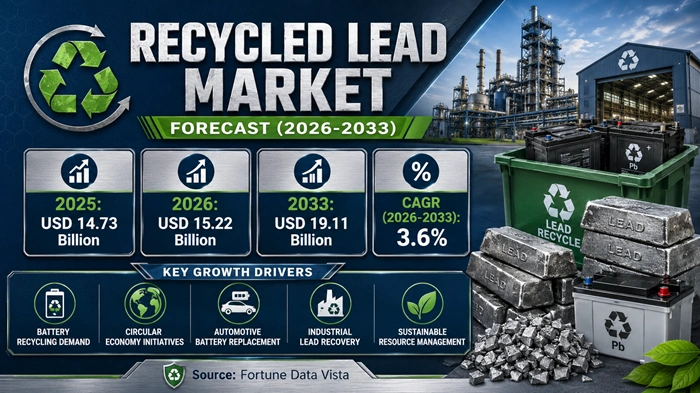
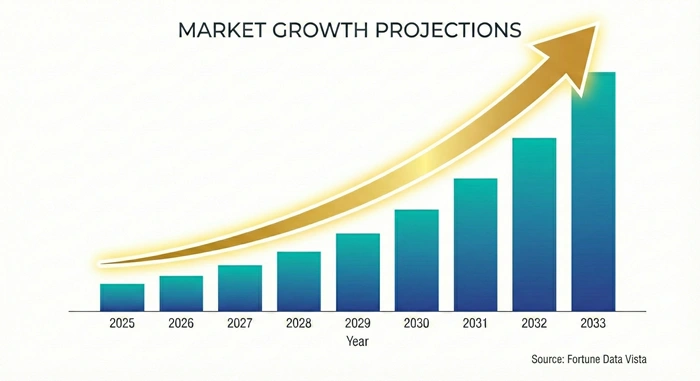
The global recycled lead market size is valued at USD 14.73 billion in 2025 and is predicted to increase from USD 15.22 billion in 2026 to approximately USD 19.11 billion by 2033, growing at a CAGR of 3.6% from 2026 to 2033.
The market is driven by the consistently high demand for secondary lead — primarily sourced from spent lead-acid batteries — across automotive, construction, and industrial sectors worldwide. Lead holds a unique distinction among metals: it can be recycled repeatedly without any significant loss in quality, making it one of the most efficiently recycled industrial materials globally. With over 80% of total lead production in many developed nations already sourced from recycled feedstocks, the recycled lead market represents not just an environmental success story but a commercially vital part of the global metals economy.
AI Impact on the Recycled Lead Industry
Artificial Intelligence Is Quietly Revolutionizing Lead Recycling Operations — From Automated Battery Sorting to Predictive Smelter Maintenance and Real-Time Environmental Compliance Monitoring
Artificial intelligence is beginning to reshape how lead recycling facilities operate across the full value chain — from feedstock collection and sorting to smelting optimization and regulatory reporting. AI-powered optical sorting systems can now identify and separate lead-acid batteries from mixed scrap streams with higher accuracy and throughput than manual or legacy automated processes, reducing contamination rates and improving the quality of recycled lead output. Machine learning models are being applied to smelter operations to optimize furnace temperatures, energy consumption, and slag management in real time, cutting operational costs while maintaining consistent product purity standards. As the recycled lead market scales up to meet battery demand, these AI-driven efficiency improvements are becoming competitive differentiators for the largest players.
Beyond the plant floor, AI is helping companies manage environmental and regulatory compliance more effectively. Emissions monitoring platforms that use AI-based anomaly detection can flag deviations from permitted emissions thresholds faster than traditional periodic sampling methods, reducing the risk of regulatory penalties and enabling continuous improvement in environmental performance. For companies managing multi-site lead recycling networks, AI-enabled logistics platforms are optimizing battery collection routes, reducing transportation costs, and improving the economic viability of collecting low-volume scrap from dispersed sources. This digital layer is becoming increasingly important as environmental standards rise globally and operators face mounting pressure to demonstrate responsible recycling practices.
Growth Factors
Surging Lead-Acid Battery Consumption, Circular Economy Legislation, and the Cost Competitiveness of Secondary Lead Are the Core Pillars Supporting the Recycled Lead Market's Steady Expansion
The primary growth engine for the recycled lead market is the sustained global demand for lead-acid batteries. Despite the rapid rise of lithium-ion technology in consumer electronics and premium EVs, lead-acid batteries remain indispensable across a far broader range of applications — from automotive starter batteries and industrial forklift power to data center uninterruptible power supplies (UPS) and telecom tower backup systems. The International Lead Association estimates that lead-acid batteries account for approximately 80% or more of total lead consumption globally, meaning that every battery produced today becomes a future feedstock for secondary lead recovery. Start-stop vehicle technology, which is increasingly standard across conventional passenger vehicles, actually increases per-vehicle lead consumption, maintaining battery demand even as hybrid and electric vehicles gain share.
The second major driver is the favorable economics and policy environment for lead recycling. Recycling lead requires approximately 35–40% less energy than producing primary lead from ore — a cost advantage that makes secondary lead inherently more competitive at most points in the commodity price cycle. Governments across North America, Europe, and parts of Asia Pacific have implemented stringent producer responsibility regulations and Extended Producer Responsibility (EPR) frameworks that mandate battery take-back schemes, ensuring a steady and regulated supply of end-of-life batteries to licensed recyclers. Environmental regulations restricting unregulated smelting — particularly in China, India, and Southeast Asia — are gradually formalizing informal recycling operations, channeling more battery scrap into compliant, efficient processing facilities and strengthening the quality and consistency of recycled lead output.
Market Outlook
The Recycled Lead Market Is Positioned for Stable, Long-Term Growth as Battery Infrastructure Scales Up and Environmental Regulations Strengthen Formal Recycling Networks Globally
The long-term outlook for the recycled lead market is one of steady, moderate growth underpinned by structural demand continuity. While the growth rate is more measured compared to newer technology materials like lithium, the market benefits from exceptional predictability — lead-acid battery demand is well-established, the recycling infrastructure is mature in key markets, and lead's inherent recyclability gives the supply chain a degree of self-sustaining efficiency rare in other industrial metals. The ongoing expansion of renewable energy storage using lead-acid technology in developing markets — particularly in off-grid solar systems across Africa, South Asia, and Southeast Asia — will add incremental demand layers that support market growth through 2033.
From a competitive standpoint, the market is seeing increasing consolidation as larger, technology-advanced recyclers absorb smaller operations unable to meet tightening environmental compliance requirements. Investments in new-generation hydrometallurgical and solid-phase electrolytic reduction processes are reducing the environmental footprint of lead recycling and potentially unlocking access to high-purity secondary lead applications in electronics and specialized industrial uses. New battery chemistries adopting thin-plate pure lead (TPPL) technology for advanced start-stop and mild hybrid applications are also sustaining premium demand for high-purity secondary lead, adding a value-accretive segment within the broader recycled lead market that rewards quality and process innovation.
Expert Speaks
-
"Lead recycling is a cornerstone of our sustainability strategy. Our facilities achieve battery recycling rates exceeding 99%, and we are committed to investing in cleaner, more energy-efficient smelting technologies that reduce our environmental impact while maintaining the cost competitiveness of secondary lead relative to primary production," — Philippe Delpech, CEO, Exide Technologies.
-
"The circular economy for lead-acid batteries is one of the most successful material recovery models in the world. Our Clarios battery recovery network across North America, Europe, and Asia ensures that virtually every battery we produce eventually returns to us as a high-quality secondary lead feedstock, closing the loop in a truly sustainable way," — Mark Wallace, CEO, Clarios International.
-
"Gravita has built its entire business model around the principle that secondary lead production, done responsibly, is both better for the environment and better for business. The combination of rising battery demand in Asia and tightening environmental regulations is structurally favorable for compliant recyclers who invest in the right technologies and processes," — Yogesh Malhotra, Managing Director, Gravita India Limited.
Key Report Takeaways
-
Asia Pacific dominates the global recycled lead market, accounting for approximately 40–43% of global revenue in 2025, with China and India as the largest producers and consumers of secondary lead, driven by massive automotive battery replacement volumes, expanding industrial sectors, and rapidly growing renewable energy storage needs that sustain high lead-acid battery consumption.
-
North America is the fastest-growing region in the recycled lead market, expected to grow at a CAGR of approximately 4.2–4.5% from 2026 to 2033, fueled by strict battery recycling regulations, advanced collection infrastructure, and rising investment in grid-scale lead-acid battery energy storage linked to renewable energy integration.
-
Automotive end-users are the largest consumers of recycled lead, accounting for over 60% of total market demand, as lead-acid starter, lighting, and ignition (SLI) batteries remain standard equipment in virtually all conventional and many hybrid vehicles globally, generating a massive and continuous stream of end-of-life battery scrap.
-
The battery application segment contributes the largest share of recycled lead consumption, capturing approximately 75–80% of total market revenue, as both automotive batteries and industrial stationary batteries remain the most significant and growing use cases for secondary lead.
-
Pyrometallurgy is the most widely used lead recycling process globally, accounting for over 70% of total secondary lead production, owing to its established technology base, ability to process a wide range of battery scrap types, and cost efficiency at industrial scale, though cleaner hydrometallurgical alternatives are gaining investment.
-
Renewable energy storage battery applications represent the fastest-growing future segment within the market, projected to grow at a CAGR of approximately 5.5–6% from 2026 to 2033, with a current market share of roughly 8–10%, as off-grid solar systems, grid balancing applications, and backup power for critical infrastructure increasingly adopt lead-acid chemistry in cost-sensitive markets across Asia, Africa, and Latin America.
Market Scope
| Parameter | Details |
|---|---|
| Market Size by 2033 | USD 19.11 Billion | Market Size by 2026 | USD 15.22 Billion | Market Size by 2025 | USD 14.73 Billion | Market Growth Rate from 2026 to 2033 | CAGR of 3.6% | Dominating Region | Asia Pacific | Fastest Growing Region | North America | Segments Covered | Process Type, Application, End-User, Source, Purity Level | Regions Covered | North America, Europe, Asia Pacific, Latin America, Middle East & Africa |
Market Dynamics
Drivers Impact Analysis
The Unmatched Recyclability of Lead, Combined with Automotive Battery Demand Growth and Favorable Environmental Policy, Creates a Durable and Resilient Driver Base for the Recycled Lead Market
| Driver | ≈ % Impact on CAGR Forecast | Geographic Relevance | Impact Timeline |
|---|---|---|---|
| Sustained lead-acid battery demand in automotive sector | ~35% | Global, Dominant in Asia Pacific & North America | Ongoing through 2033 |
| Environmental regulations mandating battery collection and recycling | ~25% | North America, Europe, China, India | Ongoing |
| Cost competitiveness of secondary vs. primary lead production | ~20% | Global | Ongoing |
| Renewable energy storage expansion using lead-acid technology | ~12% | Asia Pacific, MEA, Latin America | Near to Long-Term (2026–2033) |
| Start-stop vehicle technology increasing per-vehicle battery demand | ~8% | Europe, China, North America | Near to Medium-Term (2026–2030) |
The structural link between automotive production, battery consumption, and secondary lead recovery is the most reliable and enduring driver of the recycled lead market. Every lead-acid battery that powers a car, truck, forklift, UPS system, or telecom tower is a future source of secondary lead — and with collection rates in North America and Europe already exceeding 95%, the feedback loop between new battery demand and recycled material supply is highly efficient. As global vehicle production continues to grow, particularly in Asia and Latin America, the pool of end-of-life battery scrap expands predictably over a three-to-seven-year replacement cycle, providing recyclers with a well-defined and growing feedstock pipeline that is insulated from many of the supply chain uncertainties affecting other raw material markets.
The regulatory environment is equally important in sustaining market growth. The US Environmental Protection Agency (EPA), the EU Batteries Regulation, and China's policies on hazardous waste management collectively mandate that lead-acid batteries must be returned through licensed channels and processed by certified facilities. These regulatory frameworks not only ensure compliant scrap volumes flow to permitted recyclers but also create significant barriers to entry that protect established operators and justify continued capital investment in recycling infrastructure. For large players like Clarios, ECOBAT, and Gravita India, these regulatory environments effectively function as demand guarantees that support long-term capacity planning.
Restraints Impact Analysis
Growing Competition from Lithium-Ion Batteries, Health and Environmental Compliance Costs, and Lead Price Volatility Are the Primary Forces Constraining the Recycled Lead Market's Growth Pace
| Restraint | ≈ % Impact on CAGR Forecast | Geographic Relevance | Impact Timeline |
|---|---|---|---|
| Substitution by lithium-ion batteries in key applications | ~40% | Global, Strongest in EV and Consumer Electronics | Medium to Long-Term |
| High compliance costs for environmental and health regulations | ~25% | North America, Europe | Ongoing |
| Lead price volatility and commodity market fluctuations | ~20% | Global | Ongoing |
| Informal and unregulated recycling competition in developing markets | ~15% | Asia Pacific, MEA, Latin America | Near to Medium-Term |
The most structurally significant restraint on the recycled lead market is the growing displacement of lead-acid batteries by lithium-ion technology in higher-value applications. While premium EVs, consumer electronics, and grid-scale storage projects are the primary areas where lithium-ion is displacing lead, the ongoing shift creates a long-term demand ceiling concern for secondary lead producers. As the global vehicle fleet increasingly electrifies — particularly in Europe and China, where EV adoption rates are highest — the per-vehicle lead content in the overall fleet gradually declines over time, particularly as traditional 12V SLI batteries eventually give way to 48V lithium or lithium-iron phosphate systems in next-generation architectures. While this transition is slow and lead-acid demand remains robust for many years, the long-term trajectory is one of gradual volume moderation in the most developed markets.
Environmental and health compliance costs represent another significant constraint, particularly in developed markets. Lead is classified as a hazardous substance under most regulatory frameworks, meaning that every step of the recycling process — from battery collection and transport to breaking, smelting, and emissions control — requires significant investment in containment, safety, and environmental management. These compliance costs are rising as regulations tighten, putting margin pressure on recyclers and making smaller, less efficient operations economically unviable. Simultaneously, informal lead recycling — which remains common in parts of India, sub-Saharan Africa, and Southeast Asia — undercuts compliant operators on cost while creating severe public health externalities that attract increasing regulatory scrutiny.
Opportunities Impact Analysis
Advanced Recycling Technologies, Grid Energy Storage Growth, and Emerging Market Formalization Are Creating Meaningful New Growth Pathways for the Recycled Lead Market
| Opportunity | ≈ % Impact on CAGR Forecast | Geographic Relevance | Impact Timeline |
|---|---|---|---|
| Hydrometallurgical and clean-process lead recycling adoption | ~35% | North America, Europe, Asia Pacific | Medium to Long-Term |
| Lead-acid battery use in off-grid and grid-edge renewable storage | ~30% | MEA, Asia Pacific, Latin America | Near to Long-Term |
| High-purity lead for specialty industrial and electronics use | ~20% | North America, Europe | Medium to Long-Term |
| Formalization of recycling in developing market economies | ~15% | India, Southeast Asia, MEA | Near to Medium-Term |
The transition toward cleaner recycling technologies represents one of the most value-accretive opportunities in the recycled lead market today. Traditional pyrometallurgical smelting — while efficient at scale — generates significant emissions of lead dust, sulfur dioxide, and particulate matter, creating both environmental liabilities and community relations challenges for operators. New hydrometallurgical processes and solid-phase electrolytic reduction technologies offer lower-emission alternatives that produce higher-purity secondary lead with a significantly reduced environmental footprint. Companies like Aqua Metals in the United States have pioneered room-temperature, electrochemical lead recycling that eliminates smelting entirely, a model that could scale meaningfully as environmental standards tighten and the premium for clean-process recycled lead grows.
The expansion of off-grid and grid-edge renewable energy storage in developing economies is creating an entirely new demand category for secondary lead that is largely independent of the automotive cycle. In sub-Saharan Africa, South Asia, and parts of Southeast Asia, solar home systems and community microgrids rely predominantly on lead-acid battery storage because of its low upfront cost, local serviceability, and well-understood maintenance requirements. As these regions expand their electrification programs, both new battery demand and eventual recycling volumes will grow. For established lead recyclers with the geographic reach and operational flexibility to capture these emerging feedstocks, this represents a long-term supply diversification opportunity that reduces dependence on the automotive battery replacement cycle.
Segment Analysis
By Application
Battery Applications Command the Recycled Lead Market with Overwhelming Dominance, While Rolls and Extruded Products Serve Critical Industrial Applications Across Multiple Sectors
The battery application segment holds the commanding position in the recycled lead market, capturing approximately 75–80% of total revenue in 2025 and growing at a CAGR of roughly 3.8% from 2026 to 2033. This dominance reflects the fundamental role of secondary lead as the preferred raw material for manufacturing new lead-acid batteries across automotive, industrial, and stationary energy storage applications. Asia Pacific leads battery application consumption, driven by China's position as both the world's largest vehicle market and its largest producer and consumer of lead-acid batteries for e-bikes, electric three-wheelers, and industrial equipment. Leading companies active in this segment across Asia Pacific include Gravita India Ltd. (India), Yuguang Gold & Lead Co. Ltd. (China), and Clarios International (US/global), all of which operate large-scale secondary lead smelting facilities supplying battery manufacturers. In North America and Europe, strict battery collection mandates ensure high-quality secondary lead availability, with companies like ECOBAT Technologies (UK/US) and The Doe Run Company (US) serving as primary suppliers to automotive battery OEMs.
The rolls and extruded products application is the second-largest segment in the recycled lead market, representing approximately 10–12% of revenue and growing at a CAGR of around 3.2% through 2033. This segment covers the use of secondary lead in sheet and rolled forms for radiation shielding in medical and nuclear facilities, waterproofing membranes in construction, and cable sheathing in telecommunications and power transmission infrastructure. Europe holds the largest regional share in this segment, where strict construction and radiation protection standards maintain consistent demand for certified high-purity secondary lead in shielding applications. Companies such as Nyrstar (Belgium), Boliden Group (Sweden), and Recyclex SA (France) are key suppliers in the European rolls and extruded products market. The segment benefits from the premium pricing that high-purity recycled lead commands in specialty applications, offering manufacturers better margins compared to commodity battery-grade secondary lead.
By Process Type
Pyrometallurgy Remains the Globally Dominant Lead Recycling Process While Next-Generation Wet and Electrolytic Technologies Gain Traction as Cleaner Alternatives
Pyrometallurgy is the most widely practiced and commercially established lead recycling process, accounting for over 70% of global secondary lead production in 2025 and growing at a CAGR of approximately 3.3% through 2033. The process involves smelting crushed battery scrap in blast or rotary furnaces at high temperatures to separate lead from slag, sulfur, and other impurities. Its dominance is rooted in decades of industrial refinement, low capital cost relative to newer alternatives, and its ability to process a wide variety of battery chemistries and scrap compositions without strict input quality requirements. Asia Pacific leads in pyrometallurgical capacity, with China and India hosting the largest concentration of lead smelters globally, though both countries are progressively tightening emissions standards that are forcing older facilities to upgrade or close. Key players operating large-scale pyrometallurgical lead recycling plants include Yuguang Gold & Lead (China), KOREAZINC (South Korea), Boliden (Sweden), and The Doe Run Company (United States), each of which has invested in secondary metallurgy upgrades to meet increasingly strict environmental regulations.
The solid-phase electrolytic reduction and wet smelting processes represent the growth frontier within the recycled lead market's processing segment, collectively growing at a CAGR of approximately 5.0–5.5% from 2026 to 2033. These technologies eliminate or significantly reduce the high-temperature smelting step, resulting in substantially lower air emissions, lower energy consumption, and the ability to produce higher-purity lead products. North America is the key region driving adoption of these advanced processes, with companies like Aqua Metals (United States) operating commercial-scale plants using proprietary ionic liquid electrochemical technology. Europe is closely following, as the EU's Industrial Emissions Directive places increasing cost burdens on conventional smelters that are pushing operators to evaluate cleaner alternatives. While the capital costs for advanced processes remain higher than conventional pyrometallurgy, the combination of environmental compliance advantages and potential premium pricing for clean-process secondary lead is making the business case increasingly compelling for new capacity investments.
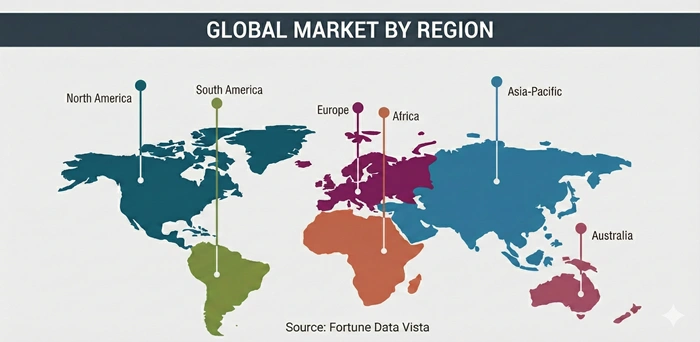
Regional Insights
Asia Pacific
Asia Pacific Is the Undisputed Leader in the Recycled Lead Market, Powered by the World's Largest Lead-Acid Battery Ecosystem and Rapidly Growing Industrial Battery Demand
Asia Pacific holds the largest share of the global recycled lead market, accounting for approximately 40–43% of global revenue in 2025, and is projected to maintain regional dominance throughout the forecast period with a CAGR of approximately 3.7% from 2026 to 2033. China is the defining force in the region — it is simultaneously the world's largest producer and consumer of lead-acid batteries and secondary lead, with its recycling ecosystem spanning thousands of licensed and unlicensed facilities across coastal and inland provinces. The Chinese government's "green fence" environmental campaigns have progressively shut down smaller, informal smelters and redirected scrap battery flows to larger, compliant operators, raising the average technical standard of the country's lead recycling industry and concentrating market share among larger players. Key companies operating in Asia Pacific include Yuguang Gold & Lead Co., Ltd. (China), Gravita India Ltd. (India), and KOREAZINC (South Korea), which collectively process significant volumes of secondary lead for both domestic battery manufacturing and regional export markets.
India is the fastest-growing market within Asia Pacific for recycled lead, with its secondary lead sector expanding rapidly alongside the country's booming two-wheeler EV market and telecom infrastructure expansion. The Bureau of Indian Standards has strengthened regulations for battery recycling facilities, pushing informal recyclers toward compliance and creating growth opportunities for organized players like Gravita India, which operates a pan-India collection and recycling network. South Korea and Japan maintain highly efficient and well-regulated secondary lead recycling sectors, characterized by high collection rates, advanced smelting technology, and close integration with domestic battery manufacturers. The region's combination of massive scale, growing regulatory formalization, and diverse application demand makes Asia Pacific the strategic center of gravity for the global secondary lead industry.
North America
North America Is the Fastest-Growing Region in the Recycled Lead Market, Driven by Advanced Collection Infrastructure, Tightening Environmental Standards, and Grid Storage Investment
North America is the fastest-growing regional market in the global recycled lead market, projected to register a CAGR of approximately 4.2–4.5% from 2026 to 2033, underpinned by a combination of mature collection infrastructure, high consumer recycling participation, and rising investment in lead-acid-based grid energy storage. The United States leads the region, where lead-acid battery collection rates regularly exceed 95% — one of the highest recycling rates of any industrial material — driven by refundable core deposit schemes at retail level and stringent EPA regulations governing battery disposal. The region's automotive sector, which is among the world's largest by total vehicle population, provides a massive and predictable supply of end-of-life battery scrap that sustains high recycler utilization rates year-round. Leading companies with strong North American operations include Clarios International (US/global), ECOBAT Technologies (UK/US), The Doe Run Company (US), and Aqua Metals (US), the latter of which is advancing commercial-scale clean-process recycling technology at its Nevada facility.
The broader North American market is also benefiting from the growing deployment of lead-acid batteries in grid-scale and commercial energy storage applications. As utility companies seek cost-effective energy storage solutions for frequency regulation and peak shaving, the proven reliability, recyclability, and lower upfront cost of lead-acid systems — particularly Advanced Lead-Acid (VRLA and TPPL) batteries — are supporting incremental demand beyond traditional automotive applications. Canada's mining sector and Mexico's growing automotive manufacturing base are also contributing to regional secondary lead supply growth. The combination of robust collection systems, advanced recycling technology investment, favorable policy environments, and diversifying demand is making North America the most dynamically growing major regional market in the global recycled lead industry.
Report Customization: Region-Wise and Country-Wise Insights
This Report Is Available with Full Geographic Customization — Enabling Businesses to Access Precise, Country-Level Intelligence on the Recycled Lead Market Tailored to Their Specific Strategic Priorities
This report on the recycled lead market offers comprehensive region-wise and country-wise customization options for clients who require more granular geographic intelligence than a standard global report can provide. Whether the objective is to analyze lead battery collection infrastructure in a specific country, benchmark recycling technology adoption across European markets, or assess regulatory compliance requirements in emerging Asian economies, our research team can deliver a fully tailored version of this study built around your chosen geography and market focus.
Customized reports are available for the following regions and countries, each providing in-depth market sizing, application demand analysis, competitive landscape, regulatory environment review, technology adoption trends, and growth opportunities specific to that market and the recycled lead industry:
North America
-
U.S. — Detailed analysis of battery collection infrastructure, key recycler profiles (Clarios, ECOBAT, Doe Run), EPA regulatory framework, and clean-process recycling technology adoption
-
Canada — Mining sector scrap lead flows, automotive battery recycling volumes, and provincial environmental regulation review
-
Mexico — Automotive manufacturing sector battery demand, cross-border scrap trade dynamics, and regulatory formalization trends
Europe
-
U.K. — ECOBAT Technologies and UK battery producer responsibility scheme analysis, post-Brexit regulatory changes
-
Germany — Automotive OEM battery procurement from secondary lead, advanced smelter technology investment, and EU Battery Regulation compliance
-
France — Recyclex SA operations, rolling and extruded secondary lead demand, construction sector applications
-
Italy — Industrial battery demand, construction and cable sheathing lead consumption, and recycling infrastructure overview
-
Rest of Europe — Nordic, Eastern European, and Benelux secondary lead market dynamics, including Boliden operations
Asia Pacific
-
China — Government policy on informal smelter closures, Yuguang Gold & Lead competitive analysis, e-bike battery recycling volumes, and export trade flows
-
India — Gravita India network analysis, BIS regulatory evolution, EV two-wheeler battery recycling projections, and PLI scheme impact
-
Japan — Regulated secondary lead industry, Panasonic and GS Yuasa battery recycling integration, and advanced smelting technology adoption
-
South Korea — KOREAZINC competitive positioning, domestic battery demand, and secondary lead export analysis
-
Australia — Mining-linked scrap lead flows, grid energy storage battery demand, and regulatory compliance landscape
-
Rest of Asia Pacific — Southeast Asian battery collection infrastructure, Malaysia and Indonesia recycling sector analysis
Latin America
-
Brazil — Automotive sector battery recycling volumes, grid storage demand, and regulatory framework
-
Argentina — Industrial battery demand and emerging recycling sector development opportunities
-
Rest of Latin America — Regional scrap trade flows and off-grid solar battery recycling potential
Middle East & Africa
-
UAE — Data center backup power and construction sector secondary lead demand, with regulatory overview
-
Saudi Arabia — Vision 2030 industrial diversification and battery recycling infrastructure investment
-
Rest of MEA — Sub-Saharan Africa off-grid solar battery demand, informal recycling sector formalization, and South Africa mining applications
Top Key Players
-
Clarios International Inc. (United States)
-
ECOBAT Technologies Ltd. (United Kingdom)
-
Gravita India Limited (India)
-
The Doe Run Company (United States)
-
Boliden Group (Sweden)
-
Yuguang Gold & Lead Co., Ltd. (China)
-
KOREAZINC Co., Ltd. (South Korea)
-
Nyrstar NV (Belgium)
-
Recyclex SA (France)
-
Aqua Metals, Inc. (United States)
-
SAR Recycle Pvt. Ltd. (India)
-
Exide Industries Ltd. (India)
-
Mayco Industries LLC (United States)
-
Glencore plc (Switzerland)
-
Teck Resources Limited (Canada)
Recent Developments
-
2025 — Clarios International announced a multi-year capacity expansion investment across its North American and European lead recycling facilities, increasing secondary lead output by approximately 10% to meet growing demand from start-stop vehicle battery programs and grid-scale backup power applications.
-
2024 — Aqua Metals, Inc. completed a significant upgrade to its AquaRefining® system at its Nevada Innovation Center, demonstrating commercial viability of its room-temperature, zero-smelting lead recycling technology at industrial scale, marking a key milestone in clean-process secondary lead production.
-
2025 — Gravita India Limited expanded its secondary lead recycling network by commissioning two new facilities in strategic locations in India's northern and western industrial corridors, adding capacity to capture growing lead-acid battery scrap from the rapidly expanding Indian two-wheeler EV and telecom backup power markets.
-
2024 — ECOBAT Technologies completed a strategic acquisition of a regional battery collection and processing business in Central Europe, strengthening its pan-European secondary lead supply chain and improving its ability to serve automotive battery OEMs across the EU with certified high-purity recycled lead.
-
2024–2025 — Boliden Group invested in process upgrades at its Bergsöe secondary lead smelter in Sweden, implementing new emissions abatement technology to meet updated EU Industrial Emissions Directive requirements, reinforcing its position as a leading sustainable secondary metals producer in Europe.
Market Trends
Rising Demand for High-Purity Secondary Lead and the Gradual Shift Toward Cleaner Recycling Processes Are the Two Most Defining Trends Reshaping the Recycled Lead Market Heading Into 2033
The most notable trend evolving in the recycled lead market is the growing demand for high-purity secondary lead that meets the stringent specifications required for advanced battery chemistries, specialty electronics applications, and medical radiation shielding. As lead-acid battery technology itself advances — with thin-plate pure lead (TPPL) batteries for start-stop and mild hybrid applications requiring higher-grade material inputs than standard SLI batteries — the premium for certified high-purity secondary lead is rising. This trend is rewarding recyclers who invest in refining and quality control capabilities and creating a quality-differentiated tier within what was historically a relatively undifferentiated commodity market. Processors that can consistently certify purity levels and trace material provenance are finding access to premium contract pricing that insulates them from commodity price cycles.
The second major trend is the gradual but unmistakable shift in the market's environmental standards profile. Regulatory pressure from the EU, EPA, and equivalent bodies in China and India is progressively raising the bar for emissions performance at lead smelting facilities, increasing operating costs for conventional pyrometallurgical operators and accelerating interest in cleaner alternative technologies. Extended Producer Responsibility schemes are also evolving to include not just collection mandates but lifecycle carbon footprint requirements, pushing battery manufacturers to seek secondary lead suppliers who can demonstrate low-carbon production credentials. This environmental quality trend is reshaping competitive dynamics in the recycled lead market, giving operators with clean-process capabilities a growing regulatory and reputational advantage that will strengthen their market positions through 2033 and beyond.
Segments Covered in the Report
-
By Process Type
-
Pyrometallurgy Process
-
Solid Phase Electrolytic Reduction Process
-
Wet Smelting Process
-
-
By Application
-
Battery (Automotive SLI, Industrial, Stationary Energy Storage)
-
Rolls & Extruded Products
-
Pigments & Other Compounds
-
Radiation Shielding
-
Cable Sheathing
-
Others
-
-
By End-User
-
Automotive
-
Construction
-
Electronics & Telecommunications
-
Utilities & Power Backup
-
Renewable Energy Storage
-
Others
-
-
By Source
-
Post-Consumer Batteries
-
Industrial Scrap
-
Manufacturing Scrap
-
-
By Purity Level
-
High Purity Lead
-
Standard Purity Lead
-
-
By Region
-
North America (U.S., Canada, Mexico)
-
Europe (U.K., Germany, France, Italy, Rest of Europe)
-
Asia Pacific (China, India, Japan, South Korea, Australia, Rest of Asia Pacific)
-
Latin America (Brazil, Argentina, Rest of Latin America)
-
Middle East & Africa (UAE, Saudi Arabia, Rest of MEA)
-
❝ Built for Every Level — From Startups to Industry Giants ❞
Here Is Exactly How This Report Works for You
-
Tier 1 battery manufacturers, automotive OEMs, and large-scale lead recyclers will find precise competitor revenue benchmarks, secondary lead sourcing cost analyses, and regional supply-demand balance data that enables them to optimize procurement strategies, identify preferred supplier relationships, and assess expansion or M&A targets with confidence — turning market intelligence into measurable competitive advantage in the recycled lead market.
-
For investors, mid-level processors, and growth-stage recycling companies, this report delivers a granular view of how global geopolitical dynamics — including trade tariffs on scrap metals, China's environmental crackdowns, and cross-border battery scrap regulations — are reshaping supply chains and margin structures, so your investment and operational decisions are grounded in the real-world forces driving the secondary lead industry.
-
Startups and niche technology developers in advanced lead recycling, battery collection logistics, and secondary lead refining will gain from detailed analysis of regulatory entry requirements, application segment growth rates, and the technology adoption roadmap in key markets — the intelligence needed to position a new entrant, close investment rounds, and build customer pipelines among the decision-makers who control the world's secondary lead supply chain.
Frequently Asked Questions:
Answer: The global recycled lead market was valued at USD 14.73 billion in 2025 and is projected to reach USD 19.11 billion by 2033. The market is expected to grow at a CAGR of 3.6% from 2026 to 2033, supported by consistent demand from the lead-acid battery and automotive sectors.
Answer: The battery application segment is the dominant driver of the recycled lead market, accounting for approximately 75–80% of total consumption, with automotive SLI batteries being the single largest source of both demand and feedstock supply. Industrial stationary batteries, UPS systems, and renewable energy storage are important secondary applications contributing to consistent market growth.
Answer: Asia Pacific leads the global recycled lead market with approximately 40–43% of total revenue, driven by China's massive lead-acid battery production and consumption base, alongside India's rapidly growing secondary lead sector. High vehicle ownership rates, expanding industrial sectors, and rising investment in formal recycling infrastructure are the primary factors sustaining the region's leading position.
Answer: Environmental regulations such as the US EPA's battery take-back mandates, the EU Batteries Regulation, and China's hazardous waste management policies collectively ensure high-quality battery scrap flows to licensed recyclers, sustaining feedstock supply for the recycled lead market. These frameworks also raise compliance barriers that protect established operators and incentivize investment in cleaner recycling technologies with lower emissions.
Answer: The primary challenge for the recycled lead market is the gradual substitution of lead-acid batteries by lithium-ion technology in premium EV and consumer electronics applications, which creates a long-term ceiling on demand growth in the most developed markets. Rising environmental compliance costs, lead price volatility, and competition from informal unregulated recyclers in developing economies are additional constraints that established operators must actively manage.