
Respiratory Care Devices Market Overview
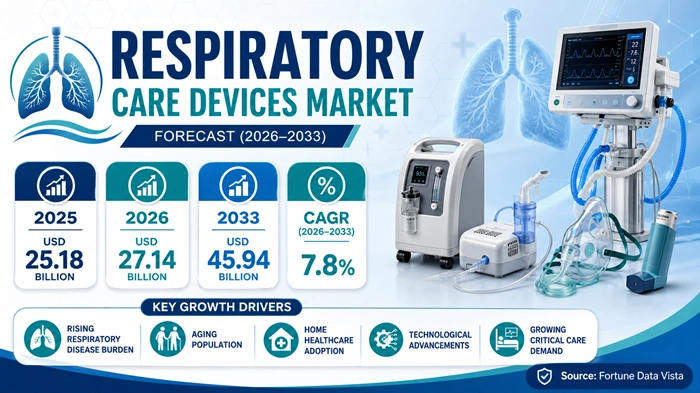
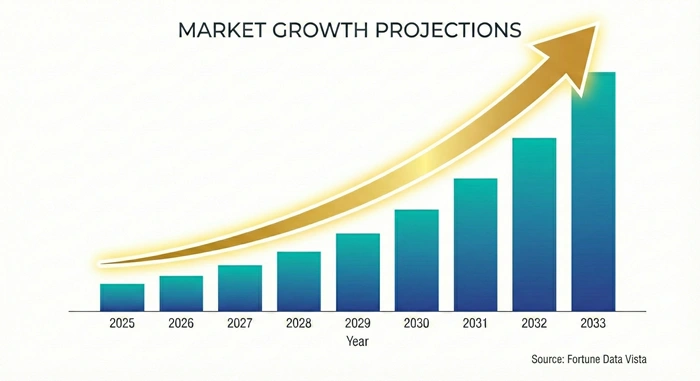
The global respiratory care devices market size is valued at USD 25.18 billion in 2025 and is predicted to increase from USD 27.14 billion in 2026 to approximately USD 45.94 billion by 2033, growing at a CAGR of 7.8% from 2026 to 2033.
Respiratory health has become one of the defining public health priorities of the modern era — and the devices that help patients breathe, monitor lung function, and manage chronic respiratory conditions are at the center of a major expansion in global healthcare investment. COPD, asthma, sleep apnea, and infectious respiratory diseases collectively affect hundreds of millions of people worldwide, and the aging global population, persistently high air pollution levels, and the lingering legacy of the COVID-19 pandemic have all significantly intensified demand for ventilators, CPAP machines, oxygen concentrators, nebulizers, and advanced respiratory monitoring systems. The respiratory care devices market is expanding steadily and durably, driven by both chronic disease burden and the rapid shift toward home-based respiratory therapy that is bringing sophisticated clinical devices out of hospital wards and into patients' homes across every major global market.
AI Impact on the Respiratory Care Devices Industry
Artificial Intelligence Is Transforming Respiratory Care Devices from Passive Treatment Tools into Intelligent Health Management Systems — Enabling Predictive Disease Monitoring, Personalized Therapy Optimization, and Remote Patient Management That Reduce Hospitalizations and Improve Long-Term Outcomes
Artificial intelligence is rapidly reshaping the respiratory care devices market by embedding data intelligence directly into the devices that patients and clinicians rely on every day. Modern CPAP and BiPAP devices from ResMed and Philips Respironics now use machine learning algorithms to continuously analyze breathing patterns during sleep — automatically adjusting pressure delivery in real time, detecting mask leakage events, identifying apnea severity changes, and generating clinical-grade compliance reports that physicians can review remotely. This shift from passive device delivery to active AI-powered therapy management is improving adherence rates, enabling earlier clinical intervention when therapy parameters deteriorate, and reducing the costly in-clinic follow-up visits that have historically been required to optimize ventilation therapy for COPD and sleep apnea patients.
Beyond individual device intelligence, AI is enabling a new generation of connected respiratory care ecosystems where device data from thousands of patients is aggregated on cloud platforms, analyzed with population-level machine learning models, and used to generate predictive alerts when individual patients show early signs of disease exacerbation before their symptoms become clinically severe enough to require emergency hospitalization. ResMed's AirView platform, Philips' EncoreAnywhere, and Medtronic's cloud-connected respiratory monitoring systems are building these capabilities at commercial scale — demonstrating that AI-powered remote patient management programs can measurably reduce COPD-related emergency department visits, lower hospital readmission rates, and improve overall healthcare resource utilization in ways that are creating strong value propositions for hospital systems and payers who are increasingly willing to invest in AI-enabled respiratory care infrastructure.
Growth Factors
Escalating Global Chronic Respiratory Disease Burden, Accelerating Adoption of Home-Based Respiratory Therapy, and Post-COVID Healthcare System Investment in Respiratory Infrastructure Are the Three Most Powerful Commercial Growth Drivers of the Respiratory Care Devices Market
The structural growth foundation of the respiratory care devices market rests on the extraordinary and growing global burden of chronic respiratory disease. COPD alone affects over 300 million people worldwide and is the third leading cause of death globally — a disease that requires long-term, continuous respiratory therapy using oxygen concentrators, nebulizers, and non-invasive ventilators that patients must use daily, often for the remainder of their lives. Asthma affects over 260 million people, sleep apnea an estimated 936 million adults in various severities, and tuberculosis and post-COVID respiratory sequelae are adding tens of millions of additional patients to the global respiratory care device demand pool every year. The aging of the global population is intensifying this disease burden, as respiratory conditions disproportionately affect individuals over 65 — a demographic that is growing rapidly in North America, Europe, Japan, and increasingly in China and India — creating a self-reinforcing cycle of growing patient populations that will sustain demand for respiratory care devices across the full forecast horizon and beyond.
The accelerating shift of respiratory therapy from hospital and clinic settings to the home is one of the most commercially consequential structural trends in the respiratory care devices market — fundamentally expanding the addressable patient population from those with access to hospital-based respiratory programs to the far larger population of patients who require ongoing therapy but prefer to manage their conditions at home. Advances in device miniaturization and portability — including travel-sized oxygen concentrators, compact CPAP devices that fit in a carry-on bag, and handheld smart nebulizers that synchronize with mobile health apps — are making home respiratory therapy more accessible and adherence-friendly than hospital-grade alternatives. Healthcare system economics are strongly reinforcing this shift, as home-based respiratory therapy costs substantially less per patient per year than equivalent hospital-administered care — creating financial incentives for insurers, health systems, and government payers worldwide to actively encourage and reimburse home respiratory device adoption.
Market Outlook
The Respiratory Care Devices Market Is Entering a Period of Sustained, Durable Growth Powered by AI-Connected Home Care Devices, Expanding Global Disease Screening Programs, and the Growing Clinical Integration of Remote Respiratory Monitoring Into Standard Chronic Disease Management Protocols
The medium-term outlook for the respiratory care devices market is characterized by the progressive convergence of several reinforcing commercial trends that will sustain above-average growth through 2033 and beyond. The rapid adoption of AI-connected home respiratory devices — CPAP machines, home ventilators, smart nebulizers, and pulse oximeters that transmit data continuously to clinical monitoring platforms — is transforming respiratory care from a periodic clinical encounter model to a continuous care model where clinicians have real-time visibility into patient therapy adherence, device performance, and disease trajectory. This transition creates a more compelling commercial proposition for healthcare systems by enabling early intervention that prevents costly acute exacerbations, reduces emergency care utilization, and improves patient-reported quality of life — outcomes that are increasingly backed by clinical evidence and are strengthening reimbursement decisions for connected respiratory care programs globally.
Looking further toward 2033, the respiratory care devices market will be shaped by the commercial maturation of closed-loop ventilation systems — devices that use AI to automatically adjust ventilation parameters in real time based on continuous patient monitoring data, without requiring manual clinician intervention — and by the expanded integration of respiratory monitoring into broader chronic disease management platforms that track the interactions between respiratory health, cardiovascular status, sleep quality, and metabolic function. The growing recognition that respiratory health is not an isolated clinical domain but deeply interconnected with cardiovascular, neurological, and metabolic health is driving demand for multimodal monitoring solutions and integrated therapy platforms that address the full clinical complexity of patients who frequently carry multiple comorbid conditions alongside their primary respiratory diagnosis.
Expert Speaks
-
"ResMed's investment in digital health and AI-powered respiratory monitoring has fundamentally changed the commercial model of our business — transitioning from a device manufacturer to a comprehensive digital health company where the data, software, and care management services generated by our 17 million cloud-connected devices create an ecosystem of recurring value that hardware products alone cannot deliver. The respiratory care devices market is experiencing a structural transformation driven by the shift to value-based care, and ResMed is uniquely positioned to lead it — with the world's largest connected respiratory patient database and the AI capabilities to turn that data into clinical insights that improve outcomes at scale." — Mick Farrell, CEO, ResMed Inc.
-
"Philips' respiratory care portfolio — spanning home ventilation, hospital ventilators, sleep therapy systems, and oxygen concentrators — is at the core of our long-term healthcare innovation strategy, and the integration of AI-powered monitoring and telehealth connectivity into these devices is delivering measurable improvements in patient outcomes that are creating strong commercial differentiation in a competitive and growing market. The respiratory care devices market is being reshaped by the convergence of device intelligence, connectivity, and patient data analytics — a convergence that Philips is well positioned to lead through our combined hardware, software, and clinical informatics capabilities across the full spectrum of care settings from ICU to home." — Roy Jakobs, CEO, Koninklijke Philips N.V.
-
"Medtronic's respiratory and monitoring solutions portfolio serves patients across the full acuity spectrum — from ICU ventilator-dependent patients to community-based COPD patients managing their condition at home — and the common thread across all of these settings is the growing role of connected intelligence in making respiratory therapy more personalized, more effective, and more efficient for patients, clinicians, and healthcare systems simultaneously. The respiratory care devices market's transition to value-based care models is creating strong commercial tailwinds for companies like Medtronic that can demonstrate the clinical and economic outcomes improvements that justify the reimbursement premiums that AI-enabled respiratory care devices command." — Geoff Martha, Chairman & CEO, Medtronic plc
Key Report Takeaways
-
North America dominates the global respiratory care devices market, holding approximately 42% of total revenue in 2025, driven by the United States' world-leading prevalence of COPD, sleep apnea, and obesity-related respiratory conditions, a deeply developed private and public reimbursement ecosystem for home respiratory devices, the presence of leading companies including ResMed, Medtronic, GE Healthcare, and Inogen, and exceptionally high adoption rates of connected respiratory monitoring platforms that are driving premium device sales across hospital and homecare segments.
-
Asia Pacific is the fastest growing regional market for respiratory care devices, propelled by China's enormous and rapidly growing COPD patient population (estimated at over 100 million individuals), India's combination of high air pollution exposure and rapid healthcare infrastructure development, Japan's aging population driving home respiratory therapy adoption, and the expanding healthcare capital expenditure programs across South Korea, Australia, and Southeast Asian markets that are improving access to advanced respiratory care technology across the region.
-
Therapeutic devices represent the largest product type segment, contributing approximately 58% of total respiratory care devices market revenue in 2025, reflecting the essential clinical role of ventilators, CPAP and BiPAP machines, nebulizers, and oxygen concentrators in managing the chronic respiratory conditions that collectively represent the market's largest disease burden — a segment driven by both hospital-based acute care demand and the rapidly growing home-based chronic disease management market where long-term device utilization creates durable, recurring revenue streams for device manufacturers and distributors.
-
COPD is the dominant application segment, accounting for approximately 34% of market revenue in 2025 as the world's most prevalent serious chronic respiratory condition — requiring patients to use oxygen concentrators, nebulizers, and non-invasive ventilators continuously for years or decades — creating the highest-volume, most durable device demand category in the respiratory care devices market and driving proportionally large investment in COPD-specific device innovation and connected care platform development by leading manufacturers.
-
Homecare settings are the fastest growing end-user segment, expected to grow at a CAGR exceeding 9.5% through 2033, driven by patients' strong preference for managing chronic respiratory conditions in the comfort of their homes, the improving portability and usability of home respiratory devices, expanding reimbursement for home-based respiratory therapy across major healthcare markets, and healthcare system financial incentives to shift stable chronic disease management from expensive hospital outpatient programs to lower-cost community and home-based care pathways.
-
Connected and AI-enabled respiratory monitoring devices are the highest-growth technology segment, with smart inhalers, cloud-connected CPAP devices, and remote patient monitoring systems projected to grow at a CAGR exceeding 12% through 2033, as the commercial value of device-generated clinical data — for improving therapy adherence, enabling predictive intervention, and satisfying value-based care contract requirements — becomes increasingly central to purchasing decisions made by hospital systems, homecare providers, and government health programs globally.
Market Scope
| Parameter | Details |
|---|---|
| Market Size by 2033 | USD 45.94 Billion | Market Size by 2026 | USD 27.14 Billion | Market Size by 2025 | USD 25.18 Billion | Market Growth Rate from 2026 to 2033 | CAGR of 7.8% | Dominating Region | North America | Fastest Growing Region | Asia Pacific | Segments Covered | Product Type, Device Type, Application, End User | Regions Covered | North America, Europe, Asia Pacific, Latin America, Middle East & Africa |
Market Dynamics
Drivers Impact Analysis
Rising Global COPD and Sleep Apnea Prevalence, Expanding Insurance Reimbursement for Home Respiratory Devices, and the Post-COVID Surge in Healthcare System Investment in Respiratory Infrastructure Are Creating a Structurally Strong Commercial Demand Foundation for the Respiratory Care Devices Market
| Driver | ≈ % Impact on CAGR Forecast | Geographic Relevance | Impact Timeline |
|---|---|---|---|
| Rising global burden of COPD, asthma, sleep apnea, and post-COVID respiratory sequelae | ~38% | Global — especially North America, Europe, Asia Pacific | Short to Long Term |
| Accelerating adoption of home-based respiratory therapy driving device demand beyond hospital settings | ~30% | Global — especially North America, Europe | Short to Long Term |
| Expanding reimbursement for AI-connected home respiratory devices and remote monitoring programs | ~20% | North America, Europe | Short to Medium Term |
| Post-COVID healthcare system investment in respiratory care infrastructure and stockpiling | ~12% | Global | Short to Medium Term |
The post-COVID healthcare landscape has created lasting structural improvements in the respiratory care devices market that extend well beyond the acute pandemic demand surge for ventilators and oxygen systems. Healthcare systems across North America, Europe, and Asia Pacific have significantly increased their strategic stockpiles of critical respiratory devices, established permanent procurement frameworks for emergency respiratory equipment replenishment, and invested in the IT infrastructure required to support connected respiratory monitoring at scale — investments that are sustaining elevated baseline demand for respiratory devices even as the immediate pandemic emergency has receded. Additionally, the clinical recognition of post-COVID respiratory sequelae — millions of long COVID patients experiencing persistent breathlessness, reduced lung capacity, and sleep-disordered breathing as long-term consequences of COVID-19 infection — has added a substantial new patient cohort to the global respiratory care device demand base that was not anticipated in pre-pandemic market projections.
The expanding clinical evidence base for connected respiratory therapy — where AI-enabled CPAP compliance monitoring, remote COPD management programs, and smart inhaler adherence tracking are demonstrating measurable reductions in hospital admissions, emergency visits, and disease progression — is progressively strengthening the reimbursement case for premium connected devices in the respiratory care devices market. Medicare's Advancing All-Payer Disease Management initiative in the United States, NHS digital respiratory care programs in the United Kingdom, and equivalent national digital health investment programs across France, Germany, and Australia are creating funded pathways for connected respiratory device adoption that reduce the out-of-pocket cost barrier for patients while simultaneously providing device manufacturers with access to large public-payer customer channels that offer durable, high-volume procurement contracts.
Restraints Impact Analysis
High Device Costs Limiting Access in Price-Sensitive Emerging Markets, Regulatory Approval Complexity for AI-Enabled Respiratory Devices, and Supply Chain Vulnerabilities for Critical Electronic Components Are the Primary Constraints on Faster Respiratory Care Devices Market Growth
| Restraint | ≈ % Impact on CAGR Forecast | Geographic Relevance | Impact Timeline |
|---|---|---|---|
| High device costs restricting access and adoption in price-sensitive developing market healthcare systems | ~42% | Asia Pacific (emerging), Latin America, Middle East & Africa | Short to Medium Term |
| Regulatory complexity and evolving AI medical device approval requirements extending product development timelines | ~32% | Global — especially for connected and AI-enabled devices | Short to Long Term |
| Supply chain vulnerabilities for semiconductors and electronic components critical to respiratory device manufacturing | ~26% | Global | Short to Medium Term |
Device affordability remains one of the most significant barriers to realizing the full commercial potential of the respiratory care devices market in price-sensitive healthcare environments across South Asia, Southeast Asia, Latin America, the Middle East, and Sub-Saharan Africa — regions where the disease burden of respiratory conditions including COPD and TB is severe but where per-capita healthcare spending is insufficient to support widespread access to the premium-priced connected devices that dominate revenue in high-income markets. A hospital-grade home ventilator costs USD 3,000–15,000 in typical market pricing, a connected CPAP system USD 700–1,500, and an industrial oxygen concentrator USD 500–2,500 — price points that are beyond the financial reach of the majority of patients in low- and middle-income countries without significant insurance subsidy or government procurement support. While Chinese and Indian manufacturers including BMC Medical, Yuwell, and Nidek Medical are producing lower-cost alternatives that are expanding access, the quality, connectivity, and regulatory compliance of low-cost alternatives often falls short of the standards required for premium clinical applications.
The regulatory environment for AI-enabled respiratory care devices is evolving rapidly but inconsistently across major markets — creating compliance complexity and development timeline uncertainty that is constraining the speed at which leading manufacturers can commercialize their most advanced connected therapy and monitoring innovations. The FDA's Software as a Medical Device (SaMD) regulatory framework, the EU MDR and AI Act requirements for machine learning-powered respiratory monitoring algorithms, and the divergent digital health device regulatory frameworks across China (NMPA), Japan (PMDA), and other key markets require manufacturers to maintain parallel regulatory development programs for different jurisdictions — adding cost, time, and risk to the product development pipeline for AI-enabled respiratory devices in ways that disproportionately affect mid-sized manufacturers with more limited regulatory affairs resources than the largest global players.
Opportunities Impact Analysis
Smart Inhaler Adoption for Asthma and COPD Management, Wearable Respiratory Monitoring Technology, and Market Penetration of Home Respiratory Therapy in Emerging Healthcare Economies Represent the Most Commercially Significant Expansion Opportunities in the Respiratory Care Devices Market
| Opportunity | ≈ % Impact on CAGR Forecast | Geographic Relevance | Impact Timeline |
|---|---|---|---|
| Smart inhaler adoption and digital adherence monitoring for asthma and COPD management | ~38% | North America, Europe, Asia Pacific | Short to Long Term |
| Wearable and continuous respiratory monitoring technology integration into standard care protocols | ~34% | North America, Europe | Short to Long Term |
| Emerging market penetration with affordable connected home respiratory therapy systems | ~28% | Asia Pacific, Latin America, Middle East & Africa | Medium to Long Term |
Smart inhalers — traditional metered-dose and dry powder inhalers equipped with electronic sensors, Bluetooth connectivity, and mobile health app integration that tracks medication delivery, monitors inhaler technique, and provides adherence data to patients and physicians — represent one of the highest-value near-term commercial opportunities in the respiratory care devices market. Poor inhaler adherence is one of the leading causes of uncontrolled asthma and COPD exacerbations globally — estimated to contribute to 50–60% of preventable hospitalizations in respiratory disease patients — and smart inhalers address this problem directly by making adherence visible, measurable, and improvable through behavioral reminders and clinical feedback loops. Companies including Adherium, Propeller Health (ResMed), Hailie (Adherium-AstraZeneca), and Pneumo Wave are commercializing smart inhaler platforms that are demonstrating measurable adherence improvement and exacerbation reduction in clinical studies — building the evidence base that is progressively driving payer and hospital adoption across the respiratory care devices market.
The expansion of homecare respiratory therapy in large emerging markets — particularly China, India, Brazil, and the growing middle-class healthcare markets of Southeast Asia and the Middle East — represents a transformational long-term growth opportunity for the respiratory care devices market. As household income levels rise, private health insurance penetration expands, and consumer awareness of respiratory health grows in these markets, the demand for CPAP devices for sleep apnea, home oxygen concentrators for COPD, and nebulizers for asthma will scale from relatively limited penetration to the mass-market adoption levels seen in North American and European markets — creating a massive incremental demand pool that will sustain respiratory care device market growth well beyond the 2033 forecast horizon.
Segment Analysis
By Product Type
Therapeutic Devices Dominate the Respiratory Care Devices Market Today While Monitoring and Diagnostic Devices Are Driving the Most Commercially Significant New Growth as Connected Care Transforms Respiratory Disease Management
Therapeutic devices represent the dominant product type segment in the respiratory care devices market, accounting for approximately 58% of total revenue in 2025 and growing at a CAGR of approximately 7.6% through 2033, reflecting the essential clinical requirement for devices that actively deliver therapy — oxygen, medicated aerosols, positive airway pressure, mechanical ventilation — to the enormous and growing global population of patients managing chronic and acute respiratory conditions. North America leads this segment with a dominant share, driven by exceptionally high CPAP and BiPAP penetration for sleep apnea — the United States has the world's highest diagnosed sleep apnea prevalence and the most commercially developed home CPAP market — combined with widespread hospital and homecare ventilator adoption for COPD and post-COVID respiratory management. Leading companies in this segment include ResMed (market leader in CPAP and home ventilation, headquartered in San Diego, CA), Philips Respironics (CPAP, hospital ventilators, and oxygen systems), and Medtronic (hospital ventilators and high-flow oxygen therapy) — each maintaining large commercial infrastructure and distribution networks across North American hospital, homecare, and sleep clinic customer segments. The therapeutic devices segment benefits from the chronic, lifelong nature of most respiratory conditions it serves — patients with COPD, sleep apnea, and neuromuscular respiratory failure require device-dependent therapy continuously, creating recurring consumable, accessory, and device replacement revenue streams that provide device manufacturers and distributors with highly predictable, durable commercial income.
Monitoring and diagnostic devices account for approximately 25% of total respiratory care devices market revenue in 2025 and are growing at a CAGR of approximately 8.9% through 2033 — the fastest growth rate among the three product type segments — as the clinical integration of continuous respiratory monitoring into both hospital critical care and home-based chronic disease management programs accelerates demand for spirometers, pulse oximeters, capnography monitors, and AI-enabled respiratory function assessment devices. Asia Pacific is the fastest growing region for respiratory monitoring device adoption, driven by the expanding critical care infrastructure across Chinese, Indian, and Southeast Asian hospitals that are upgrading their patient monitoring capabilities to meet international clinical quality standards, combined with rapidly growing consumer awareness of respiratory health monitoring in markets where smartphone-connected pulse oximeters and peak flow meters are gaining traction as preventive health management tools. Key companies active in this segment include Masimo Corporation (advanced pulse oximetry and capnography), Nihon Kohden (patient monitoring systems), Natus Medical (respiratory diagnostic systems), and Midmark (diagnostic spirometry) — alongside the major monitoring platform companies including GE Healthcare and Philips HealthCare that integrate respiratory monitoring as components of comprehensive patient monitoring solutions.
By End User
Hospitals and ICUs Lead End-User Revenue While Homecare Settings Are the Fastest Growing Segment Transforming the Structural Delivery Model of the Respiratory Care Devices Market
Hospitals and ICUs represent the largest end-user segment in the respiratory care devices market, accounting for approximately 47% of total revenue in 2025 and growing at a CAGR of approximately 6.8% through 2033, as the primary settings for acute respiratory failure management — including mechanical ventilation for critically ill patients, high-flow nasal oxygen therapy for COVID and pneumonia patients, and comprehensive respiratory monitoring in ICU environments — that require the most sophisticated and highest-cost devices in the market. North America and Europe jointly lead hospital respiratory device adoption, with the United States and major European markets maintaining the world's highest hospital critical care bed density and the most advanced respiratory therapy technology infrastructure. Drägerwerk AG (Germany) is the world's leading provider of ICU ventilators and anesthesia workstations for hospital use, with a large installed base across North American and European hospitals — alongside GE Healthcare (hospital monitoring and respiratory systems), Hamilton Medical (ICU ventilators), and Getinge (intensive care respiratory therapy) that collectively supply the majority of advanced hospital respiratory device revenue in the mature high-income market segment.
Homecare settings are the fastest growing end-user segment in the respiratory care devices market, projected to grow at a CAGR of approximately 9.5% through 2033 from approximately 30% of market revenue in 2025, driven by the structural shift of chronic respiratory disease management from hospital outpatient programs to home-based care that is being enabled by device miniaturization, connectivity improvements, and expanding reimbursement frameworks. The United States homecare respiratory market — served by distributors including AdaptHealth, Rotech Healthcare, and Lincare Holdings (Linde plc subsidiary) — is the world's largest, supported by Medicare's Home Oxygen Therapy and CPAP reimbursement programs that provide the commercial infrastructure for mass-market home respiratory device access. Asia Pacific is the fastest growing homecare respiratory market, particularly China and India where improving insurance coverage, growing consumer health awareness, and increasing availability of affordable home respiratory devices are driving adoption of CPAP for sleep apnea and home oxygen for COPD in millions of patients who previously lacked access to these therapies — representing a transformational commercial expansion of the homecare end-user segment within the respiratory care devices market across the forecast period.
Regional Insights
North America
North America Dominates the Global Respiratory Care Devices Market — Powered by the World's Largest COPD and Sleep Apnea Patient Populations, the Most Advanced Home Respiratory Therapy Reimbursement Infrastructure, and the Leading AI-Connected Device Innovation Ecosystem
ResMed's AI-Powered CPAP Platform, Medtronic's Hospital Ventilator Leadership, and the United States' Exceptionally Deep Home Oxygen Therapy Market Make North America the Undisputed Commercial Center of the Respiratory Care Devices Market
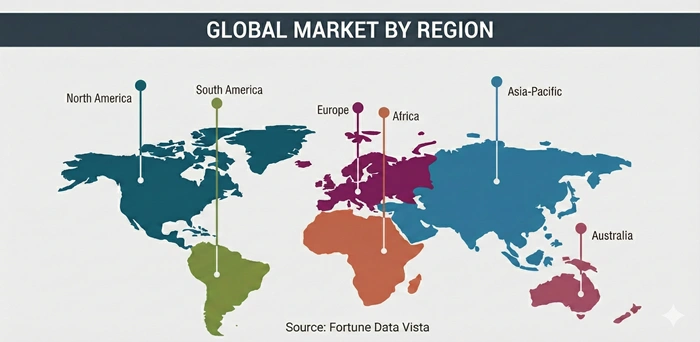
North America holds approximately 42% of global respiratory care devices market revenue in 2025, a commanding position built on the United States' status as the world's largest respiratory disease market by both patient population and healthcare spending per patient — driven by high obesity rates (a primary sleep apnea risk factor), extensive smoking history in older demographics, aging population dynamics, and the exceptionally high diagnostic rate for respiratory conditions supported by a well-resourced healthcare system with broad specialist respiratory care access. The region is projected to grow at a CAGR of approximately 7.2% from 2026 to 2033, sustained by the continued expansion of connected CPAP therapy adoption (the U.S. CPAP market is the world's largest and continues to grow as sleep apnea diagnostic rates improve), the ongoing shift of COPD management to home oxygen and home ventilation, and the progressive integration of AI-powered remote respiratory monitoring into standard COPD and asthma disease management programs. Key North American players including ResMed (market leader in CPAP and cloud-connected home ventilation), Inogen (portable oxygen concentrators), Natus Medical (respiratory diagnostics), and the U.S. operations of Philips Respironics and Medtronic collectively represent the world's most commercially developed respiratory device business ecosystem — supported by Medicare and commercial insurance reimbursement infrastructure that provides mass-market funding access for home respiratory device adoption at a scale unmatched in any other global market.
Canada's respiratory care market — driven by similar disease prevalence patterns to the U.S. and supported by provincial healthcare funding for home oxygen therapy — contributes meaningfully to North America's regional total, with major Canadian healthcare providers deploying connected respiratory monitoring programs that are generating clinical evidence supporting broader provincial government reimbursement. The North American respiratory devices market continues to attract significant corporate development investment, with the major device companies actively acquiring digital health and remote monitoring software assets to strengthen their connected care platforms and create competitive differentiation that pure hardware competitors cannot replicate.
Asia Pacific
Asia Pacific Is the Fastest Growing Regional Market for Respiratory Care Devices — Driven by China's 100 Million COPD Patients, India's Pollution-Driven Respiratory Disease Burden, and Rapidly Expanding Healthcare Infrastructure Investment Across the Region's Emerging Economies
BMC Medical, Yuwell, and Nidek Medical Are Building the Regional Manufacturing and Distribution Infrastructure That Is Making Advanced Respiratory Care Accessible to Hundreds of Millions of New Patients Across Asia Pacific
Asia Pacific is the fastest growing regional market in the respiratory care devices market, with a projected CAGR of approximately 9.8% from 2026 to 2033, and currently holds approximately 25% of global market revenue in 2025. China represents the dominant country within the region — home to the world's largest population of COPD patients, estimated at over 100 million individuals — and is rapidly expanding both hospital respiratory care infrastructure and home-based respiratory therapy adoption as the National Healthcare Commission's COPD management guidelines are progressively implemented across China's vast network of regional and community hospitals. Key Chinese companies including BMC Medical, Yuwell, and Hypnus Healthcare are developing AI-enabled CPAP and home ventilation systems that combine competitive hardware pricing with connectivity features targeting China's digitally sophisticated consumer and clinical markets — while international companies including ResMed and Philips maintain significant China market positions through local manufacturing partnerships and Chinese regulatory-compliant product variants. India's respiratory care devices market is growing exceptionally rapidly — driven by the world's highest ambient PM2.5 air pollution exposure in its major urban centers, a tuberculosis burden that creates persistent respiratory damage requiring long-term device support, and a rapidly expanding private hospital sector that is upgrading ICU respiratory therapy equipment to international standards to attract medical tourism and serve India's growing urban middle class.
Japan and South Korea represent significant and stable respiratory device markets within Asia Pacific — both countries having aging populations driving strong COPD and sleep apnea device demand, highly developed healthcare systems with strong reimbursement for respiratory therapy, and established relationships with international device leaders including Drägerwerk, ResMed, and Philips. Australia's respiratory care market — characterized by high CPAP adoption for sleep apnea (Australia has among the world's highest CPAP penetration rates globally) and strong hospital ventilator quality standards — is an important premium segment within the Asia Pacific respiratory care devices market that supports a growing connected respiratory care ecosystem anchored by ResMed's Australian headquarters and the strong Fisher & Paykel Healthcare (New Zealand) distribution network across the Australasian market.
Report Customization Available by Region and Country
Access Precisely Targeted Respiratory Care Devices Market Intelligence Through Fully Customized Region-Wise and Country-Wise Reports — Tailored to the Specific Disease Epidemiology, Reimbursement Environment, Regulatory Framework, and Competitive Landscape of Every Major Respiratory Healthcare Market Globally
This report is fully customizable by region and country, enabling respiratory device manufacturers, healthcare system procurement teams, homecare service providers, healthcare investors, and regulatory affairs professionals to access respiratory care devices market intelligence specifically tailored to the disease burden profile, reimbursement infrastructure, regulatory framework, and competitive dynamics of their target geographies. Customized reports deliver country-level market sizing, disease-specific device demand analysis, competitive device manufacturer profiling, reimbursement and regulatory environment assessment, and strategic growth opportunity mapping for each selected market.
Customized respiratory care devices market reports are available for all of the following regions and countries, offering detailed market analysis, disease epidemiology-based demand forecasting, competitive landscape profiling, reimbursement and regulatory environment assessment, and strategic market entry opportunity identification tailored to each specific geography:
North America
-
U.S. — Medicare and Medicaid home respiratory device reimbursement analysis, ResMed and Inogen competitive positioning, COPD and sleep apnea prevalence and device penetration benchmarking, FDA regulatory framework for connected respiratory devices, and U.S. homecare respiratory provider landscape
-
Canada — Provincial healthcare funding for home oxygen and CPAP therapy, Canadian respiratory disease prevalence analysis, regulatory pathway through Health Canada for respiratory medical devices, and cross-border product and distribution dynamics
-
Mexico — COFEPRIS regulatory framework for respiratory devices, Mexican hospital respiratory equipment upgrade investment, COPD and TB-related respiratory device demand, and affordable device segment competitive dynamics
Europe
-
U.K. — NHS respiratory care device procurement programs, MHRA regulatory framework for AI-enabled respiratory devices, Drägerwerk and Philips UK market analysis, post-Brexit device approval pathway implications, and U.K. COPD and sleep apnea management guideline device requirements
-
Germany — German statutory health insurance (GKV) reimbursement for home respiratory devices, Drägerwerk home market analysis, EOS GmbH and German hospital ventilator market, EU MDR and AI Act compliance implications for connected respiratory devices, and German COPD guideline device standards
-
France — ANSM regulatory framework for respiratory devices, French social security respiratory therapy reimbursement programs, Philips and Air Liquide Healthcare France market positions, and French COPD home oxygen therapy market analysis
-
Italy — Italian SSN respiratory device reimbursement policies, Italian COPD and asthma prevalence analysis, key respiratory device distributor landscape, and Italian hospital respiratory equipment procurement trends
-
Rest of Europe — Nordic hospital ventilator market analysis, Eastern European respiratory device market development, Benelux respiratory care ecosystem, and pan-European connected respiratory monitoring program development
Asia Pacific
-
China — NMPA regulatory pathway for respiratory devices, National COPD Management Program device implications, BMC Medical and Yuwell competitive analysis, Chinese hospital ventilator market development, and home CPAP market growth trajectory
-
India — CDSCO regulatory framework, India pollution-driven respiratory disease demand analysis, Nidek Medical and domestic device manufacturer profiles, PLI scheme medical device implications, and Indian homecare respiratory market development
-
Japan — PMDA regulatory framework for respiratory devices, Japanese COPD and sleep apnea market analysis, aging population device demand drivers, Fisher & Paykel and ResMed Japan market positions, and Japanese hospital respiratory technology standards
-
South Korea — MFDS regulatory environment, Korean respiratory device reimbursement analysis, leading Korean hospital system procurement patterns, and Korean medical device manufacturer respiratory segment profiles
-
Australia — TGA regulatory pathway, Australian CPAP market leadership analysis, ResMed Australasian headquarters operations, Fisher & Paykel Healthcare New Zealand cross-market analysis, and Australian home oxygen therapy reimbursement
-
Rest of Asia Pacific — Southeast Asian hospital respiratory equipment investment, Singapore medical hub respiratory device distribution, Taiwan respiratory device manufacturing sector, and Vietnam and Thailand emerging market respiratory care development
Latin America
-
Brazil — ANVISA regulatory framework for respiratory devices, Brazilian SUS and private insurance respiratory device reimbursement, major Brazilian hospital chain respiratory equipment procurement, and homecare oxygen therapy market development
-
Argentina — ANMAT regulatory environment, Argentine respiratory disease burden analysis, healthcare system respiratory device procurement constraints, and key respiratory device distributor profiles
-
Rest of Latin America — Colombian and Chilean respiratory device market development, regional hospital infrastructure upgrade respiratory equipment demand, and Latin American homecare respiratory therapy market emergence
Middle East & Africa (MEA)
-
UAE — UAE MOH regulatory framework, Dubai and Abu Dhabi hospital respiratory equipment investment, medical tourism respiratory care device implications, and premium connected device adoption in UAE private healthcare sector
-
Saudi Arabia — SFDA regulatory framework for respiratory medical devices, Saudi Vision 2030 hospital infrastructure development respiratory device demand, King Faisal Specialist Hospital procurement, and Saudi homecare respiratory therapy market development
-
Rest of MEA — South African respiratory disease burden and device market development, Egyptian and North African hospital respiratory equipment procurement, Israeli medical technology respiratory innovation, and Sub-Saharan African homecare respiratory market emergence
Top Key Players
-
ResMed Inc. (United States)
-
Koninklijke Philips N.V. (Philips Respironics) (Netherlands)
-
Medtronic plc (Ireland / United States)
-
Drägerwerk AG & Co. KGaA (Germany)
-
Fisher & Paykel Healthcare Limited (New Zealand)
-
GE Healthcare (United States)
-
Masimo Corporation (United States)
-
Getinge AB (Sweden)
-
Nihon Kohden Corporation (Japan)
-
Inogen, Inc. (United States)
-
Hamilton Medical AG (Switzerland)
-
Air Liquide Healthcare (France)
Recent Developments
-
In 2025, ResMed launched the AirSense 11 Elite CPAP system with enhanced AI-powered AutoRamp and AutoSet algorithms that dynamically personalize therapy pressure delivery based on individual patient breathing pattern analysis — reporting strong commercial adoption in the U.S. and European markets and growing physician preference for the system's clinical data transparency features, while simultaneously expanding its myAir patient engagement app to provide AI-generated personalized sleep coaching that is demonstrably improving CPAP adherence rates among newly diagnosed sleep apnea patients.
-
In 2025, Philips reached a significant milestone in resolving its respiratory device recall program — receiving FDA acceptance of its corrective action plans for affected CPAP, BiPAP, and ventilator products — and simultaneously announced a strategic refocus of its respiratory care business on connected hospital ventilation, home non-invasive ventilation, and oxygen therapy systems, with increased R&D investment in AI-enabled respiratory monitoring and the development of a next-generation hospital ventilator platform designed to meet the growing demand for intelligent, network-connected critical care respiratory management.
-
In 2024, Medtronic completed the acquisition of EOFlow, a Korean wearable drug delivery device company, to strengthen its connected therapeutic delivery capabilities — while simultaneously advancing its respiratory monitoring business through the commercial launch of an AI-powered capnography monitoring platform for hospital use that provides continuous end-tidal CO2 monitoring with predictive alert algorithms designed to identify early signs of respiratory deterioration in general ward patients before clinical symptoms become critical.
-
In 2025, Drägerwerk launched the Evita V800 hospital ventilator — its most advanced critical care ventilator platform — featuring AI-assisted lung-protective ventilation algorithms, integrated respiratory mechanics monitoring, and cloud connectivity for remote clinical decision support that enables intensivists to review patient ventilation status remotely and adjust therapy protocols through secure digital interfaces — reporting strong adoption among major European and North American academic medical centers that are upgrading their ICU respiratory technology infrastructure.
-
In 2024, Fisher & Paykel Healthcare expanded its Optiflow nasal high-flow therapy system to new indication approvals in Asian markets including Japan and South Korea, simultaneously launching clinical studies supporting the use of high-flow nasal oxygen for post-operative respiratory support that are building the evidence base for broader hospital adoption — while also reporting double-digit revenue growth in its homecare division, driven by the strong performance of its SleepStyle CPAP system in Asia Pacific markets where sleep apnea diagnostic rates are rapidly improving.
Market Trends
AI-Connected Home Respiratory Therapy and the Integration of Smart Inhalers Into Digital Chronic Disease Management Programs Are the Two Defining Commercial Trends Shaping the Future of the Respiratory Care Devices Market
From ResMed's 17 Million Connected Devices to Propeller Health's Smart Inhaler Platform, the Respiratory Care Devices Market Is Rapidly Transitioning from Hardware-Centric to Digital Health-Centric Commercial Models
The most transformative trend in the respiratory care devices market is the progressive commoditization of hardware and the corresponding elevation of digital health software — connectivity, data analytics, patient engagement apps, and clinical decision support algorithms — as the primary source of commercial differentiation and premium pricing power in the CPAP, home ventilation, and respiratory monitoring segments. ResMed's AirView platform — which aggregates data from over 17 million connected patients globally — and Philips' EncoreAnywhere represent the current commercial standard for connected respiratory therapy management, but the competitive intensity around connected respiratory platforms is intensifying as Google Health, Apple Health (through pulse oximetry and respiratory monitoring features), and Amazon Health Services build consumer-facing respiratory health monitoring capabilities that are expanding the digital health touchpoints around respiratory care beyond dedicated medical devices into consumer technology ecosystems. Respiratory device manufacturers that fail to build compelling digital health ecosystems around their hardware products face the risk of hardware commoditization as lower-cost competitors — particularly Chinese manufacturers — close the quality gap on device hardware while the connected software capabilities that drive clinical adoption decisions and premium pricing remain concentrated among the most digitally invested global leaders.
The clinical integration of smart inhalers into standardized asthma and COPD management protocols — supported by clinical guidelines from GINA (Global Initiative for Asthma) and GOLD (Global Initiative for Chronic Obstructive Lung Disease) that increasingly acknowledge digital adherence monitoring as a best practice in chronic respiratory disease management — is creating a new and commercially significant growth vector within the respiratory care devices market. Pharmaceutical companies including AstraZeneca (partnered with Adherium for Hailie smart inhaler), GSK (partnered with Propeller Health), and Boehringer Ingelheim are actively funding and commercializing smart inhaler programs as part of integrated disease management offerings that combine inhaled drug therapy with digital adherence support — creating a commercially driven pull for smart inhaler adoption that supplements the clinical and regulatory push from healthcare quality improvement programs. As payer evidence requirements for smart inhaler reimbursement strengthen and the device-drug combination regulatory pathway clarifies in major markets, smart inhaler adoption is expected to shift from niche clinical program to mainstream standard of care — adding a meaningful and durable new revenue stream to the respiratory care devices market's growth profile through 2033.
Segments Covered in the Report
-
By Product Type
-
Therapeutic Devices
-
Monitoring and Diagnostic Devices
-
Consumables and Accessories (Masks, Tubing, Filters, Mouthpieces)
-
-
By Device Type
-
Ventilators (Invasive and Non-Invasive)
-
CPAP and BiPAP Devices
-
Nebulizers (Jet, Ultrasonic, Mesh)
-
Oxygen Concentrators (Portable and Stationary)
-
Spirometers and Peak Flow Meters
-
Humidifiers and Heated Humidification Systems
-
Pulse Oximeters and Capnography Monitors
-
Smart Inhalers and Metered-Dose Inhaler Sensors
-
Others (High-Flow Nasal Cannula Systems, Cough Assist Devices)
-
-
By Application
-
Chronic Obstructive Pulmonary Disease (COPD)
-
Asthma
-
Sleep Apnea and Sleep-Disordered Breathing
-
Infectious Respiratory Disease (Pneumonia, TB, COVID Sequelae)
-
Neuromuscular Disease-Related Respiratory Failure
-
Other Respiratory Conditions
-
-
By End User
-
Hospitals and Intensive Care Units (ICUs)
-
Homecare Settings
-
Ambulatory Surgical and Respiratory Care Centers
-
Specialty Clinics and Sleep Laboratories
-
Others (Emergency Medical Services, Long-Term Care Facilities)
-
-
By Region
-
North America (U.S., Canada, Mexico)
-
Europe (U.K., Germany, France, Italy, Rest of Europe)
-
Asia Pacific (China, India, Japan, South Korea, Australia, Rest of Asia Pacific)
-
Latin America (Brazil, Argentina, Rest of Latin America)
-
Middle East & Africa (UAE, Saudi Arabia, Rest of MEA)
-
❝ Built for Every Level — From Startups to Industry Giants ❞
Here Is Exactly How This Report Works for You
-
For Tier 1 global respiratory device manufacturers, healthcare private equity investors, hospital system technology procurement executives, and institutional asset managers with healthcare sector exposure, this report delivers a comprehensive competitive revenue analysis across the respiratory care devices market — including device-by-device market share breakdowns by application, end user, and geography; supply-demand dynamics assessment showing how aging population growth, pollution-driven disease burden, and post-COVID healthcare investment are reshaping device demand trajectories by region; competitor revenue source analysis mapping how leading companies are shifting revenue from hardware to digital health subscriptions and managed care contracts; and a detailed geopolitical factor assessment showing how U.S.-China medical device trade dynamics, EU MDR compliance timelines, and national reimbursement policy changes are impacting competitive positioning and strategic procurement decisions across the global market.
-
For Tier 2 and Tier 3 regional respiratory device distributors, homecare respiratory service providers, mid-market device manufacturers, and health technology startups developing connected respiratory monitoring or smart inhaler platforms, this report maps the specific market entry opportunities where unmet respiratory care device demand is largest relative to current competitive supply — identifying the geographic markets, device categories, and end-user segments where established global players have under-served commercial presence and where new entrants can achieve profitable market positions without direct confrontation with ResMed, Philips, or Medtronic's core competitive strengths, supported by detailed analysis of the regulatory pathways, reimbursement frameworks, and clinical adoption barriers that define the practical commercial landscape in each target market.
-
For venture capital and corporate venture investors evaluating respiratory digital health and medical device startup opportunities, hospital CFOs planning respiratory care capital equipment upgrade programs, and government health system procurement planners managing respiratory disease management infrastructure investment, this report provides a technology maturity and adoption readiness timeline for AI-connected respiratory devices, smart inhalers, and wearable respiratory monitoring systems; a country-by-country reimbursement readiness assessment for premium connected respiratory care technologies; and a forward-looking competitive landscape model identifying which segment winners, emerging acquirees, and technology platform consolidation opportunities are most likely to define the commercial structure of the respiratory care devices market through 2033 — enabling smarter investment, procurement, and strategic partnership decisions anchored in comprehensive, current market intelligence.
Frequently Asked Questions:
Answer: The global respiratory care devices market was valued at USD 25.18 billion in 2025 and is projected to reach approximately USD 45.94 billion by 2033. The market is expected to grow at a CAGR of 7.8% from 2026 to 2033, driven by the rising global burden of COPD, sleep apnea, and asthma alongside the accelerating shift toward AI-connected home respiratory therapy.
Answer: North America leads the global respiratory care devices market with approximately 42% of total revenue in 2025, anchored by the United States' large respiratory disease patient population, well-developed home care reimbursement infrastructure, and the presence of leading companies including ResMed, Medtronic, and Inogen. Asia Pacific is the fastest growing region, projected to grow at a CAGR of approximately 9.8% from 2026 to 2033, driven by China's enormous COPD patient base and India's pollution-driven respiratory disease burden.
Answer: The respiratory care devices market is driven primarily by CPAP and BiPAP systems for sleep apnea, oxygen concentrators for COPD home therapy, non-invasive ventilators for acute and chronic respiratory failure, nebulizers for asthma management, and AI-connected pulse oximeters and spirometers for remote patient monitoring. Smart inhalers and connected home ventilation systems are the fastest growing device categories, as the clinical value of digital adherence monitoring and remote therapy optimization becomes increasingly recognized by healthcare payers and providers globally.
Answer: Artificial intelligence is transforming the respiratory care devices market by enabling CPAP and ventilator systems to automatically adjust therapy parameters in real time based on each patient's breathing patterns — improving therapy effectiveness without requiring manual clinician adjustment. AI-powered cloud platforms aggregating data from millions of connected respiratory devices are also enabling population-level predictive monitoring that identifies patients at risk of acute exacerbations before symptoms become clinically severe, reducing hospitalizations and improving long-term disease management outcomes.
Answer: The primary restraints on respiratory care devices market growth include high device costs that limit access in price-sensitive emerging healthcare markets where respiratory disease burden is severe, complex regulatory pathways for AI-enabled and connected respiratory devices that extend time-to-market for innovative products, and supply chain vulnerabilities for the electronic components and semiconductor chips critical to modern respiratory device manufacturing. Reimbursement gaps for premium connected respiratory monitoring technologies in several major markets also constrain adoption rates, though these barriers are progressively easing as clinical evidence for connected respiratory care outcomes strengthens.