
Serum Free Media Market Overview
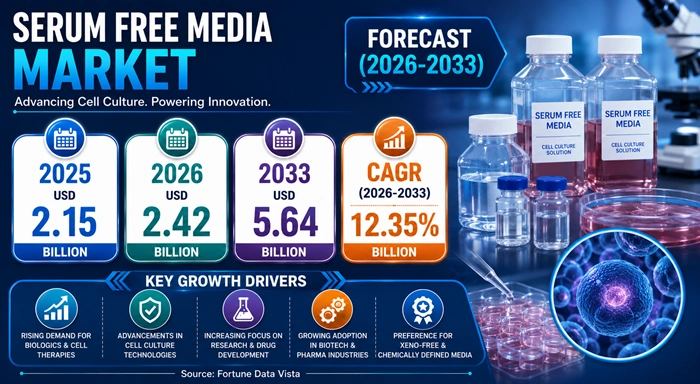
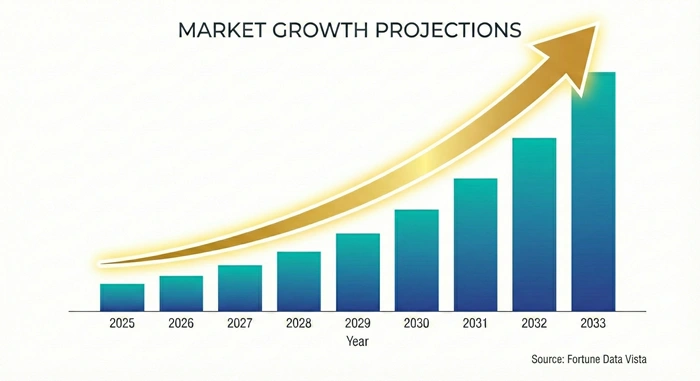
The global serum free media market size is valued at USD 2.15 billion in 2025 and is predicted to increase from USD 2.42 billion in 2026 to approximately USD 5.64 billion by 2033, growing at a CAGR of 12.35% from 2026 to 2033.
This robust growth trajectory reflects the biopharmaceutical industry's continued shift away from animal-derived serum toward chemically defined, serum-free formulations that offer greater batch-to-batch consistency and lower contamination risk. As biologics manufacturers scale up production of monoclonal antibodies, vaccines, and cell therapies, serum-free formulations have become the preferred foundation for reliable, regulatory-compliant cell culture across the industry.
AI Impact on the Serum Free Media Industry
Artificial Intelligence Is Accelerating Custom Media Formulation, Enabling Predictive Cell Culture Optimization, and Strengthening Process Consistency Across the Serum Free Media Landscape — Fundamentally Changing How Bioprocessing Teams Design Cell Culture Protocols
Artificial intelligence has begun playing an increasingly meaningful role in how manufacturers design and optimize serum-free media formulations, particularly through predictive modeling tools that can analyze how different combinations of nutrients, growth factors, and supplements affect cell growth and productivity before a single physical batch is even prepared. This capability allows media developers to dramatically shorten formulation development timelines, since AI-driven modeling can screen thousands of potential formulation combinations computationally rather than relying solely on time-consuming trial-and-error laboratory testing. Biopharmaceutical companies working with contract manufacturers are increasingly asking for these AI-optimized custom formulations, since faster development cycles translate directly into shorter timelines for bringing new biologic therapies to market.
Beyond formulation design, AI-powered analytics are also being applied to real-time bioprocess monitoring, helping manufacturers detect subtle shifts in cell culture performance that might indicate media-related issues long before yield problems become apparent through traditional testing methods. This proactive monitoring capability has become particularly valuable for large-scale biomanufacturing operations, where even minor inconsistencies in serum-free formulations can meaningfully impact overall production economics. As AI-driven formulation and monitoring tools continue maturing, they are becoming an important competitive differentiator for suppliers operating within the broader serum free media market.
Growth Factors
Rising Biologics Production and Growing Cell and Gene Therapy Pipelines Continue Driving Sustained Demand
The most significant growth factor supporting the serum free media market is the continued expansion of biologics manufacturing worldwide, particularly monoclonal antibodies, recombinant proteins, and vaccines, all of which increasingly rely on serum-free formulations to ensure consistent, contamination-free production at commercial scale. As biopharmaceutical companies face mounting regulatory pressure to demonstrate process consistency and eliminate the variability that animal-derived serum inevitably introduces, serum-free media has become the default choice for new manufacturing processes rather than simply an alternative option.
A second important growth factor is the rapid expansion of cell and gene therapy development pipelines, since these advanced therapies often require highly specialized, chemically defined culture conditions to support the sensitive cell types involved in their production. Companies developing CAR-T therapies and other cell-based treatments increasingly depend on serum-free formulations specifically optimized for their unique cell types, creating substantial new demand from an emerging therapeutic category that barely existed a decade ago. This combination of expanding traditional biologics production and rapidly growing cell therapy pipelines continues to broaden demand across the serum free media market.
Market Outlook
Chemically Defined Formulation Advancement and Expanding Biosimilar Production Point Toward Sustained Growth Through 2033
Looking ahead through the forecast period, the serum free media industry is expected to benefit substantially from continued advancement toward fully chemically defined formulations, as manufacturers push beyond simply removing serum toward eliminating all animal-derived and undefined components from their culture media entirely. This shift toward complete chemical definition is likely to become an increasingly important regulatory expectation, particularly for therapies intended for use in immunocompromised patient populations where any risk of contamination carries heightened consequences.
At the same time, the rapid global expansion of biosimilar manufacturing, particularly across emerging markets seeking to build domestic biomanufacturing capacity, is expected to create substantial new demand for cost-effective, scalable serum-free formulations. Companies that can deliver consistent quality at commercially viable price points while supporting the specific cell lines used in biosimilar production are increasingly well positioned to capture this growth. Suppliers combining deep formulation expertise with strong regional manufacturing and distribution capabilities are likely to lead growth within the broader serum free media market through 2033.
Expert Speaks
-
"Our customers increasingly demand fully chemically defined formulations that eliminate any trace of animal-derived components, and we continue investing heavily to meet that evolving expectation." — CEO, Thermo Fisher Scientific Inc
-
"As cell and gene therapy pipelines expand rapidly, specialized serum-free formulations tailored to unique cell types have become central to how we support our biopharmaceutical partners." — CEO, Danaher Corporation
-
"The shift toward serum-free bioprocessing reflects the industry's broader commitment to consistency and safety, and our life science business remains focused on advancing that transition." — CEO, Merck KGaA
Key Report Takeaways
-
North America leads the global serum free media market, holding approximately 41% market share in 2025, supported by a well-established biopharmaceutical industry and strong biologics research infrastructure
-
Asia Pacific is the fastest-growing region, projected to expand at a CAGR near 15% through 2033, driven by rapidly expanding biomanufacturing capacity across China and India
-
Pharmaceutical and biotechnology companies represent the dominant end-user segment, accounting for roughly 55% share, given their heavy investment in biologics research and commercial-scale production
-
Biopharmaceutical production contributes the most to overall demand, reflecting the industry's reliance on serum-free formulations for monoclonal antibody and recombinant protein manufacturing
-
CHO media remains the most widely adopted product type, valued for its scalability and strong compatibility with serum-free formulations across biologics production
-
Cell and gene therapy applications will grow the fastest among application segments, holding close to 30% market share with a CAGR near 17% through the forecast period, driven by rapidly expanding advanced therapy pipelines
Market Scope
| Parameter | Details |
|---|---|
| Market Size by 2033 | USD 5.64 Billion | Market Size by 2026 | USD 2.42 Billion | Market Size by 2025 | USD 2.15 Billion | Market Growth Rate from 2026 to 2033 | CAGR of 12.35% | Dominating Region | North America | Fastest Growing Region | Asia Pacific | Segments Covered | Product Type, Application, End User, Region | Regions Covered | North America, Europe, Asia Pacific, Latin America, Middle East & Africa |
Market Dynamics
Drivers Impact Analysis
Rising Biologics Manufacturing and Expanding Cell Therapy Pipelines Remain the Two Strongest Forces Behind Market Momentum
| Driver | (≈) % Impact on CAGR Forecast | Geographic Relevance | Impact Timeline |
|---|---|---|---|
| Growing biologics and monoclonal antibody manufacturing worldwide | ~35% | Global, strongest in North America, Europe | Short to long-term |
| Rapid expansion of cell and gene therapy development pipelines | ~29% | North America, Europe, growing in Asia Pacific | Medium to long-term |
| Regulatory pressure to eliminate animal-derived components from culture media | ~23% | Global | Medium-term |
| Rising demand for consistent, contamination-free production processes | ~13% | Global | Short to medium-term |
Growing biologics and monoclonal antibody manufacturing continues to serve as the primary engine behind sustained growth in the serum free media market, as biopharmaceutical companies scale up commercial production and increasingly favor serum-free formulations to ensure consistent product quality across manufacturing batches. This growing production volume has translated directly into rising media consumption among contract manufacturers and in-house biologics facilities worldwide.
Rapid expansion of cell and gene therapy development pipelines represents the second major driver, as companies developing these advanced therapies require highly specialized, chemically defined culture conditions unavailable through traditional serum-supplemented media. This emerging demand source, combined with tightening regulatory expectations around eliminating undefined animal-derived components, continues reinforcing steady demand growth across the broader serum free media market.
Restraints Impact Analysis
High Formulation Costs and Cell Line Adaptation Challenges Continue to Moderate Broader Adoption
| Restraint | (≈) % Impact on CAGR Forecast | Geographic Relevance | Impact Timeline |
|---|---|---|---|
| High cost of developing and manufacturing specialized serum-free formulations | ~34% | Global | Short to medium-term |
| Technical challenges adapting existing cell lines to serum-free conditions | ~30% | Global | Medium-term |
| Limited availability of standardized formulations for niche cell types | ~22% | Global, notable in emerging applications | Medium-term |
| Extended validation timelines required for regulatory approval of new formulations | ~14% | Global | Long-term |
The most persistent restraint facing the serum free media market is the substantial cost associated with developing and manufacturing highly specialized formulations, particularly those tailored to specific cell lines or therapeutic applications that require extensive optimization before reaching commercial viability. This cost barrier can be particularly challenging for smaller biotechnology companies operating with limited research budgets.
Technical challenges adapting existing cell lines to serum-free conditions represent a second significant restraint, since many established cell lines were originally developed and optimized using serum-supplemented media, making the transition process time-consuming and occasionally requiring significant reformulation effort. Combined with limited availability of standardized formulations for less common cell types, these restraints continue moderating how quickly full adoption spreads across the global serum free media market.
Opportunities Impact Analysis
Chemically Defined Formulation Innovation and Expanding Biosimilar Manufacturing Represent the Clearest Paths to Growth
| Opportunity | (≈) % Impact on CAGR Forecast | Geographic Relevance | Impact Timeline |
|---|---|---|---|
| Advancing fully chemically defined and animal-component-free formulations | ~37% | Global | Short to medium-term |
| Expanding biosimilar manufacturing capacity across emerging economies | ~33% | Asia Pacific, Latin America | Medium to long-term |
| Growing demand for custom, application-specific media formulations | ~30% | North America, Europe | Short to medium-term |
Advancing fully chemically defined and animal-component-free formulations represents one of the most substantial opportunities within the serum free media market, as suppliers developing these next-generation formulations stand to capture significant share from manufacturers seeking to future-proof their processes against evolving regulatory expectations. This formulation advancement is expected to meaningfully reshape competitive positioning among leading suppliers over the coming years.
Expanding biosimilar manufacturing capacity across emerging economies presents a second substantial opportunity, as countries like China and India build domestic biomanufacturing infrastructure that requires reliable, cost-effective serum-free formulations from day one. Growing demand for custom, application-specific media formulations further broadens the opportunity landscape, particularly as cell and gene therapy developers seek media precisely tailored to their unique cell types. Companies pursuing these parallel opportunities are well positioned to capture meaningful growth within the broader serum free media market through the forecast period.
Segment Analysis
By Product Type: CHO Media
CHO Media Continues to Anchor the Product Landscape, Reflecting Its Central Role in Monoclonal Antibody Production
CHO media holds the largest share within the product type segment of the serum free media market, accounting for approximately 36% of total segment revenue in 2025. This dominance reflects the widespread use of Chinese hamster ovary cells across monoclonal antibody and recombinant protein manufacturing, owing to their strong growth characteristics, scalability, and excellent compatibility with serum-free formulations. In markets like the United States and Germany, biologics manufacturers rely heavily on optimized CHO media formulations to support commercial-scale antibody production at consistent quality levels. Leading suppliers such as Thermo Fisher Scientific, Merck KGaA, and Lonza Group continue to dominate this segment through continuous formulation refinement and expanded manufacturing capacity.
Growth within this segment remains particularly strong in North America, where established biopharmaceutical manufacturers continue investing heavily in optimized CHO-based production processes to support growing monoclonal antibody pipelines. The region's combination of deep biomanufacturing expertise and strong regulatory infrastructure has helped CHO media maintain its leading position despite growing interest in specialized formulations for emerging cell therapy applications. As monoclonal antibody production continues expanding globally, CHO media is expected to remain the dominant product type within the broader serum free media market throughout the forecast period.
By Application: Biopharmaceutical Production
Biopharmaceutical Production Applications Remain the Leading Demand Driver, Reflecting Heavy Reliance on Serum-Free Formulations for Commercial Manufacturing
Biopharmaceutical production applications account for approximately 48% of application-based revenue within the serum free media market, reflecting the industry's near-universal reliance on serum-free formulations to manufacture monoclonal antibodies, recombinant proteins, and vaccines at commercial scale. Manufacturers increasingly depend on these formulations to minimize contamination risks and reduce the batch-to-batch variability that animal-derived serum inevitably introduces into production processes. This consistent, high-volume demand has made biopharmaceutical production the anchor application for serum-free media suppliers targeting large-scale manufacturing customers.
Growth in this application segment remains especially strong in Europe, where established biopharmaceutical hubs continue expanding commercial manufacturing capacity to support growing biologics and biosimilar production. Companies like Sartorius and Corning have expanded their regional formulation and manufacturing capabilities significantly to support this growing biopharmaceutical demand, often working closely with customers to optimize media performance for specific production processes. As global biologics production continues expanding, this application segment is expected to remain the primary demand driver within the broader serum free media market.
Regional Insights
North America
Well-Established Biopharmaceutical Infrastructure and Strong Research Investment Keep North America Firmly in the Lead
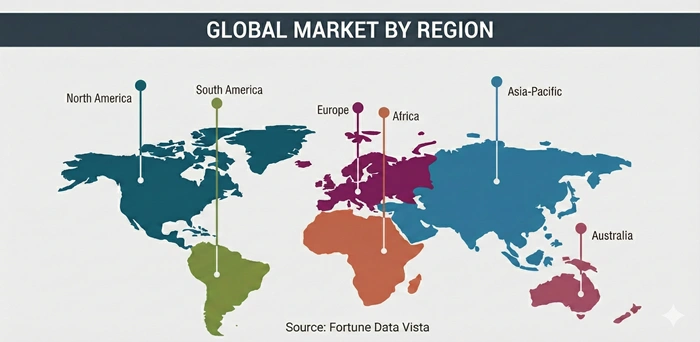
North America commands the leading position in the global serum free media market, holding approximately 41% share in 2025, supported by a well-established biopharmaceutical industry, extensive biologics research infrastructure, and strong academic-industry partnerships across the region. The United States drives the overwhelming majority of regional demand, backed by a dense concentration of biopharmaceutical manufacturers and contract development organizations continuously scaling up biologics production. Companies with strong regional presence include Thermo Fisher Scientific, Danaher, Corning, and Bio-Techne, each maintaining deep relationships with biopharmaceutical customers across the country.
Canada also contributes meaningfully to regional demand, supported by growing biomanufacturing investment and expanding academic research activity in cell culture technology. The region's combination of strong research infrastructure, deep supplier ecosystem, and continuous formulation innovation ensures North America's leadership position within the serum free media market remains firmly intact through the remainder of the forecast period.
Asia Pacific
Rapidly Expanding Biomanufacturing Capacity Positions Asia Pacific as the Fastest-Growing Region
Asia Pacific is projected to register the fastest CAGR within the global serum free media market through 2033, expanding at a rate near 15% as rapidly expanding biomanufacturing capacity and rising demand for biosimilars and therapeutic proteins create substantial new demand across the region. China and India lead much of this regional growth, supported by significant government and private investment in domestic biomanufacturing infrastructure aimed at reducing reliance on imported biologics. Regional and international suppliers alike have expanded their presence to serve this growing institutional demand, often establishing local manufacturing operations to better serve regional customers.
Japan and South Korea contribute further depth to regional growth, both bringing advanced biotechnology research capabilities that increasingly incorporate serum-free formulations for both established and emerging therapeutic applications. Growing government investment in biomanufacturing infrastructure across several Asia Pacific countries continues to accelerate serum-free media adoption among manufacturers building next-generation production capacity. This combination of rising biomanufacturing investment, expanding biosimilar production, and growing government support positions Asia Pacific as the clear growth leader within the broader serum free media market through the forecast period.
Customization Available for This Report
Region-Specific and Country-Specific Versions of This Report Are Available to Deliver a Sharper, More Localized View of Market Dynamics
This report can be tailored on a region-by-region and country-by-country basis, providing localized market sizing, competitive mapping, and biomanufacturing investment trend analysis that a global overview alone cannot fully capture.
Clients seeking a more focused breakdown can request a customized version covering any of the following regions and countries, complete with demand forecasting, competitor landscape review, and adoption trend analysis tied specifically to the serum free media keyword focus:
North America
-
U.S. — Detailed review of biopharmaceutical manufacturing investment and research infrastructure trends
-
Canada — Coverage of biomanufacturing investment and academic research partnership patterns
-
Mexico — Analysis of emerging biopharmaceutical manufacturing modernization trends
Europe
-
U.K. — Review of biologics manufacturing capacity and formulation adoption trends
-
Germany — Coverage of biopharmaceutical production investment among leading manufacturers
-
France — Insights into biomanufacturing modernization and adoption patterns
-
Italy — Analysis of regional biopharmaceutical technology investment trends
-
Rest of Europe — Country-level view of emerging demand across Eastern Europe and the Nordics
Asia Pacific
-
China — Coverage of expanding biomanufacturing infrastructure and government investment
-
India — Analysis of growing biosimilar production and manufacturing modernization
-
Japan — Review of established biotechnology research and adoption trends
-
South Korea — Assessment of biomanufacturing investment and formulation adoption
-
Australia — Insights into biotechnology research funding and adoption trends
-
Rest of Asia Pacific — Country-level breakdown covering Thailand, Vietnam, Indonesia, and Malaysia
Latin America
-
Brazil — Coverage of expanding biopharmaceutical manufacturing investment and adoption
-
Argentina — Analysis of early-stage biomanufacturing modernization trends
-
Rest of Latin America — Country-level sizing across Colombia, Peru, and Chile
Middle East & Africa
-
UAE — Review of biopharmaceutical manufacturing investment and adoption trends
-
Saudi Arabia — Coverage of expanding biomanufacturing modernization initiatives
-
Rest of MEA — Country-level view of Sub-Saharan Africa biomanufacturing expansion
Top Key Players
-
Thermo Fisher Scientific Inc (United States)
-
Merck KGaA (Germany)
-
Lonza Group AG (Switzerland)
-
Danaher Corporation (United States)
-
FUJIFILM Irvine Scientific Inc (United States)
-
Sartorius AG (Germany)
-
Corning Incorporated (United States)
-
Bio-Techne Corporation (United States)
-
PAN-Biotech GmbH (Germany)
-
MP Biomedicals LLC (United States)
-
Cytiva (United States)
-
HiMedia Laboratories Pvt Ltd (India)
Recent Developments
-
In 2025, Thermo Fisher Scientific expanded its Gibco serum-free media portfolio with new chemically defined formulations tailored to emerging cell and gene therapy applications
-
In 2025, Merck KGaA strengthened its life science formulation capabilities through expanded manufacturing capacity dedicated to serum-free and chemically defined media production
-
In 2026, Lonza Group deepened its custom media formulation services to better support biopharmaceutical customers developing specialized cell therapy manufacturing processes
-
In 2025, Sartorius advanced its cell culture media offerings through expanded partnerships supporting biosimilar manufacturers across emerging biomanufacturing markets
-
In 2025, Danaher Corporation expanded its bioprocessing media capabilities through continued investment in formulation research supporting monoclonal antibody production
Market Trends
Chemically Defined Formulation Advancement and Custom Media Development Are Reshaping Industry Standards
One of the clearest trends shaping the serum free media market is the accelerating shift toward fully chemically defined formulations, as manufacturers move beyond simply removing serum toward eliminating all undefined animal-derived components entirely to meet increasingly stringent regulatory expectations. Suppliers are investing heavily in formulation research, recognizing that chemical definition is becoming a critical competitive differentiator as biopharmaceutical customers demand greater process transparency.
A second significant trend is the growing demand for custom, application-specific media formulations tailored to unique cell types used in cell and gene therapy manufacturing, as standardized off-the-shelf formulations often fail to meet the precise requirements these advanced therapies demand. This trend toward customization is particularly meaningful for suppliers serving the rapidly expanding cell therapy sector, continuing to support steady expansion across the broader serum free media market as advanced therapy pipelines mature.
Segments Covered in the Report
By Product Type
-
CHO Media
-
HEK Media
-
Hybridoma Media
-
Other Specialty Media
By Application
-
Biopharmaceutical Production
-
Cell and Gene Therapy Manufacturing
-
Vaccine Production
-
Tissue Engineering and Regenerative Medicine
By End User
-
Pharmaceutical and Biotechnology Companies
-
Contract Development and Manufacturing Organizations
-
Research and Academic Institutes
By Region
-
North America (U.S., Canada, Mexico)
-
Europe (U.K., Germany, France, Italy, Rest of Europe)
-
Asia Pacific (China, India, Japan, South Korea, Australia, Rest of Asia Pacific)
-
Latin America (Brazil, Argentina, Rest of Latin America)
-
Middle East & Africa (UAE, Saudi Arabia, Rest of MEA)
❝ Built for Every Level — From Startups to Industry Giants ❞
Here Is Exactly How This Report Works for You
-
For tier 1 companies, investors, and established market leaders, this report delivers detailed competitor revenue analysis, formulation innovation trend mapping, and geopolitical risk context that support confident decisions around product expansion, pricing strategy, and long-term positioning within the serum free media space
-
For tier 2 and tier 3 companies, startups, and mid-sized suppliers, this report highlights the most commercially promising application categories and underserved regional opportunities, giving you a practical framework to compete against larger established players without overextending limited resources
-
For every decision maker across the value chain, this report explains exactly how regulatory developments, biomanufacturing investment trends, and competitor formulation launches are shaping market direction through 2033, equipping you to plan investment and go-to-market decisions with genuine confidence
Frequently Asked Questions:
Answer: The global serum free media market was valued at USD 2.15 billion in 2025 and is projected to reach USD 5.64 billion by 2033. This growth is driven largely by rising biologics production and expanding cell and gene therapy pipelines.
Answer: Growth in the serum free media market is being driven by expanding monoclonal antibody manufacturing and rapid growth in cell and gene therapy development. Tightening regulatory pressure to eliminate animal-derived components is further reinforcing this expansion.
Answer: North America currently leads the serum free media market with roughly 41% share, supported by well-established biopharmaceutical infrastructure and research investment. Asia Pacific is growing the fastest, driven by rapidly expanding biomanufacturing capacity.
Answer: CHO media generates the largest share of revenue in the serum free media market, reflecting its central role in monoclonal antibody production. Biopharmaceutical production also remains the leading application segment.
Answer: Leading companies in the serum free media market include Thermo Fisher Scientific, Merck KGaA, Lonza Group, Danaher, and Sartorius. These companies compete through continuous innovation in chemically defined and custom formulation development.