
Sleep Trackers Market Overview
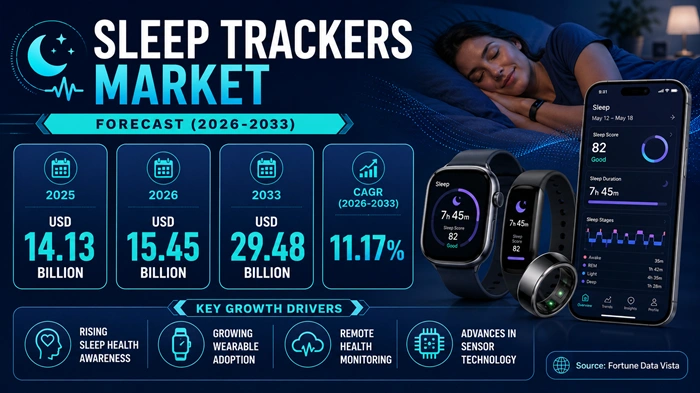
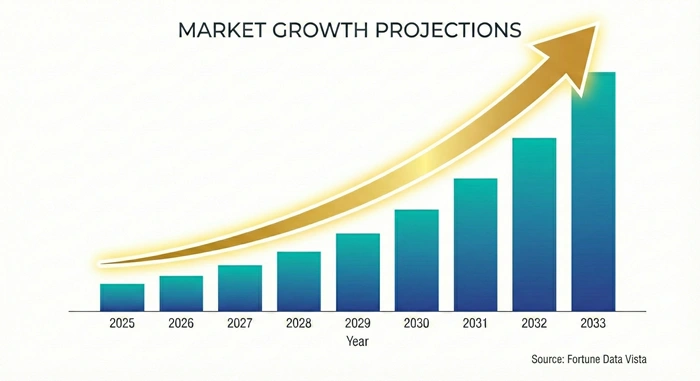
The global sleep trackers market size is valued at USD 14.13 billion in 2025 and is predicted to increase from USD 15.45 billion in 2026 to approximately USD 29.48 billion by 2033, growing at a CAGR of 11.17% from 2026 to 2033.
This strong growth trajectory reflects the rapidly growing consumer interest in personal health monitoring, as more people turn to wearable and non-wearable devices to understand their sleep quality, duration, and patterns. As awareness of sleep disorders and their connection to broader health outcomes continues rising, sleep tracking technology has moved from a niche wellness gadget category into a mainstream feature expected across smartwatches, fitness bands, and dedicated sleep monitoring devices.
AI Impact on the Sleep Trackers Industry
Artificial Intelligence Is Enhancing Sleep Stage Classification Accuracy, Enabling Personalized Health Recommendations, and Strengthening Predictive Sleep Disorder Detection Across the Sleep Trackers Landscape — Fundamentally Changing How Consumers and Clinicians Interpret Nightly Rest Data
Artificial intelligence has fundamentally transformed how sleep tracking devices interpret the raw physiological data they collect, with machine learning algorithms now capable of distinguishing between light sleep, deep sleep, and REM stages with considerably greater accuracy than earlier generation devices relying on simpler motion-based algorithms. This improved classification accuracy matters significantly for consumers, since understanding actual sleep architecture provides far more actionable insight than basic duration tracking alone ever could. Leading device manufacturers are increasingly differentiating their products based on how well their AI models perform against clinical polysomnography benchmarks, pushing the entire sleep trackers market toward greater measurement precision.
Beyond stage classification, AI-powered analytics are also enabling increasingly personalized health recommendations, with sleep tracking apps now capable of correlating a user's sleep patterns with factors like exercise timing, caffeine consumption, and stress levels to generate tailored guidance for improving rest quality. This predictive capability extends further into early detection of potential sleep disorders like sleep apnea, where AI models can flag concerning breathing irregularities that might warrant clinical follow-up. As these AI-driven interpretation and prediction tools continue maturing, they are becoming an increasingly important competitive differentiator for brands competing within the broader sleep trackers market.
Growth Factors
Rising Sleep Disorder Awareness and Growing Wearable Technology Adoption Continue Driving Sustained Demand
The most significant growth factor supporting the sleep trackers market is the steadily growing public awareness of sleep disorders and their far-reaching impact on physical and mental health, as research increasingly connects poor sleep quality to conditions ranging from cardiovascular disease to cognitive decline. As consumers become more educated about these connections, they increasingly seek out tools that can help them understand and improve their own sleep habits, driving sustained demand for both consumer wellness devices and more clinically oriented monitoring solutions.
A second important growth factor is the rapid, ongoing expansion of wearable technology adoption more broadly, since sleep tracking has become an increasingly standard feature embedded within smartwatches and fitness bands that consumers already purchase for other health and activity monitoring purposes. This bundling effect means sleep tracker adoption often happens passively as consumers buy multi-purpose wearables rather than seeking out dedicated sleep devices specifically, significantly expanding the addressable consumer base. This combination of rising health awareness and expanding wearable ownership continues to broaden demand across the sleep trackers market.
Market Outlook
Clinical-Grade Accuracy Advancement and Expanding Healthcare Integration Point Toward Sustained Growth Through 2033
Looking ahead through the forecast period, the sleep trackers industry is expected to benefit substantially from continued advancement toward clinical-grade measurement accuracy, as manufacturers work to close the gap between consumer wearables and traditional polysomnography testing performed in sleep clinics. This accuracy improvement is likely to unlock new use cases within healthcare settings, where physicians increasingly value continuous, real-world sleep data that complements or even reduces the need for costly overnight clinical testing.
At the same time, growing integration between sleep tracking devices and broader digital health ecosystems, including telemedicine platforms and electronic health records, is expected to create substantial new demand from healthcare providers and insurers seeking cost-effective ways to monitor patient sleep health remotely. Companies that can deliver devices combining consumer-friendly design with clinically credible data are increasingly well positioned to capture this growth. Brands combining strong sensor engineering with deep software and AI capabilities are likely to lead growth within the broader sleep trackers market through 2033.
Expert Speaks
-
"Sleep has become one of the most important health metrics our customers care about, and we continue investing heavily in sensor and software innovation to deliver more accurate, actionable sleep insights." — CEO, Apple Inc
-
"As consumers increasingly prioritize preventive health, our wearable devices are evolving to provide deeper, more personalized sleep analysis that genuinely helps people improve their nightly rest." — CEO, Garmin Ltd
-
"The growing connection between sleep quality and overall wellness continues to shape how we design our health monitoring devices, and sleep tracking remains a core focus of our innovation roadmap." — CEO, Samsung Electronics
Key Report Takeaways
-
North America leads the global sleep trackers market, holding approximately 43% market share in 2025, supported by high wearable device penetration and strong consumer health awareness
-
Asia Pacific is the fastest-growing region, projected to expand at a CAGR near 10.5% through 2033, driven by rising disposable incomes and expanding wearable technology adoption across China and India
-
Individual consumers represent the dominant end-user segment, accounting for roughly 50% share, reflecting widespread personal interest in self-monitoring and preventive wellness
-
Wearable sleep trackers contribute the most to overall demand, reflecting strong consumer preference for multi-purpose devices that combine sleep tracking with broader fitness monitoring
-
Wrist-worn devices remain the most widely adopted product type, valued for their convenience and seamless integration into daily routines
-
Healthcare providers and sleep clinics will grow the fastest among end-user segments, holding close to 20% market share with a CAGR near 9.3% through the forecast period, driven by rising clinical adoption of continuous sleep monitoring technology
Market Scope
| Parameter | Details |
|---|---|
| Market Size by 2033 | USD 29.48 Billion | Market Size by 2026 | USD 15.45 Billion | Market Size by 2025 | USD 14.13 Billion | Market Growth Rate from 2026 to 2033 | CAGR of 11.17% | Dominating Region | North America | Fastest Growing Region | Asia Pacific | Segments Covered | Product Type, Application, Distribution Channel, End User, Region | Regions Covered | North America, Europe, Asia Pacific, Latin America, Middle East & Africa |
Market Dynamics
Drivers Impact Analysis
Rising Sleep Disorder Awareness and Expanding Wearable Technology Adoption Remain the Two Strongest Forces Behind Market Momentum
| Driver | (≈) % Impact on CAGR Forecast | Geographic Relevance | Impact Timeline |
|---|---|---|---|
| Growing public awareness of sleep disorders and their health impact | ~34% | Global, strongest in North America, Europe | Short to long-term |
| Rapid expansion of wearable technology ownership worldwide | ~30% | Global | Medium to long-term |
| Rising availability of affordable sleep tracking devices through e-commerce | ~22% | Global, especially Asia Pacific | Short to medium-term |
| Increasing integration of sleep tracking into digital health platforms | ~14% | North America, Europe | Medium-term |
Growing public awareness of sleep disorders and their broader health impact continues to serve as the primary engine behind sustained growth in the sleep trackers market, as consumers increasingly recognize the connection between poor sleep and long-term health risks including cardiovascular disease and cognitive decline. This growing awareness has translated directly into rising consumer demand for devices that provide meaningful sleep insights rather than simple activity counting.
Rapid expansion of wearable technology ownership represents the second major driver, as sleep tracking capability increasingly comes bundled into smartwatches and fitness bands that consumers already purchase for broader health monitoring purposes. This bundling effect, combined with rising availability of affordable devices through e-commerce channels, continues reinforcing steady demand growth across the broader sleep trackers market.
Restraints Impact Analysis
Data Privacy Concerns and Limited Clinical Validation Continue to Moderate Broader Adoption
| Restraint | (≈) % Impact on CAGR Forecast | Geographic Relevance | Impact Timeline |
|---|---|---|---|
| Growing consumer concerns around personal health data privacy and security | ~35% | Global | Short to medium-term |
| Limited clinical validation of consumer-grade sleep tracking accuracy | ~29% | Global | Medium-term |
| High price points for premium devices with advanced sensor capabilities | ~22% | Emerging markets, price-sensitive segments | Short to medium-term |
| Battery life limitations affecting continuous overnight monitoring reliability | ~14% | Global | Medium-term |
The most persistent restraint facing the sleep trackers market is growing consumer concern around how personal health data collected overnight is stored, shared, and potentially monetized by device manufacturers and associated software platforms. This privacy concern has become increasingly prominent as regulators worldwide scrutinize how health technology companies handle sensitive biometric information.
Limited clinical validation of consumer-grade sleep tracking accuracy represents a second significant restraint, since many devices still fall short of the measurement precision achieved through clinical polysomnography, leading some healthcare providers to remain cautious about relying on consumer data for diagnostic purposes. Combined with high price points for premium devices offering the most advanced sensor capabilities, these restraints continue moderating how quickly broader adoption spreads across the global sleep trackers market.
Opportunities Impact Analysis
Clinical-Grade Accuracy Innovation and Expanding Healthcare Partnership Represent the Clearest Paths to Growth
| Opportunity | (≈) % Impact on CAGR Forecast | Geographic Relevance | Impact Timeline |
|---|---|---|---|
| Advancing sensor technology toward clinical-grade sleep measurement accuracy | ~37% | Global | Short to medium-term |
| Expanding partnerships between device makers and healthcare providers | ~33% | North America, Europe | Medium to long-term |
| Growing wearable technology adoption across emerging Asia Pacific economies | ~30% | Asia Pacific | Medium to long-term |
Advancing sensor technology toward clinical-grade measurement accuracy represents one of the most substantial opportunities within the sleep trackers market, as manufacturers closing the gap with traditional polysomnography stand to capture meaningful new demand from healthcare providers seeking cost-effective remote monitoring solutions. This accuracy advancement is expected to meaningfully reshape competitive positioning among leading device brands over the coming years.
Expanding partnerships between device makers and healthcare providers presents a second substantial opportunity, as sleep clinics and telemedicine platforms increasingly look to integrate consumer wearable data into broader patient care workflows. Growing wearable technology adoption across emerging Asia Pacific economies further broadens the opportunity landscape, particularly as rising disposable incomes make these devices increasingly accessible to a larger consumer base. Companies pursuing these parallel opportunities are well positioned to capture meaningful growth within the broader sleep trackers market through the forecast period.
Segment Analysis
By Product Type: Wearable Sleep Trackers
Wearable Sleep Trackers Continue to Anchor the Product Landscape, Reflecting Strong Consumer Preference for Multi-Purpose Devices
Wearable sleep trackers hold the largest share within the product type segment of the sleep trackers market, accounting for approximately 72% of total segment revenue in 2025. This dominance reflects strong consumer preference for devices that combine sleep monitoring with broader fitness and activity tracking capabilities, since most buyers view sleep tracking as one valuable feature within a multi-purpose wearable rather than a standalone purchase decision. In markets like the United States and Germany, consumers increasingly choose smartwatches and fitness bands that offer comprehensive health monitoring including sleep stage analysis, heart rate variability, and activity tracking in a single device. Leading suppliers such as Apple, Garmin, and Samsung continue to dominate this segment through continuous sensor and software innovation.
Growth within this segment remains particularly strong in North America, where high disposable incomes and strong wearable technology penetration continue driving consumers toward premium devices offering advanced sleep analysis features. The region's combination of tech-savvy consumers and strong retail distribution infrastructure has helped wearable sleep trackers maintain their leading position despite growing interest in dedicated non-wearable monitoring devices for bedside use. As wearable technology adoption continues expanding globally, wearable sleep trackers are expected to remain the dominant product type within the broader sleep trackers market throughout the forecast period.
By End User: Individual Consumers
Individual Consumers Remain the Leading End-User Segment, Reflecting Widespread Interest in Personal Sleep Health Monitoring
Individual consumers account for approximately 50% of end-user revenue within the sleep trackers market, reflecting widespread personal interest in self-monitoring sleep patterns as part of broader preventive wellness habits. Consumers increasingly purchase sleep tracking devices independently of any clinical need, driven simply by curiosity about their own sleep quality and a desire to make lifestyle adjustments that might improve overall health and daily performance. This consistent, high-volume consumer demand has made individual buyers the primary customer base for sleep tracker manufacturers targeting the broader wellness market.
Growth among this end-user segment remains especially strong in Europe, where rising awareness of sleep health and strong government support for digital health initiatives continue encouraging wider adoption of personal monitoring devices. Companies like Withings and Oura Health have expanded their regional presence significantly to support this growing consumer demand, often emphasizing design and comfort alongside measurement accuracy to appeal to everyday wellness-focused buyers. As personal health awareness continues rising globally, individual consumers are expected to remain the primary demand driver within the broader sleep trackers market.
Regional Insights
North America
High Wearable Penetration and Strong Consumer Health Awareness Keep North America Firmly in the Lead
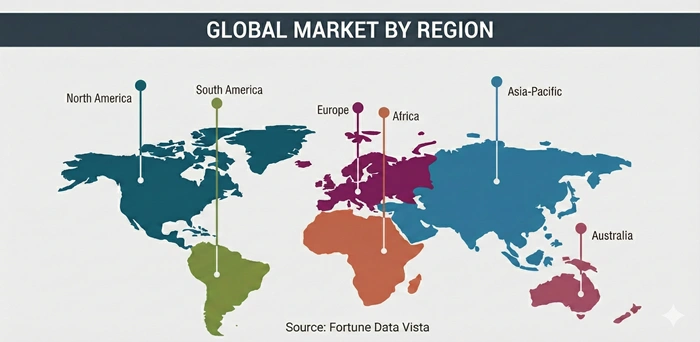
North America commands the leading position in the global sleep trackers market, holding approximately 43% share in 2025, supported by high wearable device penetration, strong consumer health awareness, and well-established digital health infrastructure across the region. The United States drives the overwhelming majority of regional demand, backed by tech-savvy consumers and a dense concentration of leading device manufacturers continuously expanding their sleep monitoring product portfolios. Companies with strong regional presence include Apple, Fitbit, Garmin, and Oura Health, each maintaining deep relationships with both retail consumers and healthcare partners across the country.
Canada also contributes meaningfully to regional demand, supported by growing consumer interest in preventive wellness technology and expanding retail availability of premium wearable devices. The region's combination of strong consumer purchasing power, deep retail distribution networks, and continuous device innovation ensures North America's leadership position within the sleep trackers market remains firmly intact through the remainder of the forecast period.
Asia Pacific
Rising Disposable Incomes and Expanding Wearable Adoption Position Asia Pacific as the Fastest-Growing Region
Asia Pacific is projected to register the fastest CAGR within the global sleep trackers market through 2033, expanding at a rate near 10.5% as rising disposable incomes and expanding wearable technology adoption create substantial new demand across the region. China and India lead much of this regional growth, supported by a rapidly growing middle class increasingly interested in health and wellness technology alongside expanding domestic wearable device manufacturing capacity. Regional and international brands alike have expanded their presence to serve this growing consumer demand, often offering more affordable device tiers tailored to local purchasing power.
Japan and South Korea contribute further depth to regional growth, both bringing advanced consumer electronics markets that increasingly incorporate sophisticated sleep tracking features into premium wearable and smart home device categories. Growing awareness of stressful lifestyles and long working hours across several Asia Pacific countries continues to accelerate sleep tracker adoption among health-conscious consumers. This combination of rising disposable incomes, expanding wearable ownership, and growing health awareness positions Asia Pacific as the clear growth leader within the broader sleep trackers market through the forecast period.
Customization Available for This Report
Region-Specific and Country-Specific Versions of This Report Are Available to Deliver a Sharper, More Localized View of Market Dynamics
This report can be tailored on a region-by-region and country-by-country basis, providing localized market sizing, competitive mapping, and consumer adoption trend analysis that a global overview alone cannot fully capture.
Clients seeking a more focused breakdown can request a customized version covering any of the following regions and countries, complete with demand forecasting, competitor landscape review, and adoption trend analysis tied specifically to the sleep trackers keyword focus:
North America
-
U.S. — Detailed review of wearable technology adoption and consumer health awareness trends
-
Canada — Coverage of retail distribution and preventive wellness technology adoption patterns
-
Mexico — Analysis of emerging consumer electronics market modernization trends
Europe
-
U.K. — Review of digital health integration and device adoption trends
-
Germany — Coverage of consumer wellness technology investment among leading retailers
-
France — Insights into telemedicine expansion and adoption patterns
-
Italy — Analysis of regional consumer electronics investment trends
-
Rest of Europe — Country-level view of emerging demand across Eastern Europe and the Nordics
Asia Pacific
-
China — Coverage of expanding wearable manufacturing capacity and consumer demand
-
India — Analysis of growing middle-class wellness technology adoption
-
Japan — Review of established consumer electronics market and adoption trends
-
South Korea — Assessment of premium wearable device adoption and market growth
-
Australia — Insights into health and wellness technology funding and adoption trends
-
Rest of Asia Pacific — Country-level breakdown covering Thailand, Vietnam, Indonesia, and Malaysia
Latin America
-
Brazil — Coverage of expanding consumer wearable technology investment and adoption
-
Argentina — Analysis of early-stage digital health market modernization trends
-
Rest of Latin America — Country-level sizing across Colombia, Peru, and Chile
Middle East & Africa
-
UAE — Review of consumer electronics investment and wearable adoption trends
-
Saudi Arabia — Coverage of expanding digital health modernization initiatives
-
Rest of MEA — Country-level view of Sub-Saharan Africa wearable technology expansion
Top Key Players
-
Apple Inc (United States)
-
Fitbit LLC (United States)
-
Samsung Electronics Co Ltd (South Korea)
-
Garmin Ltd (Switzerland)
-
Huawei Device Co Ltd (China)
-
Xiaomi Corporation (China)
-
Withings SA (France)
-
Philips Healthcare (Netherlands)
-
ResMed Inc (United States)
-
Oura Health Ltd (Finland)
-
Whoop Inc (United States)
-
Polar Electro Oy (Finland)
Recent Developments
-
In 2025, Apple expanded its sleep tracking capabilities within its wearable ecosystem, introducing enhanced sleep score algorithms and deeper sleep stage analysis
-
In 2025, Samsung Electronics strengthened its sleep monitoring software with new AI-driven personalized coaching features integrated into its wearable health platform
-
In 2026, Garmin deepened its investment in advanced sleep sensor technology to improve measurement accuracy across its fitness wearable lineup
-
In 2025, Oura Health advanced its ring-based tracking device with improved sensor accuracy and expanded partnerships supporting clinical sleep research applications
-
In 2025, Withings expanded its non-wearable sleep monitoring portfolio through continued investment in bedside device technology for health-conscious consumers
Market Trends
Clinical-Grade Sensor Innovation and Growing Non-Wearable Device Interest Are Reshaping Industry Standards
One of the clearest trends shaping the sleep trackers market is the accelerating push toward clinical-grade sensor accuracy, as device manufacturers work to close the measurement gap with traditional polysomnography testing performed in dedicated sleep clinics. Companies are investing heavily in sensor research, recognizing that measurement credibility is becoming an increasingly important competitive differentiator as consumers and healthcare providers alike demand more trustworthy sleep data.
A second significant trend is the growing consumer interest in non-wearable sleep tracking options, such as under-mattress sensors and bedside devices, as some users seek monitoring solutions that avoid the discomfort of wearing a device overnight. This trend toward non-wearable alternatives is particularly meaningful for brands targeting consumers who have struggled with wearable comfort or battery life, continuing to support steady expansion across the broader sleep trackers market as device variety increases.
Segments Covered in the Report
By Product Type
-
Wearable Sleep Trackers
-
Non-Wearable Sleep Trackers
By Wearable Sub-Type
-
Wrist-Worn Devices
-
Ring-Based Devices
-
Headband Devices
By Application
-
Sleep Quality Monitoring
-
Sleep Apnea Detection
-
Sleep Stage Analysis
By Distribution Channel
-
Online Retail
-
Offline Retail
By End User
-
Individual Consumers
-
Healthcare Providers and Sleep Clinics
-
Research and Academic Institutes
By Region
-
North America (U.S., Canada, Mexico)
-
Europe (U.K., Germany, France, Italy, Rest of Europe)
-
Asia Pacific (China, India, Japan, South Korea, Australia, Rest of Asia Pacific)
-
Latin America (Brazil, Argentina, Rest of Latin America)
-
Middle East & Africa (UAE, Saudi Arabia, Rest of MEA)
❝ Built for Every Level — From Startups to Industry Giants ❞
Here Is Exactly How This Report Works for You
-
For tier 1 companies, investors, and established market leaders, this report delivers detailed competitor revenue analysis, sensor innovation trend mapping, and geopolitical risk context that support confident decisions around product expansion, pricing strategy, and long-term positioning within the sleep trackers space
-
For tier 2 and tier 3 companies, startups, and mid-sized suppliers, this report highlights the most commercially promising application categories and underserved regional opportunities, giving you a practical framework to compete against larger established players without overextending limited resources
-
For every decision maker across the value chain, this report explains exactly how consumer adoption trends, healthcare partnership developments, and competitor device launches are shaping market direction through 2033, equipping you to plan investment and go-to-market decisions with genuine confidence
Frequently Asked Questions:
Answer: The global sleep trackers market was valued at USD 14.13 billion in 2025 and is projected to reach USD 29.48 billion by 2033. This growth is driven largely by rising sleep disorder awareness and expanding wearable technology adoption.
Answer: Growth in the sleep trackers market is being driven by growing consumer health awareness and rapid expansion of wearable device ownership worldwide. Rising availability of affordable devices through e-commerce is further reinforcing this expansion.
Answer: North America currently leads the sleep trackers market with roughly 43% share, supported by high wearable penetration and strong consumer health awareness. Asia Pacific is growing the fastest, driven by rising disposable incomes and expanding wearable adoption.
Answer: Wearable sleep trackers generate the largest share of revenue in the sleep trackers market, reflecting strong consumer preference for multi-purpose devices. Individual consumers also remain the dominant end-user segment.
Answer: Leading companies in the sleep trackers market include Apple, Fitbit, Samsung Electronics, Garmin, and Oura Health. These companies compete through continuous innovation in sensor accuracy and AI-driven sleep analysis software.