
Soil Monitoring Market Overview
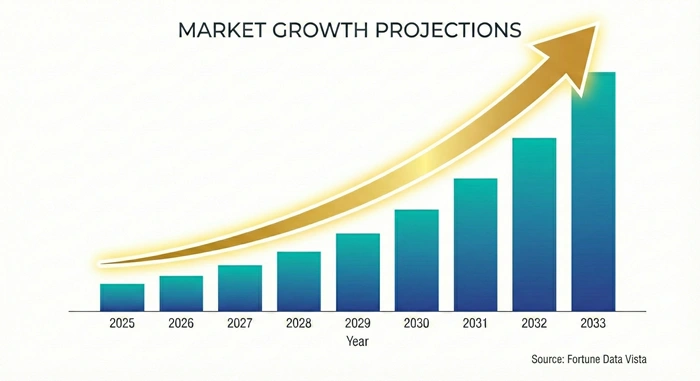
The global Soil Monitoring market size is valued at USD 669.40 million in 2025 and is predicted to increase from USD 759.85 million in 2026 to approximately USD 1260.60 million by 2033, growing at a CAGR of 14.3% from 2026 to 2033. This robust growth trajectory reflects the accelerating adoption of precision agriculture technologies, growing awareness of sustainable land management, and increasing urgency around food security and environmental protection globally. As governments, agribusinesses, and smallholder farmers alike recognize the critical value of real-time soil intelligence, investment in sensor-based and data-driven soil monitoring solutions is scaling rapidly across every major agricultural region.
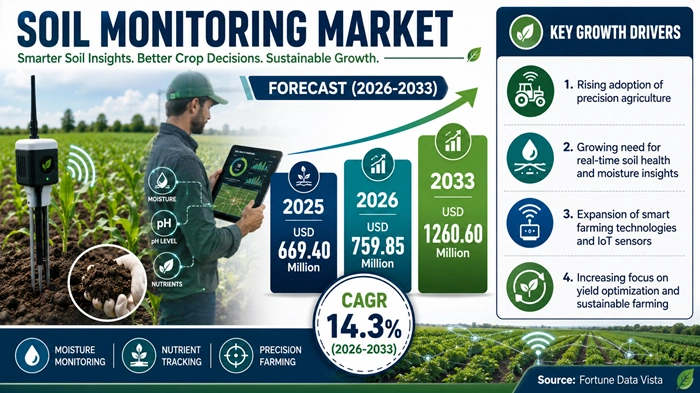
AI Impact on the Soil Monitoring Industry
Artificial Intelligence Is Revolutionizing How Soil Data Is Collected, Analyzed, and Translated into Actionable Agronomic Decisions — Enabling More Precise, Efficient, and Sustainable Land Management at Unprecedented Scale*
AI is fundamentally reshaping the soil monitoring market by transforming vast streams of raw sensor data into highly precise, field-specific agronomic recommendations. Machine learning models trained on historical soil chemistry, moisture, pH, temperature, and nutrient data can now identify complex patterns and predict soil health trajectories with a level of accuracy and speed that traditional laboratory analysis or manual observation could never achieve. Platforms developed by companies like CropX and John Deere are leveraging AI to synthesize data from in-field sensors, satellite imagery, and weather forecasts simultaneously — producing dynamic irrigation and fertilization recommendations that reduce input waste while maintaining or improving crop yield outcomes.
Beyond field-level decision support, AI is enabling a new generation of predictive soil health management tools that can model the long-term impact of specific farming practices on soil organic matter, salinity, compaction, and erosion risk. These tools allow agronomists and land managers to simulate different cultivation scenarios computationally before committing to real-world interventions — dramatically improving the quality and confidence of soil management decisions. As AI model accuracy continues to improve with the accumulation of more training data, and as cloud computing makes sophisticated analytical platforms accessible on mobile devices at low cost, AI-driven soil intelligence is rapidly transitioning from a niche capability to a mainstream agronomic management tool adopted by farms of every scale across the globe.
Growth Factors
Global Food Security Pressures, the Rapid Spread of Precision Agriculture Technology, and Escalating Government Investment in Sustainable Farming Are Together Creating the Strongest Growth Foundation This Market Has Ever Seen*
The global imperative to feed a projected population of nearly 10 billion people by 2050 — while simultaneously confronting the reality of declining soil quality, shrinking arable land availability, and increasingly erratic climate patterns — is placing soil health management squarely at the center of modern agricultural strategy. Farmers and agribusinesses that can monitor and manage soil conditions with real-time precision gain a significant competitive advantage: they use less water, apply fertilizers more efficiently, reduce crop loss from soil-related stress events, and maintain higher long-term land productivity. This economic calculus is driving investment in soil monitoring solutions across farm scales from large commercial operations to government-supported smallholder programs in developing economies.
The proliferation of low-cost IoT sensors, cloud computing platforms, and cellular connectivity infrastructure is making the soil monitoring market increasingly accessible to a much wider range of agricultural operators than ever before. What was once the domain of well-funded research institutions and large-scale precision farming operations is now within reach of mid-scale farms across Asia Pacific, Latin America, and sub-Saharan Africa — markets that represent enormous untapped volume opportunities for monitoring hardware and software solution providers. Government programs in countries including India, China, Brazil, and the United States are actively subsidizing the adoption of precision soil management tools as part of broader national food security and agricultural sustainability strategies, adding a powerful policy-driven growth accelerant to the already strong underlying commercial demand.
Market Outlook
With Climate Adaptation Urgency, Regulatory Push for Sustainable Agriculture, and Smart Farming Technology Convergence All Accelerating, the Soil Monitoring Market Is Positioned for an Exceptional Decade of Growth and Innovation*
The medium-to-long-term outlook for the soil monitoring market is exceptionally favorable, driven by a structural convergence of environmental, regulatory, economic, and technological forces that are aligning to make soil intelligence a core operational requirement for modern agriculture. Climate change is intensifying the unpredictability of growing conditions globally — making real-time soil moisture, temperature, and salinity monitoring not just a productivity tool but an essential risk management instrument for farmers facing more frequent droughts, extreme rainfall events, and temperature anomalies. As these climate pressures intensify through the 2020s and 2030s, the economic justification for soil monitoring investment will only strengthen.
From a technology perspective, the next wave of innovation in the soil monitoring sector will be defined by the integration of multi-parameter sensing — combining traditional moisture and temperature monitoring with real-time measurement of soil nitrogen, phosphorus, potassium, pH, and carbon content in a single, field-deployable sensor package. Several leading companies are already commercializing early versions of these comprehensive soil intelligence systems, and as production costs decline and sensor accuracy improves, these platforms will rapidly become the standard specification for premium soil monitoring solutions. This technology evolution will increase the average selling price per system while simultaneously expanding the market's addressable customer base — creating a compelling revenue growth dynamic that supports the soil monitoring market's strong CAGR trajectory through 2033.
Expert Speaks
-
"At John Deere, we firmly believe that the future of agriculture is data-driven, and soil monitoring is foundational to that vision. Real-time soil intelligence enables our customers to make smarter irrigation, fertilization, and tillage decisions — directly improving yield outcomes, reducing environmental impact, and strengthening the long-term economic health of farming operations worldwide." — John C. May, Chairman & CEO, John Deere & Company
-
"Yara's ambition to help farmers grow more with less is fundamentally dependent on understanding the soil — what it contains, what it needs, and how it is changing. Our investment in digital soil monitoring platforms and nutrient management tools reflects our belief that precision soil intelligence will become as standard and as indispensable to modern farming as seed selection and crop protection." — Svein Tore Holsether, President & CEO, Yara International
-
"Trimble's positioning technology and precision agriculture platforms are built on the insight that soil variability is one of the most powerful levers available to farmers seeking to improve productivity and reduce input costs. The integration of advanced soil monitoring data into our field management systems is enabling our customers to unlock meaningful yield gains and sustainability improvements that justify their technology investment many times over." — Rob Painter, President & CEO, Trimble Inc.
Key Report Takeaways
-
North America leads the global soil monitoring market with the largest regional revenue share in 2025, underpinned by the high adoption rate of precision agriculture technologies among large-scale commercial farms, strong government support for agricultural R&D, and the concentration of leading soil monitoring technology companies in the United States and Canada.
-
Asia Pacific is the fastest-growing regional market, driven by massive government investments in agricultural modernization in China and India, rapid adoption of smart farming technologies across Southeast Asia, and growing pressure on regional food systems to improve productivity efficiency in the face of land and water resource constraints.
-
Agricultural end-users are the dominant consumer category, accounting for the largest share of soil monitoring system deployments globally, as the direct connection between soil health, crop yield, and farm profitability makes this segment the most commercially motivated and highest-volume adopter of soil intelligence technologies.
-
Sensing and imagery systems are the most widely adopted technology segment, commanding the largest share of system-type revenue owing to their ability to deliver continuous, high-resolution soil condition data across large field areas — a capability that is essential for effective variable-rate input application and real-time irrigation management in commercial-scale farming operations.
-
IoT-enabled wireless soil sensor networks are the most rapidly deployed system architecture, replacing manual sampling and wired monitoring systems across all major agricultural markets, driven by the dramatic decline in wireless sensor hardware costs and the widespread availability of cellular and LoRaWAN connectivity infrastructure across rural agricultural areas.
-
The non-agricultural segment — covering environmental monitoring, construction, and mining applications — is the fastest-growing application category, projected to expand at a CAGR above the overall market average through 2033, with approximately 28.4% share and a CAGR of approximately 15.8%, driven by rising regulatory mandates for soil contamination monitoring at industrial sites and growing infrastructure development activity in emerging economies.
Market Scope
| Parameter | Details |
|---|---|
| Market Size by 2033 | USD 1260.60 Million | Market Size by 2026 | USD 759.85 Million | Market Size by 2025 | USD 669.40 Million | Market Growth Rate from 2026 to 2033 | CAGR of 14.3% | Dominating Region | North America | Fastest Growing Region | Asia‑Pacific (APAC) | Segments Covered | By Offering, By System Type, By Application, By Soil Parameter, By End-User, By Region | Regions Covered | North America, Europe, Asia Pacific, Latin America, Middle East & Africa |
Market Dynamics
Drivers Impact Analysis
Precision Agriculture Adoption, Food Security Imperatives, and the Government Push for Sustainable Farming Are Combining to Create an Exceptionally Powerful and Durable Growth Engine for the Soil Monitoring Market*
| Driver | ≈ % Impact on CAGR Forecast | Geographic Relevance | Impact Timeline |
|---|---|---|---|
| Rising adoption of precision agriculture and smart farming technologies | ~4.8% | Global (North America, Europe, Asia Pacific) | 2026–2033 (Ongoing) |
| Government subsidies and programs for agricultural technology modernization | ~3.2% | Asia Pacific, North America, Europe | 2026–2033 (Sustained) |
| Growing food security concerns driving demand for soil productivity intelligence | ~2.7% | Global (especially Asia Pacific, Africa) | 2026–2033 (Accelerating) |
| Declining IoT sensor costs expanding market accessibility to mid-scale farms | ~2.1% | Global | 2026–2030 (Near-term) |
The foundational driver sustaining the soil monitoring market's exceptional growth rate is the global agricultural community's deepening recognition that soil health is the ultimate determinant of long-term farm productivity. As the limits of conventional input-intensive farming become increasingly apparent — in the form of declining soil organic matter, rising fertilizer costs, groundwater depletion, and growing environmental regulation — farmers and agricultural companies are turning to monitoring-based precision management as the pathway to both sustainable productivity and cost efficiency. This paradigm shift from reactive to proactive soil management is creating enduring demand for sensor hardware, data platforms, and agronomic analytics services that can provide the real-time soil intelligence needed to make this transition practically achievable at farm level.
Government investment in agricultural technology adoption is amplifying this commercial demand significantly across key growth markets. In India, the government's Digital Agriculture Mission and the National Soil Health Card scheme are actively funding soil testing and monitoring across millions of smallholder farms, creating massive deployment volumes for affordable soil sensing technologies. China's 14th Five-Year Plan includes explicit targets for precision agriculture adoption that are driving large-scale government procurement of soil monitoring systems. In the United States, USDA programs supporting on-farm conservation technology adoption are channeling substantial federal funding toward soil health monitoring infrastructure on working farms. These sustained government commitments are creating a powerful demand multiplier that compounds the underlying commercial growth of the soil monitoring market well beyond what private sector investment alone would generate.
Restraints Impact Analysis
High Initial Investment Costs, Limited Technical Literacy in Emerging Agricultural Markets, and Data Privacy Concerns Are Creating Genuine Friction in the Market's Path to Broader Adoption*
| Restraint | ≈ % Impact on CAGR Forecast | Geographic Relevance | Impact Timeline |
|---|---|---|---|
| High upfront cost of comprehensive soil monitoring systems for smallholder farms | ~−2.8% | Asia Pacific, Africa, Latin America | 2026–2030 |
| Limited digital literacy and technical support infrastructure in rural areas | ~−1.9% | Africa, Southeast Asia, Latin America | 2026–2033 |
| Data security and ownership concerns among farm operators | ~−1.2% | North America, Europe | 2026–2033 |
| Inconsistent wireless connectivity in remote agricultural areas | ~−0.9% | Global | 2026–2030 |
Despite strong overall growth momentum, the soil monitoring market faces meaningful adoption barriers in the cost-sensitive agricultural segments that represent some of its largest potential volume opportunities. Smallholder farmers — who constitute the majority of agricultural operators in Asia, Africa, and Latin America — operate on extremely thin margins and cannot typically justify the upfront investment in comprehensive soil monitoring systems without direct subsidy support or compelling evidence of rapid payback from yield improvements. Even as hardware costs decline, the total cost of deployment — including installation, connectivity, data platform subscription, and agronomic support services — remains beyond the unaided reach of most small farm operators, creating a persistent accessibility gap that limits the market's penetration into its largest demographic segment.
Data privacy and ownership concerns represent an increasingly recognized restraint in more developed agricultural markets, particularly in North America and Europe. As precision soil monitoring platforms collect granular, high-value data about individual farm soil conditions, crop performance, and management practices, questions arise about who owns this data, how it can be used by platform providers, and whether it might be shared with third parties including commodity traders, crop insurance companies, or competitive agribusinesses. These concerns are causing some farm operators — particularly in the U.S. and EU — to delay or limit their adoption of cloud-connected soil monitoring solutions, preferring locally managed data architectures that sacrifice some analytical capability in exchange for greater data control. Platform providers must address these concerns through clear, farmer-favorable data governance policies to unlock the full adoption potential of the monitoring-intensive precision agriculture model.
Opportunities Impact Analysis
Carbon Market Integration, Urban Agriculture Applications, and the Emerging Soil-as-a-Service Platform Model Present Transformative and Largely Untapped Revenue Opportunities for the Soil Monitoring Market*
| Opportunity | ≈ % Impact on CAGR Forecast | Geographic Relevance | Impact Timeline |
|---|---|---|---|
| Integration of soil carbon monitoring with voluntary carbon credit markets | ~+3.4% | North America, Europe, Australia | 2027–2033 |
| Expansion of soil monitoring in urban agriculture and controlled environment farming | ~+2.6% | Global | 2026–2033 |
| Development of Soil-as-a-Service (SaaS) subscription platform models | ~+2.1% | Global | 2026–2033 |
| Growing demand for soil monitoring in environmental contamination assessment | ~+1.7% | North America, Europe, Asia Pacific | 2026–2030 |
The rapid development of voluntary carbon markets is creating a powerful and commercially significant new demand vector for precision soil monitoring. Agricultural carbon credits — which reward farmers for management practices that sequester atmospheric CO₂ in soil organic matter — require rigorous, continuous measurement and verification of soil carbon stock changes to be creditable on established carbon registries. This creates a compelling new economic justification for deploying high-precision soil monitoring systems across participating farm operations, as the carbon credit revenues generated can directly offset the cost of the monitoring infrastructure required. Companies like Indigo Ag, Nori, and Corteva Agriscience are actively developing soil carbon programs that rely on field-deployed sensor networks and satellite-based soil monitoring platforms to deliver the measurement accuracy needed for market-credible carbon accounting.
The emergence of the Soil-as-a-Service platform model — in which monitoring hardware, data analytics, agronomic advisory services, and input procurement are bundled into a subscription offering with zero upfront hardware cost — is dramatically lowering the economic barrier to adoption for smaller farm operators. By shifting from a capital expenditure to an operating expenditure model, these subscription platforms are making continuous soil monitoring accessible to mid-scale and small farms that could not previously justify the hardware investment. This commercial model innovation is expected to be a major driver of market volume expansion in Asia Pacific and Latin America through 2033, as subscription-based precision agriculture platforms extend the addressable customer base of the soil monitoring market far beyond the large commercial farms that have historically been the technology's primary adopters.
Segment Analysis
By System Type
Ground-Based Monitoring Systems Lead the Soil Monitoring Market by Revenue Share, While IoT-Enabled Wireless Sensor Networks Are Driving the Fastest Technology Adoption Growth*
Ground-based monitoring systems hold the dominant position within the soil monitoring market, accounting for approximately 54.7% of system-type segment revenue in 2025 and growing at a CAGR of around 13.8% through 2033. These systems — encompassing in-soil electrode sensors, tensiometers, soil moisture probes, and multi-parameter monitoring stations — provide the most direct and continuously accurate soil condition data available, making them the preferred technology for precision irrigation management, nutrient monitoring, and agronomic research applications. North America is the strongest regional market for ground-based soil monitoring systems, where large-scale commercial farms in the U.S. Midwest, Great Plains, and California agricultural valleys have been deploying sensor-based soil monitoring infrastructure for over a decade. Companies including METER Group, Campbell Scientific, and Stevens Water Monitoring Systems are the leading suppliers of premium ground-based soil monitoring equipment in the North American market, competing on sensor accuracy, system reliability, and the quality of their data management platforms. The segment's growth is sustained by continuous innovation in sensor miniaturization, multi-parameter capability, and wireless connectivity that is making ground-based systems more capable and easier to deploy than ever before.
Sensing and imagery systems — encompassing remote sensing platforms, drone-based hyperspectral imaging, and satellite-based soil assessment services — represent the fastest-growing technology category within the soil monitoring landscape, projected to grow at a CAGR of approximately 16.2% through 2033. These systems offer the ability to assess soil conditions across large geographic areas rapidly and cost-effectively, making them highly complementary to point-based in-soil sensor networks and essential tools for farm-scale soil variability mapping, contamination detection, and regional agricultural monitoring programs. Asia Pacific is the fastest-growing region for sensing and imagery system adoption, with China and India both running large-scale government-sponsored remote sensing programs for soil health assessment. Companies such as Trimble Inc. and Corteva Agriscience are actively deploying integrated ground-sensing and imagery platforms in the Asia Pacific market, offering farmers a holistic soil intelligence service that combines the real-time precision of in-field sensors with the spatial coverage of aerial and satellite imaging systems.
By Application
Agricultural Applications Dominate the Soil Monitoring Market Revenue Base, While Non-Agricultural Environmental Monitoring Is Emerging as a High-Growth Application Category*
The agricultural application segment is the largest and most commercially established use case within the soil monitoring market, accounting for approximately 68.4% of total application revenue in 2025 and growing at a CAGR of around 13.6% through 2033. Within agriculture, irrigation management is the single most commercially compelling application — as water scarcity intensifies globally and the cost of over-irrigation mounts in terms of both water resource depletion and energy consumption, real-time soil moisture monitoring systems that enable precise, demand-driven irrigation scheduling are delivering highly measurable economic returns for commercial farm operators. The United States, Australia, India, and Israel are the leading markets for agricultural soil monitoring deployment, with all four countries facing significant water scarcity challenges that create strong economic motivation for precision irrigation management investments. Suppliers including CropX Inc., Sentek Technologies, and Acclima Inc. are leading providers of agricultural soil monitoring systems in these markets, offering sensor networks integrated with cloud-based irrigation management platforms that automate watering decisions based on real-time soil condition data.
Non-agricultural applications — including environmental contamination monitoring, construction site soil assessment, mining reclamation monitoring, and urban greenspace management — represent one of the highest-growth application segments in the soil monitoring market, projected to expand at a CAGR of approximately 15.8% through 2033. Environmental regulation is the primary driver, as increasingly stringent government requirements for industrial site soil contamination monitoring — particularly around landfills, chemical plants, petroleum storage facilities, and mining operations — are creating mandatory monitoring requirements that generate predictable, recurring demand for soil sensing systems. Europe is the leading region for non-agricultural soil monitoring application growth, driven by the EU's stringent soil protection policy framework and the active enforcement of contamination monitoring requirements across member states. SGS Group and Element Material Technology are leading service providers in the European environmental soil monitoring market, offering comprehensive soil assessment, monitoring, and remediation verification services to industrial and government clients.
Regional Insights
North America
North America Leads the Global Soil Monitoring Market Through Its Advanced Precision Agriculture Ecosystem, Strong Federal Agricultural Policy Support, and a Deep Base of Technology-Adopting Commercial Farms*
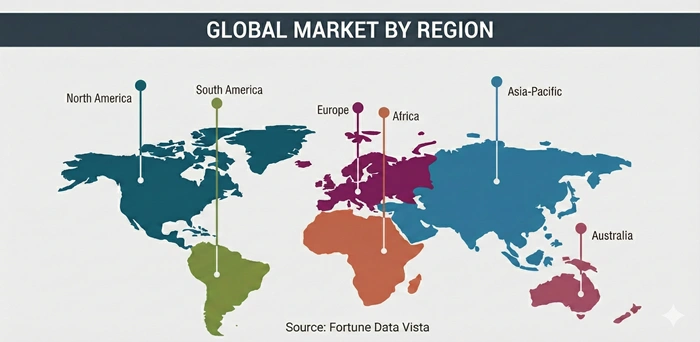
North America holds the dominant position in the global soil monitoring market, accounting for approximately 38.6% of total revenue in 2025 and expected to grow at a CAGR of approximately 13.9% through 2033. The United States is the primary market driver within the region, where the combination of large-scale commercial farming, advanced agricultural technology infrastructure, strong USDA funding for precision agriculture programs, and a mature agri-tech industry ecosystem creates ideal conditions for high levels of soil monitoring adoption. Leading companies including METER Group, Campbell Scientific, Stevens Water Monitoring Systems, CropX, and Acclima Inc. are headquartered or have major operations in the U.S., serving a large and technology-receptive commercial farm customer base that is continuously adopting new soil intelligence capabilities. Canada contributes meaningful additional market demand, particularly in the prairie grain and oilseed farming regions of Saskatchewan, Manitoba, and Alberta, where precision soil management is increasingly standard practice among large commercial operators.
The North American market is characterized by a growing integration of soil monitoring platforms with broader farm management information systems — including crop planning, variable-rate application, and financial management tools — creating increasing switching costs for existing platform users and enabling soil monitoring vendors to capture recurring software revenue streams alongside hardware sales. The U.S. agricultural carbon market's development is adding a further growth dimension, as farm operators participating in voluntary carbon credit programs require verified, continuous soil carbon measurement capabilities that are driving adoption of next-generation multi-parameter soil monitoring systems specifically designed to meet carbon registry measurement protocols.
Asia Pacific
Asia Pacific Is the Fastest-Growing Region for Soil Monitoring, Energized by China's Precision Agriculture Investments, India's Government-Led Soil Health Programs, and Rapidly Scaling Agri-Tech Adoption Across Southeast Asia*
Asia Pacific is projected to deliver the highest regional growth rate within the soil monitoring market, expanding at a CAGR of approximately 15.7% through 2033, from a 2025 revenue share of approximately 27.3%. China is the primary volume growth engine, driven by government-mandated precision agriculture programs that are systematically deploying soil monitoring infrastructure across the country's major crop production regions as part of national food security and agricultural efficiency improvement initiatives. Japanese precision agriculture technology companies — including NEC Corporation and Fujitsu Frontech — are active participants in the regional soil monitoring market, contributing sensor technology, data analytics platforms, and field robotics capabilities that support the region's growing smart farming ecosystem. India represents the most exciting emerging market within the region, where the government's Soil Health Card scheme and Digital Agriculture Mission are creating an unprecedented public-sector driven deployment of soil assessment and monitoring services across tens of millions of farm holdings nationwide.
Australia is another important Asia Pacific market, where precision agriculture adoption among large-scale grain and grazing operations is among the highest in the world per farm, driving strong commercial demand for advanced multi-parameter soil monitoring systems from suppliers including Sentek Technologies — an Australian company that is one of the world's leading manufacturers of soil moisture monitoring equipment. Southeast Asia's rapidly growing agricultural technology sector, supported by rising government and private investment in smart farming infrastructure across countries including Vietnam, Thailand, and Indonesia, is expanding the region's addressable market for soil monitoring solutions at an accelerating pace. The Asia Pacific soil monitoring sector is expected to see the largest absolute revenue gains of any region through 2033, adding substantially more market value over the forecast period than any other geographic market globally.
Top Key Players
-
METER Group, Inc. (United States)
-
Campbell Scientific, Inc. (United States)
-
Stevens Water Monitoring Systems, Inc. (United States)
-
Sentek Technologies Pty Ltd (Australia)
-
CropX Technologies Inc. (United States / Israel)
-
SGS Group (Switzerland)
-
Acclima Inc. (United States)
-
John Deere & Company (United States)
-
Trimble Inc. (United States)
-
The Toro Company (United States)
-
Spectrum Technologies, Inc. (United States)
-
Irrometer Company (United States)
-
Element Material Technology (United Kingdom)
-
Soil Scout Oy (Finland)
-
AquaCheck (Pty) Ltd (South Africa)
Recent Developments
-
In 2025, John Deere announced a significant expansion of its See & Spray technology platform to incorporate real-time soil condition data from in-field sensor networks, enabling the system to adjust application rates dynamically based on live soil moisture and nutrient status data, enhancing both input efficiency and crop yield outcomes for commercial farm operators.
-
In 2024, METER Group launched the TEROS 55 multi-parameter soil sensor — a new generation of field-deployable soil monitoring hardware capable of simultaneously measuring soil moisture, temperature, salinity, and volumetric water content, positioning the company at the forefront of comprehensive in-field soil intelligence solutions for precision agriculture markets.
-
In 2025, CropX Technologies secured a major funding round from strategic agricultural technology investors, using the capital to expand its AI-driven soil monitoring and irrigation management platform into new markets across India, Brazil, and Australia, where precision water management is an urgent commercial priority for large-scale farm operators.
-
In 2024, Trimble Inc. deepened its integration of soil monitoring data streams into its Ag Software platform, launching new soil variability mapping and variable-rate prescription generation features that enable farmers to use real-time soil condition data to drive zone-specific fertilizer and amendment application decisions directly from the platform.
-
In 2025, Sentek Technologies announced a strategic partnership with a leading Australian agri-tech distributor to expand the commercial deployment of its EnviroSCAN and TriSCAN soil moisture monitoring systems across Southeast Asian markets, targeting the rapidly growing precision irrigation management sector in Vietnam, Thailand, and Indonesia.
Market Trends
The Convergence of Multi-Parameter Sensor Arrays, Satellite-IoT Integration, and Soil Carbon Market Participation Is Defining the Next Competitive Era in the Soil Monitoring Market*
One of the most impactful trends reshaping the soil monitoring market is the rapid transition from single-parameter to comprehensive multi-parameter soil monitoring — systems that can simultaneously measure moisture, temperature, electrical conductivity, pH, and key macro-nutrient concentrations from a single in-field sensor installation. This shift is being driven by the growing recognition among agronomists and precision farming practitioners that truly effective soil management requires an integrated understanding of multiple interacting soil properties simultaneously, rather than the isolated measurement of individual parameters. As the engineering challenges of multi-parameter sensor design are overcome and production costs decline, these comprehensive soil intelligence systems are moving from premium research installations toward mainstream commercial deployment across agricultural and environmental monitoring markets globally.
The integration of soil monitoring networks with agricultural carbon accounting platforms is emerging as one of the most commercially significant market trends of the second half of the 2020s. As carbon credit markets for agricultural soil carbon sequestration scale in value and rigor, the need for independent, sensor-validated measurement and verification of soil carbon stock changes is creating a compelling new revenue justification for precision soil monitoring system deployment. This integration is drawing new categories of commercial actors — including carbon project developers, credit registries, and corporate sustainability buyers — into the soil monitoring ecosystem as buyers and co-investors in monitoring infrastructure, expanding the market's customer base and funding sources well beyond the traditional agricultural input and technology sectors that have historically driven the industry's commercial development.
Segments Covered in the Report
-
By Offering
-
Hardware (Sensors, Data Loggers, Probes, Meters)
-
Software (Analytics Platforms, Farm Management Systems, Data Visualization Tools)
-
Services (Installation, Calibration, Agronomic Advisory, Managed Monitoring)
-
-
By System Type
-
Ground-Based Monitoring Systems
-
Sensing and Imagery Systems (Drones, Satellite Remote Sensing, Aerial Imaging)
-
Robotics and Telematics Systems
-
-
By Application
-
Agricultural (Irrigation Management, Nutrient Management, Crop Planning, Precision Farming)
-
Non-Agricultural (Environmental Monitoring, Construction, Mining Reclamation, Urban Greenspace)
-
-
By Soil Parameter
-
Soil Moisture
-
Soil Temperature
-
Soil pH
-
Soil Electrical Conductivity / Salinity
-
Soil Nutrients (Nitrogen, Phosphorus, Potassium)
-
Soil Carbon
-
Others
-
-
By End-User
-
Commercial Farms and Agribusinesses
-
Government and Research Institutions
-
Environmental Consultancies and Industrial Operators
-
Urban Farms and Controlled Environment Agriculture
-
-
By Region
-
North America (U.S., Canada, Mexico)
-
Europe (Germany, France, UK, Netherlands, Rest of Europe)
-
Asia Pacific (China, India, Japan, Australia, Rest of Asia Pacific)
-
Latin America (Brazil, Argentina, Rest of Latin America)
-
Middle East & Africa (South Africa, GCC Countries, Rest of MEA)
-
❝ Built for Every Level — From Startups to Industry Giants ❞
Here Is Exactly How This Report Works for You
-
Whether you are an agri-tech startup developing next-generation soil sensors or a Tier 1 precision agriculture platform provider expanding into new regional markets, this report delivers granular segment revenue forecasts, technology adoption trend analysis, and competitive positioning intelligence that directly inform your product roadmap, go-to-market strategy, and investor conversations — giving you a precise, evidence-based picture of exactly where the soil monitoring market opportunity lies through 2033.
-
For investors, mid-market agricultural technology companies, and corporate sustainability teams, the report's detailed supply-demand analysis maps how climate change intensity, government agricultural policy shifts, and carbon market development across North America, Asia Pacific, and Europe are reshaping demand patterns and pricing dynamics — equipping your decision-makers with the commercial intelligence needed to make confident capital deployment and market entry decisions in this rapidly evolving sector.
-
The competitor revenue analysis section provides a comprehensive breakdown of revenue sources, product portfolio strategies, OEM and government contract positions, regional market share, and M&A activity for the top 15 players in the global soil monitoring industry — giving your business development and corporate strategy teams the actionable competitive intelligence needed to identify partnership opportunities, benchmark technology capabilities, and develop winning go-to-market approaches in both mature and fast-growing regional markets.
Frequently Asked Questions:
Answer: The global soil monitoring market is valued at USD 669.40 million in 2025 and is projected to reach approximately USD 1260.60 million by 2033. This reflects a strong CAGR of 14.3% from 2026 to 2033, driven by precision agriculture adoption, food security imperatives, and growing environmental monitoring requirements worldwide.
Answer: Key growth drivers include the rising global adoption of precision agriculture technologies that rely on real-time soil intelligence, government-funded programs subsidizing soil health monitoring in major agricultural economies, and the growing commercial appeal of IoT-enabled, wireless soil sensor networks for farms of every scale. The emergence of agricultural carbon markets that require verified soil carbon monitoring is also creating a powerful and entirely new growth catalyst for the market.
Answer: North America holds the dominant position in the soil monitoring market with approximately 39% of global revenue, supported by its advanced precision agriculture ecosystem and strong government policy backing. Asia Pacific is the fastest-growing region, expanding above the global CAGR through 2033, powered by China's large-scale precision farming programs, India's national soil health initiatives, and rapidly growing agri-tech adoption across Southeast Asia.
Answer: The growth of voluntary agricultural carbon credit markets is creating a significant new demand channel for the soil monitoring market, as carbon sequestration programs require continuous, verified measurement of soil carbon stock changes to generate creditable offsets. This requirement is driving farm operators participating in carbon programs to deploy advanced soil monitoring systems specifically to meet the measurement protocols of recognized carbon registries, adding an economically compelling new justification for monitoring technology investment beyond traditional agronomic productivity benefits.
Answer: The soil monitoring market covers a comprehensive range of soil parameters including moisture content, temperature, pH, electrical conductivity, salinity, and macro-nutrient concentrations (nitrogen, phosphorus, and potassium), each of which provides critical information for optimizing irrigation, fertilization, and soil health management decisions. The emerging focus on soil carbon measurement — driven by agricultural carbon market participation — is adding carbon content to this parameter set, making multi-parameter sensor systems capable of simultaneously measuring multiple soil attributes increasingly important to the market's commercial development.