
Solid Waste Management Market Overview
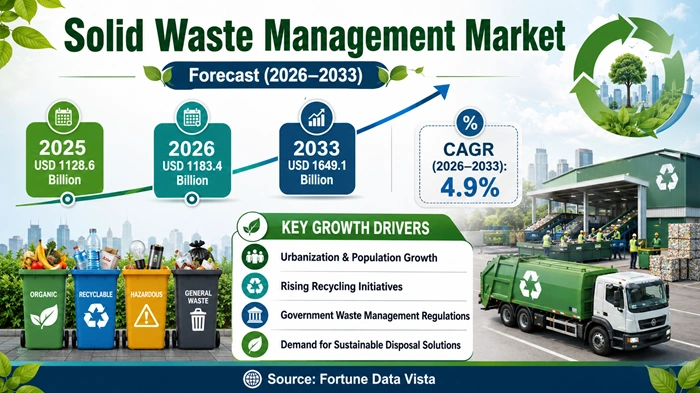
The global solid waste management market size is valued at USD 1128.6 billion in 2025 and is predicted to increase from USD 1183.4 billion in 2026 to approximately USD 1649.1 billion by 2033, growing at a CAGR of 4.9% from 2026 to 2033.
The rising volume of municipal, industrial, and commercial waste generated globally — driven by rapid urbanization, population growth, and expanding industrial output — has made efficient waste collection, processing, and disposal a critical infrastructure priority for governments and corporations alike. The solid waste management industry encompasses the full lifecycle of waste handling, from curbside collection and transportation to recycling, composting, landfilling, and waste-to-energy conversion. As environmental awareness deepens and regulatory frameworks tighten worldwide, investment in modern waste handling infrastructure is accelerating across both developed and emerging markets at an unprecedented pace.
AI Impact on the Solid Waste Management Industry
Artificial Intelligence Is Transforming Waste Collection Routes, Recycling Sorting Accuracy, and Operational Efficiency Across the Entire Solid Waste Management Value Chain
Artificial intelligence is reshaping the operational backbone of the solid waste management industry in several meaningful ways. AI-powered route optimization platforms analyze real-time traffic data, fill levels of smart bins, and fleet GPS data to generate dynamic collection routes that reduce fuel consumption, cut operational costs, and improve collection frequency without adding vehicle capacity. Cities deploying AI-driven fleet management systems have reported collection efficiency gains of up to 30% — a compelling economic case that is driving rapid adoption among municipal authorities and private waste contractors across North America and Europe.
At the processing and recycling stage, machine learning-powered robotic sorting systems are dramatically improving the accuracy and speed of material separation at materials recovery facilities (MRFs). These systems use computer vision and AI classification algorithms to identify and separate different material types — including plastics, paper, metals, and glass — at speeds and accuracy levels that far exceed what manual sorting can achieve. As the quality of sorted recyclables improves, the commercial value of recovered materials increases, making recycling operations more economically self-sustaining. This technological evolution is gradually reducing the historical financial subsidy burden on municipal recycling programs and attracting private investment into the circular economy infrastructure segment.
Growth Factors
Rapid Urbanization, Increasing Volumes of Industrial and Municipal Waste, and Expanding Government Mandates for Sustainable Waste Disposal Are the Dominant Forces Propelling the Solid Waste Management Market Forward
The single most powerful structural driver of the solid waste management market is the relentless growth of urban populations globally. According to long-term projections, more than two-thirds of the world's population will live in cities by 2050, and each percentage point of urban population growth translates directly into higher volumes of household, commercial, and construction waste requiring collection and treatment. In emerging markets across Asia Pacific, Africa, and Latin America — where urbanization is occurring fastest — the gap between current waste management infrastructure capacity and actual waste volumes being generated is widening rapidly, creating an urgent and large-scale investment need that governments and private operators are actively responding to.
Simultaneously, stricter environmental legislation in major economies is compelling both public agencies and private sector operators to upgrade their waste handling systems. Extended Producer Responsibility (EPR) regulations in Europe and parts of North America require manufacturers to finance and manage the end-of-life disposal of their products. The European Union's Circular Economy Action Plan mandates aggressive recycling and landfill diversion targets that are pushing member states to invest heavily in new recycling infrastructure, composting facilities, and waste-to-energy plants. In emerging economies, international development financing from institutions such as the World Bank and Asian Development Bank is enabling countries to build foundational waste management infrastructure that simply did not exist before — broadening the total addressable market for the solid waste management industry significantly.
Market Outlook
The Solid Waste Management Market Is Positioned for Robust Long-Term Growth, Supported by the Convergence of Environmental Policy, Circular Economy Investment, and Rapidly Expanding Waste Generation in Developing Economies
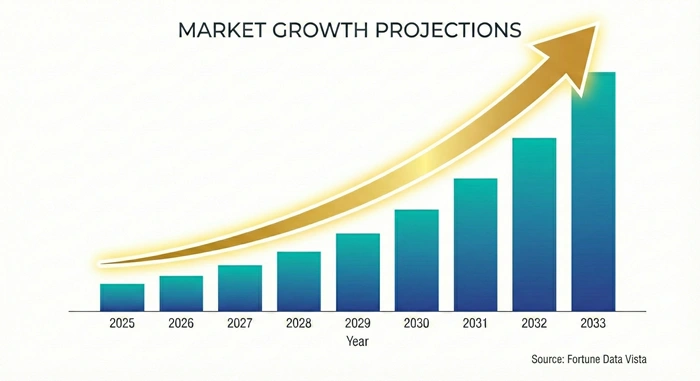
Looking at the forecast horizon, the outlook for the solid waste management market is one of consistent and broad-based expansion. The global shift toward circular economy principles — where waste is treated as a resource rather than a liability — is fundamentally changing how governments, corporations, and investors approach waste infrastructure. Recycling plants, composting facilities, and waste-to-energy conversion plants are receiving unprecedented levels of public and private investment, with many projects now structured as public-private partnerships (PPPs) that attract institutional capital while keeping public sector capital requirements manageable. This model of infrastructure financing is replicating successfully across Asia, the Middle East, and Africa, opening new market frontiers for global solid waste management operators.
The rapid growth of industrial and e-waste streams is also broadening the addressable market well beyond traditional municipal solid waste. The electronics industry's continued growth is generating enormous volumes of end-of-life devices containing both hazardous materials and valuable recovered metals, creating specialized waste handling sub-sectors with premium service margins. Construction and demolition waste — particularly from the infrastructure investment booms happening across India, Southeast Asia, and the Middle East — is adding another high-volume, high-value stream that established solid waste management companies are increasingly equipped to capture. These diversified waste streams collectively ensure that market growth remains well-distributed and resilient across economic cycles.
Expert Speaks
-
"The scale of investment needed in waste infrastructure globally is enormous, and we at Waste Management are positioning ourselves at the center of that opportunity — particularly in recycling technology, renewable natural gas, and advanced waste processing capabilities that transform what used to be a cost into a genuine revenue stream." — Jim Fish, CEO, WM (Waste Management Inc.)
-
"Republic Services has always believed that sustainability and profitability go hand in hand in this industry. The push toward zero waste, extended producer responsibility, and circular economy regulation is creating a structural tailwind for operators like us that have invested in the right infrastructure ahead of the curve." — Jon Vander Ark, CEO, Republic Services Inc.
-
"Veolia's strategic vision is to be the global reference in ecological transformation. The solid waste sector is central to that ambition — because turning waste into value, whether through energy recovery, material recycling, or treated water, is precisely what the world needs more of as environmental pressure intensifies." — Estelle Brachlianoff, CEO, Veolia Environnement SA
Key Report Takeaways
-
North America leads the solid waste management market with the largest regional revenue share of approximately 32% in 2026, driven by a highly developed municipal waste infrastructure, robust regulatory enforcement, and the presence of the world's largest private solid waste service operators including WM, Republic Services, and Waste Connections.
-
Asia Pacific is the fastest-growing regional market, expanding at a CAGR exceeding 6.5% from 2026 to 2033, powered by the rapid urban growth of China, India, and Southeast Asian economies — where waste generation is rising sharply but formal waste management capacity still lags significantly behind demand.
-
Municipal solid waste is the largest waste type segment, accounting for approximately 44% of total market revenue in 2026, given the sheer volume of household and commercial waste generated daily in urban centers across every major world region.
-
Collection and transportation services contribute the highest revenue share across service type segments at approximately 38% in 2026, reflecting the high frequency and labor-intensive nature of waste pickup operations for residential, commercial, and industrial customers globally.
-
Landfill disposal remains the most widely used waste disposal method globally, accounting for approximately 40% of solid waste treated in 2026, though its market share is declining as recycling, composting, and waste-to-energy alternatives gain investment and regulatory support.
-
The waste-to-energy segment is the fastest-growing disposal method, projected to capture approximately 18% of the disposal method market by 2033 at a CAGR of approximately 7.2% from 2026 to 2033, as governments increasingly view energy recovery from non-recyclable waste as a superior alternative to landfilling that simultaneously addresses both waste volumes and renewable energy targets.
Market Scope
| Parameter | Details |
|---|---|
| Market Size by 2033 | USD 1649.1 Billion | Market Size by 2026 | USD 1183.4 Billion | Market Size by 2025 | USD 1128.6 Billion | Market Growth Rate from 2026 to 2033 | CAGR of 4.9% | Dominating Region | North America | Fastest Growing Region | Asia Pacific | Segments Covered | Waste Type, Service Type, Disposal Method, End User | Regions Covered | North America, Europe, Asia Pacific, Latin America, Middle East and Africa |
Market Dynamics
Drivers Impact Analysis
Accelerating Urban Population Growth, Tightening Environmental Regulations, and the Rapid Expansion of Industrial and E-Waste Streams Are Delivering Powerful and Sustained Forward Momentum to the Solid Waste Management Market
| Driver | ≈ % Impact on CAGR Forecast | Geographic Relevance | Impact Timeline |
|---|---|---|---|
| Rapid urbanization and population growth | ~28% | Global — highest in Asia Pacific and Africa | Short to Long-Term |
| Stricter environmental and waste diversion regulations | ~24% | North America, Europe | Medium to Long-Term |
| Growth of industrial and construction waste streams | ~18% | Asia Pacific, Middle East | Short to Long-Term |
| Rising e-waste generation | ~12% | Global — highest in North America, Europe, Asia Pacific | Medium to Long-Term |
| Government infrastructure investment and PPP programs | ~10% | Latin America, Africa, South Asia | Medium-Term |
| Circular economy and EPR policy adoption | ~8% | Europe, North America | Long-Term |
The solid waste management market draws its strongest growth force from the continuing and unstoppable expansion of the world's urban population. Each year, hundreds of millions of people transition from rural to urban living — particularly in South and Southeast Asia, Sub-Saharan Africa, and Latin America — and every new urban resident generates between 0.5 and 2.0 kilograms of waste per day. The resulting surge in municipal solid waste volumes in cities that are already struggling to manage their existing waste loads is creating enormous pressure on local governments to expand collection infrastructure, build new processing facilities, and develop more sustainable disposal alternatives. This pressure is translating into significant public procurement activity for solid waste management services and infrastructure across dozens of countries simultaneously.
Regulatory frameworks in developed economies are also acting as major demand amplifiers. Extended Producer Responsibility (EPR) laws, which require manufacturers to fund the collection and recycling of their products at end of life, are now in force across most of the European Union, large parts of North America, and an increasing number of Asia Pacific countries. These regulations are channeling substantial private sector investment into new recycling infrastructure, sorting technology upgrades, and expanded collection systems. Combined with mandatory landfill diversion targets and carbon pricing mechanisms that make landfill disposal progressively more expensive, EPR frameworks are fundamentally restructuring the economics of the solid waste management industry in favor of recycling, reuse, and energy recovery.
Restraints Impact Analysis
High Infrastructure Investment Requirements, Informal Waste Sector Competition, and the Complexity of Managing Diverse Waste Streams Continue to Constrain Market Growth Potential in Key Geographies
| Restraint | ≈ % Impact on CAGR Forecast | Geographic Relevance | Impact Timeline |
|---|---|---|---|
| High capital cost of waste treatment infrastructure | ~-30% | Developing economies globally | Short to Medium-Term |
| Informal waste sector competition | ~-22% | Africa, South Asia, Latin America | Medium to Long-Term |
| Public resistance to waste facility siting (NIMBY) | ~-20% | North America, Europe | Medium-Term |
| Inadequate waste segregation at source | ~-15% | Developing and emerging economies | Long-Term |
| Fluctuating recycled material commodity prices | ~-13% | Global | Short-Term |
The largest operational and financial constraint facing the solid waste management market is the enormous upfront capital investment required to build and operate modern waste treatment infrastructure. Landfill construction, incineration and waste-to-energy facilities, materials recovery plants, and composting operations all require multi-million to multi-billion dollar investments in land, equipment, permits, and operating systems that take years to recoup. For developing country governments operating under tight fiscal constraints, funding such infrastructure domestically is extraordinarily challenging — and the reliance on international development financing or private capital means that many projects face lengthy approval and structuring timelines before construction can even begin.
The presence of a large and entrenched informal waste sector in many developing economies creates a separate but equally significant obstacle. In countries across South Asia, Sub-Saharan Africa, and Latin America, informal waste pickers and unlicensed collectors handle a substantial fraction of municipal solid waste outside of any formal regulated system. While these actors provide a genuine service to communities, they also compete directly with formal operators for the most valuable recyclable materials — reducing the revenue base available to licensed operators and making it harder for formal businesses to achieve the economies of scale needed to sustain profitability and expand their service footprints.
Opportunities Impact Analysis
The Rapid Expansion of Waste-to-Energy Infrastructure, the Growth of the Circular Economy, and Increasing Private Capital Investment in Smart Waste Technology Are Creating Significant New Revenue Opportunities Across the Solid Waste Management Market
| Opportunity | ≈ % Impact on CAGR Forecast | Geographic Relevance | Impact Timeline |
|---|---|---|---|
| Waste-to-energy facility development | ~26% | Global — highest in Asia Pacific, Europe | Medium to Long-Term |
| Circular economy and advanced recycling investment | ~24% | Europe, North America, Asia Pacific | Short to Long-Term |
| Smart waste technology and IoT adoption | ~20% | North America, Europe | Short to Medium-Term |
| E-waste processing and urban mining | ~16% | Global | Medium-Term |
| Public-private partnership models in emerging markets | ~14% | Africa, South Asia, Latin America | Medium to Long-Term |
Waste-to-energy (WtE) technology represents one of the most compelling growth opportunities within the solid waste management landscape today. Countries across Asia Pacific — led by China, South Korea, and Japan — along with European markets including Germany, the Netherlands, and Sweden, are actively expanding their WtE capacity as a primary strategy for handling non-recyclable waste while simultaneously generating electricity or district heat. China alone has been building new WtE plants at a rate that makes it the world's largest WtE market by capacity, and similar programs are being initiated across Southeast Asia, the Middle East, and parts of Latin America. For operators that can successfully navigate the permitting and financing process, WtE facilities offer long-term, contracted revenue streams that make them highly attractive assets for both strategic and financial investors.
The circular economy transition creates another layer of opportunity, particularly in advanced recycling technologies capable of handling plastics, textiles, and composite materials that traditional mechanical recycling cannot process. Chemical recycling and pyrolysis technologies, which break down mixed plastics into feedstocks suitable for new petrochemical production, are attracting substantial venture capital and corporate investment. Major consumer goods companies with ambitious plastic circularity commitments — including Procter and Gamble, Unilever, and Nestlé — are actively co-investing in these technologies and signing long-term offtake agreements that reduce the commercial risk for recycling operators and accelerate facility development timelines.
Segment Analysis
By Waste Type: Municipal Solid Waste
Municipal Solid Waste Is the Largest and Most Consistently Growing Segment of the Solid Waste Management Market, Driven by Urban Expansion and the Daily Waste Generation of Billions of Residential and Commercial Consumers Globally
Municipal solid waste (MSW) is the dominant segment within the solid waste management market, representing approximately 44% of total market revenue in 2026. This segment encompasses household garbage, commercial waste from offices and retail businesses, and institutional waste from schools, hospitals, and government buildings — all of which require regular and reliable collection, transport, processing, and disposal. The sheer scale and consistency of MSW generation, driven by billions of urban residents generating waste every single day, makes this segment the most predictable and stable revenue stream within the entire waste management value chain. The MSW segment is projected to grow at a CAGR of approximately 4.7% from 2026 to 2033, supported by population growth, urban expansion, and the increasing formalization of waste collection services in emerging economies. In North America, dominant operators in this segment include Waste Management Inc. (WM), Republic Services, and Waste Connections — companies that have built integrated collection, transfer, and disposal networks spanning hundreds of municipalities across the United States and Canada.
Asia Pacific is the fastest-growing geography for municipal solid waste management, with China and India together generating over one-third of the world's total MSW by volume and both countries investing heavily in expanding their formal waste management infrastructure. In India, the Swachh Bharat Mission (Clean India Mission) and subsequent urban development programs have created enormous government-funded procurement activity for waste collection vehicles, processing plants, and landfill development across hundreds of cities. In China, strict national mandates on household waste segregation introduced in major cities have created new demand for source-separation infrastructure, organic waste processing facilities, and advanced sorting technology. Blue Star Limited, A2Z Solutions, and municipal operators backed by provincial governments are among the leading players serving this rapidly growing segment across the Asia Pacific region.
By Disposal Method: Waste-to-Energy
Waste-to-Energy Is the Fastest-Growing Disposal Method in the Solid Waste Management Market as Governments and Investors Increasingly Recognize Its Dual Value in Reducing Landfill Volumes While Generating Renewable Energy
The waste-to-energy (WtE) disposal method is the fastest-growing segment within the solid waste management market, projected to achieve approximately 18% of total disposal method market share by 2033 at a CAGR of approximately 7.2% from 2026 to 2033. WtE facilities convert non-recyclable solid waste into electricity, heat, or fuel through combustion, gasification, pyrolysis, or anaerobic digestion processes — providing a solution for waste that cannot economically be recycled while simultaneously generating energy that displaces fossil fuel consumption. As countries push to meet both waste diversion targets and renewable energy generation commitments simultaneously, WtE is increasingly viewed as an efficient dual-purpose infrastructure investment. Europe leads the world in WtE capacity per capita, with countries including Germany, France, the Netherlands, Denmark, and Sweden operating large and well-established networks of WtE facilities that serve both waste disposal and district heating or electricity generation purposes. Key companies operating in the European WtE space include Veolia Environnement SA (France), Suez SA (France), and Covanta (United States), which collectively manage a significant share of the continent's thermal waste treatment capacity.
Asia Pacific is the fastest-growing region for new WtE capacity additions, with China operating the largest and fastest-expanding WtE program in the world. The Chinese government has set ambitious national targets for waste incineration capacity as part of its strategy to eliminate uncontrolled landfilling and accelerate its transition to cleaner urban waste management. Countries including South Korea, Japan, and Singapore have similarly made WtE a cornerstone of their national waste management strategies, given their land constraints and high waste generation rates. In the Middle East — particularly in Saudi Arabia and the UAE — large-scale WtE projects are being developed under national sustainability agendas as part of broader clean energy transitions, with major international operators and technology providers actively competing for long-term project contracts.
Regional Insights
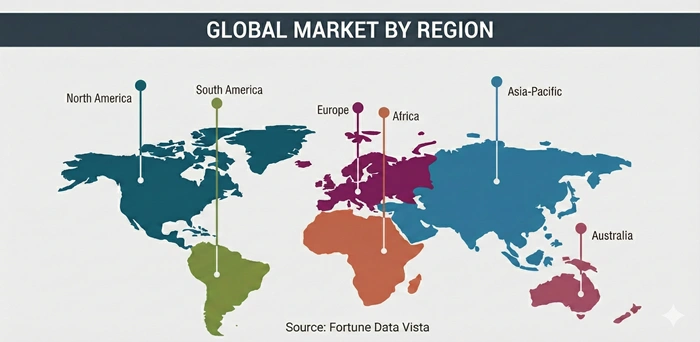
North America: The Dominating Region
North America Leads the Global Solid Waste Management Market, Powered by a Mature and Highly Formalized Service Industry, Strong Private Sector Investment, and a Robust Regulatory Framework That Drives Consistent Infrastructure Spending
North America commands the largest share of the global solid waste management market, contributing approximately 32% of total global revenue in 2026, with a regional CAGR of approximately 4.2% projected through 2033. The United States is by far the largest national market within the region, built on an exceptionally well-developed private sector solid waste services industry in which large, publicly traded companies like Waste Management Inc. (WM) (USA), Republic Services Inc. (USA), and Waste Connections Inc. (USA) collectively service hundreds of millions of residential and commercial waste generation points. The combination of high per-capita waste generation rates, near-universal formal waste service coverage, and regular infrastructure investment driven by both regulatory compliance and shareholder return expectations makes North America a consistently high-revenue market for solid waste management operators.
Canada adds a significant contribution to the regional market, particularly in industrial waste management and recycling infrastructure, while also benefiting from growing investment in waste-to-energy and organics processing in major urban centers like Toronto and Vancouver. Mexico is emerging as a growth market within the North American solid waste management landscape, with its expanding manufacturing sector and growing urban middle class generating increasing volumes of both municipal and industrial waste. Companies like GFL Environmental Inc. (Canada) and Clean Harbors Inc. (USA) are actively expanding their service footprints across both Canada and select industrial markets in Mexico, reinforcing the region's status as both the world's largest and most commercially sophisticated solid waste service market.
Asia Pacific: The Fastest Growing Region
Asia Pacific Is the World's Fastest Growing Solid Waste Management Market, Driven by an Explosive Rise in Urban Waste Generation Across China, India, and Southeast Asia That Far Outpaces Existing Infrastructure Capacity
Asia Pacific is the fastest-growing regional segment within the solid waste management market, projected to expand at a CAGR of approximately 6.5% from 2026 to 2033 — the highest rate among all global regions. The region is simultaneously the world's largest generator of municipal solid waste by volume and the region with the largest gap between waste generation and formal managed waste treatment capacity. China leads in absolute waste volumes, with decades of industrial output and rapid urbanization creating complex and large-scale waste management challenges that the government is now addressing through massive infrastructure programs including WtE plant rollouts, mandatory household waste segregation, and industrial waste treatment capacity expansion. Beijing Enterprises Holdings (China), Everbright International (China), and Veolia China (France-China) are among the leading players operating in this fast-moving market. In India, government programs including the Swachh Bharat Abhiyan have driven significant procurement of waste collection and processing infrastructure across hundreds of tier-2 and tier-3 cities, creating a growing market for both domestic service providers and international operators seeking to enter one of the world's largest emerging waste markets.
Southeast Asian economies including Indonesia, Vietnam, Thailand, and the Philippines are in the early stages of formalizing their solid waste management sectors, transitioning from largely informal waste collection systems to regulated service models that attract private investment and international operator participation. The rapid growth of manufacturing FDI across these countries is also generating rising volumes of industrial and hazardous waste that require specialized treatment infrastructure. International development financing from the World Bank, the Asian Development Bank, and bilateral donor programs is helping to fund foundational waste management infrastructure in lower-income Southeast Asian nations, gradually expanding the addressable market and creating commercial entry points for both regional and global waste management companies.
Top Key Players
-
Waste Management Inc. (WM) (United States)
-
Republic Services Inc. (United States)
-
Waste Connections Inc. (United States)
-
Veolia Environnement SA (France)
-
Suez SA (France)
-
GFL Environmental Inc. (Canada)
-
Clean Harbors Inc. (United States)
-
Casella Waste Systems Inc. (United States)
-
Covanta Holding Corporation (United States)
-
Beijing Enterprises Holdings Ltd. (China)
-
Everbright International Holdings Ltd. (China)
-
Remondis SE and Co. KG (Germany)
-
FCC Environmental Services (Spain)
Recent Developments
-
In 2025, Veolia Environnement SA announced a landmark agreement to acquire Enviri Group's Clean Earth hazardous waste division for approximately USD 3 billion, a deal that significantly doubles Veolia's U.S. hazardous waste treatment footprint and strengthens its position as a global leader in specialty waste management.
-
In 2025, GFL Environmental completed the sale of its environmental services division to Apollo Global Management and BC Partners for USD 5.6 billion, retaining a 44% stake and using the proceeds to substantially reduce its long-standing debt leverage and accelerate reinvestment into its solid waste collection and disposal operations.
-
In 2025, Republic Services Inc. set a target of USD 1 billion in mergers and acquisitions for the year, kicking off the initiative by acquiring Shamrock Environmental early in the year and continuing to expand its recycling and fleet infrastructure capabilities across multiple U.S. states.
-
In 2025, Waste Connections Inc. acquired Florida Express Environmental, a privately held waste hauling company operating in the Ocala region of Florida with a large fleet and affiliated construction and demolition landfill assets, further strengthening the company's service density in the Southeast U.S. market.
-
In 2025, Casella Waste Systems Inc. completed the acquisition of Mountain State Waste in West Virginia, a transaction representing approximately USD 30 million in annualized revenue that expanded Casella's operational reach into new territories across West Virginia, Ohio, and Kentucky.
Market Trends
The Transition From a Linear Waste Disposal Model to a Circular Economy Framework — Combined With Rapid Adoption of Smart Waste Technologies — Is the Defining Transformation Reshaping the Solid Waste Management Market Through 2033
The most consequential market-level trend reshaping solid waste management globally is the shift from a traditional linear model — collect, bury, or burn — toward a fully circular economy approach where every material stream is assessed for its recovery and reuse potential before disposal is considered. This philosophical shift, increasingly backed by binding government regulation in Europe and voluntary corporate commitments in North America and Asia Pacific, is driving massive investment in new-generation recycling infrastructure including advanced mechanical recycling lines, chemical recycling plants capable of handling mixed plastics, food and organic waste composting networks, and construction and demolition material recovery facilities. The value embedded in recovered materials — from recycled plastic feedstocks to recovered metals from e-waste — is growing as virgin material prices rise and supply chain sustainability requirements intensify, making the circular economy model progressively more commercially attractive.
Smart waste management technology is the second defining trend, transforming how both municipal and private waste operators plan, monitor, and optimize their service delivery. IoT-enabled smart bins that transmit real-time fill-level data, AI-powered collection route optimization platforms, RFID-tagged waste containers for accountability tracking, and data analytics dashboards for operational performance monitoring are all becoming standard tools for leading waste operators. Cities that have deployed smart waste management platforms have reported significant reductions in unnecessary collection runs, lower vehicle emissions, and measurable improvements in customer service outcomes. As hardware costs fall and digital infrastructure improves in developing countries, the adoption of smart waste technology is expected to expand well beyond its current concentration in North America and Western Europe — creating new commercial opportunities for both technology providers and the solid waste operators that deploy their solutions.
Segments Covered in the Report
By Waste Type:
-
Municipal Solid Waste
-
Industrial Waste
-
Hazardous Waste
-
Construction and Demolition Waste
-
Electronic Waste (E-Waste)
-
Others
By Service Type:
-
Collection
-
Transportation
-
Processing and Recycling
-
Disposal
-
Others
By Disposal Method:
-
Landfill
-
Incineration
-
Composting
-
Recycling
-
Waste-to-Energy
-
Others
By End User:
-
Residential
-
Commercial
-
Industrial
-
Healthcare
-
Others
By Region:
-
North America (U.S., Canada, Mexico)
-
Europe (Germany, U.K., France, Italy, Rest of Europe)
-
Asia Pacific (China, India, Japan, South Korea, Rest of Asia Pacific)
-
Latin America (Brazil, Argentina, Rest of Latin America)
-
Middle East and Africa (UAE, Saudi Arabia, Rest of MEA)
❝ Built for Every Level — From Startups to Industry Giants ❞
Here Is Exactly How This Report Works for You
-
Whether you are a Tier 1 global waste operator, a Tier 2 regional service company, or an early-stage startup entering the smart waste technology space, this report delivers granular revenue forecasts by segment and region, competitor revenue breakdowns, and market entry strategies that give you the precise intelligence needed to identify high-growth pockets within the solid waste management market and position your business ahead of the competition.
-
This report maps the complete supply-demand dynamics of the waste management industry — including infrastructure capacity gaps, regulatory compliance timelines, recyclable commodity price trends, and how geopolitical factors such as trade restrictions, carbon pricing, and cross-border waste movement regulations are impacting operator strategies — so that investors and corporate decision-makers can navigate market risks confidently and allocate capital where returns are most defensible.
-
The full version of this report provides detailed competitor revenue analysis, revenue source breakdowns by service type and geography, M&A activity profiling, and a forward-looking technology investment landscape covering smart waste, advanced recycling, and waste-to-energy — giving decision-makers at every level of the market the actionable data they need to grow faster, manage risk better, and outperform their competition through 2033.
Frequently Asked Questions:
Answer: The solid waste management market is valued at USD 1128.6 billion in 2025 and is expected to reach USD 1649.1 billion by 2033. The market will grow at a CAGR of 4.9% from 2026 to 2033, supported by urbanization, regulatory mandates, and rising investment in recycling and waste-to-energy infrastructure.
Answer: North America holds the largest share of the solid waste management market at approximately 32% of global revenue in 2026. This dominance is driven by a mature private sector service industry, high per-capita waste generation, and well-enforced environmental regulations that sustain consistent infrastructure spending.
Answer: Rapid urbanization and population growth are the primary drivers, steadily increasing the volume of municipal and industrial waste that requires formal management. Stricter environmental regulations — including extended producer responsibility laws, landfill diversion targets, and carbon pricing — are compelling governments and businesses to invest in advanced waste treatment infrastructure globally.
Answer: Waste-to-energy (WtE) is the fastest-growing disposal method, projected to reach approximately 18% of total disposal market share by 2033 at a CAGR of 7.2%. Its dual ability to reduce landfill volumes and generate renewable electricity makes it an increasingly attractive investment for governments with both waste reduction and clean energy targets.
Answer: Smart waste technology including IoT-enabled bins, AI-driven collection route optimization, and robotic sorting systems in recycling facilities are significantly improving operational efficiency and recyclable material recovery rates. Advanced recycling technologies including chemical recycling for mixed plastics are also expanding the range of waste streams that can be commercially recovered, moving the industry closer to a true circular economy model.