
Sterility Indicators Market Overview
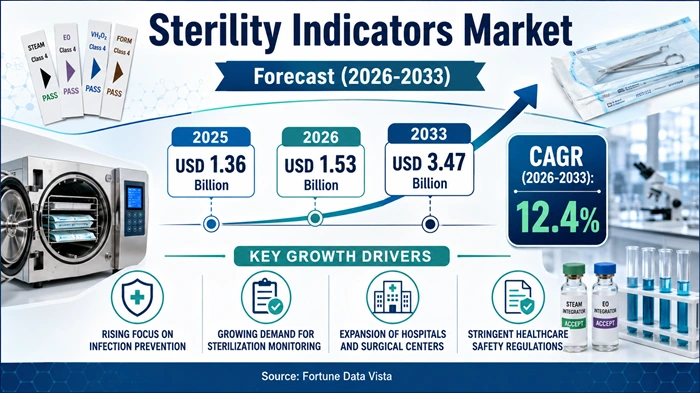
The global sterility indicators market size is valued at USD 1.36 billion in 2025 and is predicted to increase from USD 1.53 billion in 2026 to approximately USD 3.47 billion by 2033, growing at a CAGR of 12.4% from 2026 to 2033.
Sterility indicators — encompassing biological indicators, chemical indicators, and mechanical monitoring devices used to validate and confirm the effectiveness of sterilization processes — are a foundational component of infection control, patient safety, and regulatory compliance across the global healthcare, pharmaceutical, and medical device manufacturing industries. Rising rates of hospital-acquired infections, increasingly stringent regulatory requirements for sterilization validation, rapid expansion of pharmaceutical manufacturing in emerging economies, and continuous innovation in rapid-readout and digitally integrated sterilization monitoring technologies are collectively driving one of the most sustained growth phases the sterilization assurance market has seen in decades.
AI Impact on the Sterility Indicators Industry
Artificial Intelligence and Digital Integration Are Transforming Sterility Monitoring From a Manual, Batch-Based Compliance Process Into a Real-Time, Predictive, and Fully Auditable Sterilization Assurance System That Is Raising Safety Standards Across Healthcare and Pharmaceutical Manufacturing
Artificial intelligence is beginning to make a meaningful practical impact across the sterility indicators industry, most visibly in the development of intelligent automated reader systems that can process biological indicator results with greater speed, consistency, and documentation accuracy than conventional manual reading methods. Modern AI-enabled incubator-reader platforms can analyze fluorescence-based biological indicator results in as little as one to three hours — compared to the 24 to 48 hours required by traditional spore-based methods — while simultaneously logging results, flagging anomalies, and generating regulatory-compliant sterilization cycle records that can be electronically integrated with hospital infection control management systems and pharmaceutical manufacturing execution platforms. This digital traceability capability is becoming increasingly important as healthcare regulators globally tighten requirements for sterilization cycle documentation, audit trail completeness, and real-time failure notification — making AI-integrated indicator reading platforms a compelling compliance investment for high-volume sterilization facilities.
Beyond automated reading, AI is enabling predictive sterilization quality management systems that analyze patterns across large volumes of historical sterilization cycle data — identifying equipment performance trends, load configuration issues, and early indicators of sterilization process drift before they result in failed cycles or compromised product sterility assurance. For pharmaceutical manufacturers and medical device companies that operate continuous high-volume sterilization programs under strict Good Manufacturing Practice (GMP) regulatory oversight, these predictive capabilities translate directly into reduced cycle failure rates, lower batch rejection costs, and stronger regulatory audit readiness. Companies including 3M Company, STERIS plc, and Mesa Laboratories are all investing significantly in digital and AI-enhanced sterility monitoring platform development that integrates indicator data with broader quality management and manufacturing intelligence systems.
Growth Factors
Rising Global Healthcare Infrastructure Investment, Tightening Sterilization Validation Regulations From the FDA and EU MDR, and the Rapid Expansion of Pharmaceutical and Medical Device Manufacturing in Asia Pacific Are the Core Forces Driving Consistent Growth in the Sterility Indicators Market
The most structurally powerful growth driver in the sterility indicators market is the global expansion of healthcare infrastructure — particularly in Asia Pacific, Latin America, and the Middle East — where the construction of new hospitals, clinics, surgical centers, and pharmaceutical manufacturing facilities is creating direct and consistent demand for sterilization validation products. Every healthcare facility that performs surgical procedures, processes reusable medical instruments, or manufactures sterile pharmaceutical products requires sterility indicators as a non-negotiable component of its infection control and quality assurance program. As the number of operational healthcare facilities and pharmaceutical manufacturing sites globally continues to grow — driven by rising populations, expanding middle-class healthcare access, and government healthcare investment programs — the structural demand base for sterility indicators expands proportionally and persistently.
Regulatory tightening is the second major driver, and it is simultaneously increasing the required volume and sophistication of sterility monitoring across existing healthcare and pharmaceutical facilities globally. The U.S. Food and Drug Administration's ongoing strengthening of sterilization validation guidance, the European Union Medical Device Regulation's more stringent requirements for sterilization process documentation and validation, and the expansion of ISO 11140 compliance requirements for chemical indicators in international markets are all compelling healthcare facilities and manufacturers to upgrade their sterility assurance programs — adopting more rigorous biological indicator testing protocols, investing in automated indicator reader platforms, and implementing digital cycle documentation systems. This regulatory upgrade cycle creates demand that is structurally additive — it does not replace existing indicator consumption but layers additional testing requirements on top of baseline operational demand.
Market Outlook
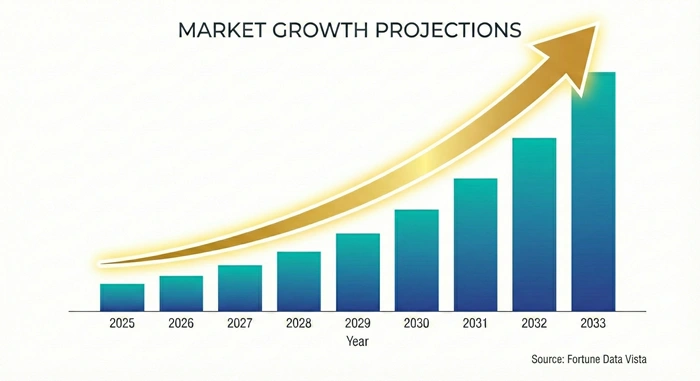
The Sterility Indicators Market Is Positioned for Sustained Double-Digit Growth Through 2033, Driven by the Rapid Modernization of Hospital Sterilization Programs in Emerging Markets, the Growing Adoption of Rapid-Readout Biological Indicators, and the Expanding Role of Digital Tracking in Pharmaceutical GMP Compliance
The long-term growth outlook for the sterility indicators market is among the most consistently positive of any segment within the broader infection control and sterilization industry, supported by the non-discretionary nature of sterility assurance spending across healthcare and pharmaceutical environments and by multiple concurrent demand growth drivers that operate across different geographic regions and end-use segments. In North America and Europe — the most mature and highest-regulation markets — growth is driven by the continuous upgrading of sterilization monitoring programs to meet evolving regulatory standards, the adoption of rapid-readout biological indicators that improve workflow efficiency in high-volume hospital central sterilization departments, and the growing integration of digital sterilization cycle management platforms that create ongoing consumable and software subscription revenue for market participants.
In Asia Pacific, Latin America, and the Middle East, the market growth profile is more growth-intensive — driven by the combination of healthcare facility expansion, improving regulatory enforcement, and the progressive adoption of international sterilization standards that are progressively replacing less rigorous domestic practices with validated indicator-based monitoring protocols. India, China, Brazil, and the Southeast Asian healthcare markets are all at a stage of healthcare system maturation where sterility indicator adoption is accelerating rapidly — transitioning from largely manual and informal sterilization monitoring practices toward structured, validated, and document-controlled biological and chemical indicator programs that align with international hospital accreditation and pharmaceutical manufacturing quality standards. This geographic diversification of demand creates a resilient and broad-based market growth profile for the sterility indicators market through the full 2026–2033 forecast period.
Expert Speaks
-
"3M's sterilization assurance business continues to experience strong growth driven by the global emphasis on patient safety and infection prevention. Healthcare facilities everywhere are investing more rigorously in validated sterilization monitoring — and our comprehensive biological and chemical indicator portfolio, combined with our digital tracking platforms, is well positioned to serve that growing demand across both developed and emerging markets." — Mike Roman, CEO, 3M Company
-
"STERIS is seeing significant demand growth for our sterilization validation and monitoring products across both our healthcare and life sciences business segments. The regulatory environment is becoming consistently more rigorous globally, and our customers — whether hospitals, pharmaceutical manufacturers, or medical device companies — are investing in more sophisticated and comprehensive sterility assurance programs that our indicator and monitoring portfolio is purpose-built to support." — Daniel Carestio, CEO, STERIS plc
-
"Getinge's infection control and sterilization business is benefiting from the powerful combination of healthcare infrastructure expansion in emerging markets and tightening sterilization compliance requirements in developed economies. Both dynamics create sustained demand for validated sterilization monitoring products, and we are investing in both our indicator portfolio innovation and our digital sterility management platform capabilities to serve this growing global market." — Mattias Perjos, CEO, Getinge AB
Key Report Takeaways
-
North America dominates the global sterility indicators market, accounting for approximately 35% of total global revenue in 2026, underpinned by the United States' stringent FDA and CDC sterilization validation requirements, the well-developed healthcare infrastructure generating high-volume sterilization monitoring demand, and the strong commercial presence of leading companies including 3M Company, STERIS plc, and Mesa Laboratories that collectively command significant market share in the biological and chemical indicator segments.
-
Asia Pacific is the fastest-growing regional market, expanding at a CAGR of approximately 14.2% from 2026 to 2033, driven by rapid expansion of hospital and pharmaceutical manufacturing infrastructure across China, India, Japan, and Southeast Asia, combined with growing regulatory enforcement of sterilization validation standards that is compelling healthcare facilities and manufacturers to adopt structured indicator-based monitoring programs aligned with international quality standards.
-
Hospitals and clinics are the dominant end-use segment, contributing approximately 42% of total market revenue in 2026, reflecting the enormous and consistent demand generated by central sterilization departments in healthcare facilities globally — which require continuous replenishment of biological and chemical indicators for the validation of every surgical instrument sterilization cycle performed.
-
Biological indicators are the dominant product type segment, accounting for approximately 45% of total type-based revenue in 2026, as biological indicators — particularly spore-based and rapid-readout enzyme-based systems — represent the most stringent and regulatory-accepted method for verifying sterilization efficacy across steam, ethylene oxide, radiation, and other sterilization modalities used in healthcare and pharmaceutical manufacturing.
-
Steam sterilization is the dominant sterilization method segment, holding approximately 50% of total sterilization method-based revenue in 2026, as autoclaving remains the most widely used sterilization process in hospital central sterilization departments globally — creating consistent and high-volume demand for steam sterilization biological and chemical indicators across all geographic markets.
-
Chemical indicators are the fastest-growing product type segment, projected to capture approximately 40% of total type-based revenue by 2033 at a CAGR of approximately 14% from 2026 to 2033, driven by their cost-effectiveness, ease of use, and growing adoption in high-volume hospital sterilization workflows as a rapid, per-cycle process monitoring tool that complements biological indicator validation programs.
Market Scope
| Parameter | Details |
|---|---|
| Market Size by 2033 | USD 3.47 Billion | Market Size by 2026 | USD 1.53 Billion | Market Size by 2025 | USD 1.36 Billion | Market Growth Rate from 2026 to 2033 | CAGR of 12.4% | Dominating Region | North America | Fastest Growing Region | Asia Pacific | Segments Covered | Type, Sterilization Method, End Use | Regions Covered | North America, Europe, Asia Pacific, Latin America, Middle East and Africa |
Market Dynamics
Drivers Impact Analysis
Rising Global Healthcare Construction Activity, Tightening FDA and EU MDR Sterilization Validation Requirements, and the Growing Adoption of Rapid-Readout Biological Indicators in High-Volume Hospital and Pharmaceutical Manufacturing Settings Are the Three Most Consequential Drivers Shaping the Sterility Indicators Market
| Driver | ≈ % Impact on CAGR Forecast | Geographic Relevance | Impact Timeline |
|---|---|---|---|
| Expansion of healthcare facilities and pharmaceutical manufacturing | ~30% | Asia Pacific, Latin America, Middle East | Short to Long-Term |
| Tightening FDA, EU MDR, and ISO sterilization compliance requirements | ~26% | North America, Europe, Global | Short to Long-Term |
| Growing adoption of rapid-readout biological indicator systems | ~18% | North America, Europe, Asia Pacific | Short to Medium-Term |
| Rising rates of hospital-acquired infections driving infection control investment | ~14% | Global | Medium to Long-Term |
| Digital integration of sterilization cycle documentation and tracking | ~8% | North America, Europe | Short to Medium-Term |
| Expansion of medical device and biopharmaceutical manufacturing | ~4% | Asia Pacific, Latin America | Long-Term |
The healthcare infrastructure expansion driver is the most foundational and geographically broad force in the sterility indicators market, operating most powerfully in rapidly developing healthcare systems across Asia Pacific, Latin America, and the Middle East. In India, the government's National Health Mission and Ayushman Bharat program are funding the construction and upgrading of thousands of public hospitals and community health centers — each of which requires sterilization validation programs that generate ongoing demand for biological and chemical indicators. In China, the ongoing expansion of both public hospital networks and private healthcare facilities is similarly generating consistent structural demand that is expected to persist as a primary growth driver throughout the forecast period.
The regulatory compliance driver operates through a distinct but complementary mechanism, compelling existing healthcare facilities and manufacturers in North America and Europe — where the overall number of new facility openings is more moderate — to continuously upgrade their sterility assurance programs to meet evolving standards. The EU Medical Device Regulation's more stringent sterilization documentation requirements, which came into full force for existing devices, are compelling medical device manufacturers operating across European markets to invest in more rigorous biological and chemical indicator validation programs that generate incremental indicator consumption above baseline operational levels. In the United States, the FDA's increasing focus on sterilization process validation in its 510(k) and PMA medical device clearance pathway requirements is similarly driving medical device manufacturers to invest in more comprehensive and documented sterility assurance protocols.
Restraints Impact Analysis
High Costs of Advanced Rapid-Readout Biological Indicator Systems, Regulatory Complexity Around New Product Validation and Market Authorization, and Awareness Gaps in Developing Market Healthcare Systems Are the Primary Constraints Limiting Faster Growth in the Sterility Indicators Market
| Restraint | ≈ % Impact on CAGR Forecast | Geographic Relevance | Impact Timeline |
|---|---|---|---|
| High cost of advanced rapid-readout biological indicator platforms | ~-30% | Developing economies, small healthcare facilities | Short to Medium-Term |
| Regulatory complexity and lengthy product validation requirements | ~-28% | Global | Medium to Long-Term |
| Limited awareness of advanced sterilization monitoring in developing markets | ~-20% | Africa, parts of Latin America and Asia | Short to Medium-Term |
| Supply chain disruptions affecting raw material availability | ~-12% | Global | Short-Term |
| Price sensitivity and budget constraints in public healthcare systems | ~-10% | Latin America, Africa, South Asia | Medium-Term |
The cost barrier associated with advanced rapid-readout biological indicator systems — particularly automated fluorescence-based platforms that require both consumable indicators and dedicated reader instruments — creates a meaningful accessibility limitation for smaller hospitals, outpatient surgical centers, and healthcare facilities in developing economies that operate under tight procurement budgets. Traditional spore-based biological indicators are significantly more affordable on a per-test basis, but the 24 to 48 hour incubation period required for result confirmation creates workflow inefficiencies and instrument holding delays that are costly in high-volume sterilization environments. This cost-capability trade-off shapes product adoption patterns in ways that limit revenue growth at the premium end of the sterility indicators market among cost-sensitive customer segments.
Regulatory validation requirements represent a second meaningful restraint — particularly for manufacturers seeking to launch new sterility indicator products across multiple global markets simultaneously. Biological indicators require extensive performance validation data including efficacy testing under representative sterilization conditions, population consistency testing, and stability studies — all of which require significant time and investment before regulatory submissions can be made to authorities including the FDA, the European Medicines Agency, and national regulatory bodies across Asia Pacific and Latin America. The length and cost of this regulatory approval process slows product innovation cycles and creates barriers to entry that favor established players with existing regulatory relationships and validated product portfolios.
Opportunities Impact Analysis
The Growing Demand for Integrated Digital Sterilization Cycle Management Platforms, the Expansion of Pharmaceutical GMP Compliance Programs in Emerging Markets, and the Development of Next-Generation Rapid-Readout Indicator Technologies Are Creating Significant New Revenue Opportunities in the Sterility Indicators Market
| Opportunity | ≈ % Impact on CAGR Forecast | Geographic Relevance | Impact Timeline |
|---|---|---|---|
| Digital sterilization cycle tracking and compliance platform adoption | ~28% | North America, Europe, Asia Pacific | Short to Long-Term |
| Pharmaceutical GMP compliance expansion in emerging markets | ~24% | Asia Pacific, Latin America | Medium to Long-Term |
| Next-generation rapid-readout and enzyme-based biological indicator development | ~20% | Global | Short to Medium-Term |
| Medical device manufacturer sterilization validation program expansion | ~16% | Asia Pacific, North America | Medium-Term |
| Growing hospital accreditation programs driving sterilization standard adoption | ~12% | Asia Pacific, Middle East, Latin America | Long-Term |
The integration of sterility indicator data into digital sterilization cycle management platforms represents one of the most strategically important commercial opportunities in the current market. Hospitals and pharmaceutical manufacturers are increasingly seeking unified digital systems that can record every sterilization cycle parameter — load configuration, indicator placement, cycle result, and operator identification — in a tamper-evident, electronically retrievable format that supports regulatory audits, accreditation reviews, and internal quality management processes. As electronic health records, hospital management systems, and pharmaceutical manufacturing execution platforms evolve to incorporate sterilization data integration capabilities, the companies that offer indicator products with seamless digital connectivity — through RFID tagging, barcode scanning, or direct cloud integration — will be positioned to capture growing share of a market that increasingly values total system integration over lowest per-unit indicator cost.
The expansion of international hospital accreditation programs — including Joint Commission International accreditation and ISO 15189 laboratory accreditation — across healthcare systems in the Middle East, Southeast Asia, and Latin America is creating a powerful structural opportunity for sterility indicator market participants to penetrate markets where baseline sterilization monitoring adoption has historically been limited. As hospitals in these regions pursue accreditation to attract international patients, qualify for government reimbursement programs, or meet the expectations of private healthcare operators, they are required to implement structured sterilization validation programs that necessarily include regular biological and chemical indicator use — converting previously low-penetration markets into consistent and growing revenue opportunities.
Segment Analysis
By Type: Biological Indicators
Biological Indicators Lead the Sterility Indicators Market as the Most Rigorous and Regulatory-Validated Method for Confirming Sterilization Efficacy, Making Them the Preferred Monitoring Tool for High-Stakes Healthcare and Pharmaceutical Applications Globally
Biological indicators hold the dominant position within the sterility indicators market by product type, accounting for approximately 45% of total type-based revenue in 2026. As the only sterilization monitoring method that directly tests the lethality of a sterilization process using actual microorganisms — typically highly resistant bacterial spores such as Geobacillus stearothermophilus for steam sterilization or Bacillus atrophaeus for ethylene oxide sterilization — biological indicators provide the highest level of sterility assurance accepted by regulatory bodies globally, making them an indispensable component of validated sterilization programs across hospitals, pharmaceutical manufacturers, and medical device companies. The biological indicators segment within the sterility indicators market is projected to grow at a CAGR of approximately 11% from 2026 to 2033, sustained by regulatory requirements that mandate periodic biological indicator testing across virtually all sterilization modalities and all high-risk healthcare and manufacturing environments. North America is the largest and most technically advanced regional market for biological indicators, with leading companies including 3M Company (USA), STERIS plc (USA/Ireland), and Mesa Laboratories Inc. (USA) dominating the segment through comprehensive biological indicator product portfolios, rapid-readout enzyme-based systems, and integrated automated reader platforms that serve both hospital and pharmaceutical end-use markets.
Asia Pacific is the fastest-growing regional market for biological indicators, driven by the rapid expansion of pharmaceutical manufacturing capacity across India and China — both of which are global pharmaceutical manufacturing hubs where GMP compliance programs require rigorous biological indicator validation of sterilization processes. In India, the pharmaceutical industry's growth — driven by both domestic healthcare expansion and export-oriented generic drug manufacturing — is generating significant incremental demand for biological indicators compliant with international pharmacopoeia standards. Regional and multinational companies including Getinge AB (Sweden) and Cantel Medical Corporation (USA) are actively expanding their distribution networks and regulatory registrations across Asia Pacific markets to capture this growing demand, while domestic Indian and Chinese manufacturers are also developing validated biological indicator product lines that serve cost-sensitive local market segments.
By End Use: Hospitals and Clinics
Hospitals and Clinics Are the Dominant End-Use Segment in the Sterility Indicators Market, Generating the Highest and Most Consistent Indicator Consumption Volume Through Their Central Sterilization Departments That Process Thousands of Surgical Instrument Sets Daily
Hospitals and clinics represent the largest end-use segment within the sterility indicators market, accounting for approximately 42% of total end-use revenue in 2026. Central Sterile Services Departments (CSSDs) within hospitals are among the highest-volume consumers of both biological and chemical sterilization indicators globally — using indicators on every sterilization load as a required component of infection control protocols and regulatory compliance programs. The combination of high load volumes, mandatory per-cycle monitoring requirements, and ongoing regulatory scrutiny of hospital sterilization practices makes hospital end-use the most structurally reliable and consistent revenue-generating segment in the sterility indicators market, with demand driven by operational necessity rather than discretionary purchasing decisions. The hospital and clinic segment is projected to grow at a CAGR of approximately 12.8% from 2026 to 2033, with the fastest growth concentrated in Asia Pacific where new hospital construction and accreditation-driven sterilization program formalization are simultaneously expanding the hospital customer base. In North America and Europe, key suppliers to the hospital segment include 3M Company (USA), STERIS plc, Hu-Friedy Mfg. Co. LLC (USA), and Propper Manufacturing Co. Inc. (USA) — all of which offer comprehensive indicator product portfolios supported by technical service, training, and sterilization validation consulting capabilities that strengthen their relationships with hospital central sterilization departments.
In Asia Pacific, the hospital end-use segment is experiencing particularly dynamic growth as both public hospital expansion programs and private hospital network development create hundreds of new CSSD facilities annually across China, India, Indonesia, and Vietnam — each of which requires initial setup of sterilization monitoring programs and then ongoing indicator replenishment. Hospital accreditation initiatives — including Joint Commission International accreditation programs actively pursued by private hospital groups across the region — are driving the formalization of sterilization protocols and creating strong growth for biological and chemical indicator products that support the documentation and validation requirements of accreditation standards. Matachana Group (Spain) and GKE-GmbH (Germany) are among the international suppliers actively developing their Asia Pacific distribution footprints to serve this rapidly growing hospital CSSD market alongside established regional distributors that are progressively building structured sterilization monitoring product portfolios.
Regional Insights
North America: The Dominating Region
North America Leads the Global Sterility Indicators Market Through the United States' Stringent FDA and CDC Sterilization Standards, the High Volume of Hospital Sterilization Processing Activity, and the Concentration of Leading Biological and Chemical Indicator Manufacturers With Global Commercial Reach
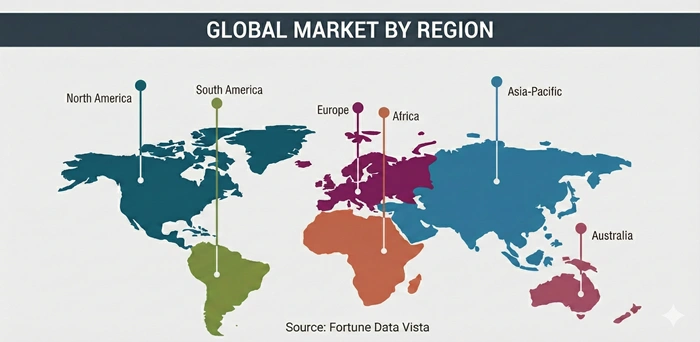
North America holds the largest share of the global sterility indicators market, accounting for approximately 35% of total global revenue in 2026, with a regional CAGR of approximately 11.2% from 2026 to 2033. The United States is the dominant national market, driven by the healthcare system's exceptionally high sterilization standards — mandated through FDA device sterilization guidance, CDC infection control guidelines, and the accreditation requirements of The Joint Commission — that require comprehensive and documented biological and chemical indicator use across hospital, ambulatory surgery center, and dental facility sterilization programs. Key companies anchoring North America's market leadership include 3M Company (USA), STERIS plc, Mesa Laboratories Inc. (USA), and Cantel Medical Corporation (USA) — all of which have developed extensive commercial infrastructures across the U.S. healthcare market and serve both hospital and pharmaceutical manufacturing end-use segments through direct sales and broad distribution networks.
Canada contributes meaningfully to the regional market through its own rigorous healthcare sterilization standards and the Canadian Standards Association's sterilization guidelines that govern hospital instrument reprocessing practices. The North American sterility indicators market also benefits from the region's position as the world's largest pharmaceutical manufacturing market — generating significant biological indicator demand from pharmaceutical GMP sterilization validation programs that require extensive documentation and regulatory submission support. The region's combination of stringent regulatory standards, high healthcare facility density, large pharmaceutical manufacturing base, and the commercial strength of domestic indicator manufacturers solidifies North America's position as the most valuable and technically advanced market in the global sterility indicators ecosystem.
Asia Pacific: The Fastest Growing Region
Asia Pacific Is the Fastest Growing Regional Market for Sterility Indicators, Driven by Rapid Hospital Infrastructure Expansion, Growing Pharmaceutical Manufacturing GMP Compliance Requirements, and the Progressive Adoption of International Sterilization Validation Standards Across China, India, and Southeast Asia
Asia Pacific is the fastest-growing regional segment within the sterility indicators market, projected to expand at a CAGR of approximately 14.2% from 2026 to 2033 — significantly above the global market average. China is the largest national market within the region, driven by both the enormous scale of its domestic hospital network — which encompasses over 35000 hospitals — and the country's position as the world's leading generic pharmaceutical manufacturer, which generates substantial biological indicator demand from pharmaceutical GMP sterilization programs. India is the most exciting growth market for international sterility indicator companies, with its rapidly expanding hospital construction pipeline, the growth of its pharmaceutical manufacturing export sector, and the government's push for improved healthcare quality and infection control standards creating a multi-dimensional demand growth story. Key companies serving the Asia Pacific market include Getinge AB (Sweden), 3M Company (USA), STERIS plc, and a growing number of local Indian and Chinese indicator manufacturers that are developing validated product lines for domestic market consumption.
Japan and South Korea represent the most mature and technically sophisticated sterility indicator markets within Asia Pacific, with sterilization monitoring standards aligned with international pharmacopoeia requirements and hospital accreditation frameworks that generate consistent premium indicator demand. Australia's sterility indicators market is growing steadily, supported by the Therapeutic Goods Administration's sterilization product registration requirements and the country's well-developed private hospital sector that maintains international-standard central sterilization programs. The broader Southeast Asian market — encompassing Indonesia, Vietnam, Thailand, Malaysia, and the Philippines — represents the most untapped growth opportunity in Asia Pacific, with rapidly expanding hospital networks and growing regulatory enforcement of sterilization standards creating an increasingly attractive commercial opportunity for both international and regional sterility indicator suppliers to establish distribution presence and capture market share ahead of full market maturation.
Report Customization by Region and Country
This Sterility Indicators Market Report Offers Complete Region-Wise and Country-Wise Customization — Delivering Geography-Specific Market Sizing, Regulatory Insights, Competitive Landscapes, and Strategic Opportunities Tailored Precisely to Your Target Market Across Every Region and Country Worldwide
This Sterility Indicators Market report is available with full customization by region and country, enabling organizations to access precise, geography-specific insights tailored to their strategic focus. The report can be configured to deliver the exact regional depth and market intelligence your business needs — covering market sizing, CAGR forecasts, segment breakdowns, regulatory environment analysis, key player profiles, and actionable strategic opportunities specific to each selected geography.
North America
-
U.S. — FDA sterilization validation guidance, hospital CSSD market size and trends, pharmaceutical GMP indicator demand, and leading domestic supplier landscape
-
Canada — Canadian Standards Association sterilization guidelines, hospital reprocessing market, and healthcare quality accreditation-driven demand
-
Mexico — Growing healthcare infrastructure, pharmaceutical manufacturing expansion, and regulatory harmonization with international sterilization standards
Europe
-
U.K. — NHS sterilization standards, Medicines and Healthcare products Regulatory Agency (MHRA) compliance requirements, and hospital decontamination market trends
-
Germany — RKI and DIN sterilization standards, medical device manufacturing indicator demand, and strong domestic supplier competitive landscape
-
France — Hospital sterilization compliance landscape, pharmaceutical manufacturing indicator demand, and regional market growth outlook
-
Italy — Medical device and pharmaceutical manufacturing sterilization requirements, hospital CSSD market, and regional market opportunities
-
Rest of Europe — Coverage of Scandinavian, Eastern European, and other EU member state sterilization monitoring markets and regulatory frameworks
Asia Pacific
-
China — Hospital network expansion, pharmaceutical GMP compliance programs, domestic indicator manufacturer landscape, and regulatory environment
-
India — Government hospital construction programs, pharmaceutical export manufacturing sterilization demand, Make in India opportunities, and market growth forecast
-
Japan — Pharmaceutical sterilization standards, hospital market maturity, and domestic supplier competitive dynamics
-
South Korea — Medical device manufacturing sterilization validation, hospital accreditation-driven demand, and regional market outlook
-
Australia — TGA regulatory requirements, private hospital sector sterilization monitoring market, and market sizing forecast
-
Rest of Asia Pacific — Southeast Asian hospital expansion, ASEAN regulatory harmonization, and emerging sterilization indicator demand across Vietnam, Indonesia, Thailand, and the Philippines
Latin America
-
Brazil — ANVISA pharmaceutical manufacturing compliance, hospital sterilization monitoring demand, and regional market leadership position
-
Argentina — Pharmaceutical production sterilization requirements, hospital market growth, and regional competitive landscape
-
Rest of Latin America — Healthcare infrastructure expansion, growing regulatory enforcement of sterilization standards, and market opportunity assessment across Colombia, Chile, and Mexico
Middle East and Africa (MEA)
-
UAE — Private hospital accreditation-driven sterilization demand, pharmaceutical manufacturing growth, and premium indicator market opportunities
-
Saudi Arabia — Vision 2030 healthcare infrastructure expansion, hospital CSSD market growth, and regulatory sterilization compliance landscape
-
Rest of MEA — Sub-Saharan Africa hospital construction activity, improving sterilization awareness, and long-term market development opportunity across the broader MEA region
Each customized Sterility Indicators Market report delivers targeted intelligence — including country-specific regulatory frameworks, key procurement trends, competitive landscapes, end-use segment breakdowns, and strategic market entry opportunities — providing decision-makers with the precise information they need to assess market entry, prioritize investment, and build sustainable competitive advantages in their chosen sterility indicators markets across every region and country.
Top Key Players
-
3M Company (United States)
-
STERIS plc (United States / Ireland)
-
Getinge AB (Sweden)
-
Mesa Laboratories Inc. (United States)
-
Cantel Medical Corporation (United States)
-
Matachana Group (Spain)
-
GKE-GmbH (Germany)
-
Hu-Friedy Mfg. Co. LLC (United States)
-
Propper Manufacturing Co. Inc. (United States)
-
Anderson Products Inc. (United States)
-
Crosstex International (United States)
-
Terragene S.A. (Argentina)
Recent Developments
-
In 2025, 3M Company launched a next-generation rapid-readout biological indicator system for steam sterilization — offering confirmed cycle results in as little as 24 minutes through an enhanced enzyme-based fluorescence detection technology — representing a significant advancement in hospital CSSD workflow efficiency and a major product innovation milestone for the sterility indicators market.
-
In 2025, STERIS plc completed the acquisition of a specialty sterilization validation services company, expanding its integrated offering of biological indicators, chemical indicators, and sterilization validation consulting services for pharmaceutical and medical device manufacturing customers — strengthening its position as a full-service sterilization assurance partner across the life sciences manufacturing sector.
-
In 2026, Mesa Laboratories Inc. announced a strategic partnership with a leading hospital management software provider to enable direct electronic integration of biological indicator reader results into hospital infection control and quality management systems — creating a seamlessly connected digital sterilization cycle documentation platform that supports both regulatory compliance and accreditation audit readiness for hospital customers.
-
In 2025, Getinge AB expanded its sterility indicator product portfolio with the introduction of a new multi-variable chemical indicator line specifically designed for low-temperature hydrogen peroxide plasma sterilization — addressing a growing clinical demand for reliable process monitoring tools for heat-sensitive surgical instrument sterilization that is expanding rapidly in hospital minimally invasive surgery departments globally.
-
In 2026, Cantel Medical Corporation received FDA 510(k) clearance for a new enzyme-based rapid biological indicator system for ethylene oxide sterilization — filling a critical gap in the rapid-readout indicator segment for EO sterilization applications and positioning the company to capture growing demand from medical device manufacturers and hospital sterilization departments that process ethylene oxide-sterilized products.
Market Trends
The Rapid Adoption of Digital Sterilization Cycle Documentation Platforms and the Shift Toward Rapid-Readout Enzyme-Based Biological Indicators Are the Two Most Commercially Significant Trends Reshaping the Sterility Indicators Market Through 2033
The shift from traditional 24–48 hour spore-based biological indicators toward rapid-readout enzyme-based systems that deliver confirmed results within minutes to hours is the most significant product technology trend in the sterility indicators market today. This transition is being driven by operational efficiency demands in high-throughput hospital CSSDs and pharmaceutical manufacturing environments — where prolonged quarantine of sterilized loads pending biological indicator results creates costly workflow bottlenecks and instrument utilization inefficiencies. As rapid-readout systems become more clinically validated, regulatory-accepted, and price-competitive relative to traditional biological indicators, adoption rates are accelerating across both hospital and pharmaceutical end-use segments in North America and Europe — and increasingly across Asia Pacific healthcare facilities pursuing international accreditation standards that accept rapid biological indicator methods for routine sterilization monitoring.
The digitalization of sterilization cycle management is simultaneously transforming how sterility indicators are used, documented, and audited within healthcare and pharmaceutical quality systems. Electronic sterilization record management systems — integrating biological indicator results, chemical indicator pass/fail readings, physical cycle parameter data, and load configuration records into unified, electronically retrievable sterilization batch records — are becoming a baseline operational and regulatory expectation in hospitals and pharmaceutical facilities across North America and Europe. For sterility indicator manufacturers, this digitalization trend creates a significant commercial opportunity to expand beyond consumable product revenue into recurring software subscription and digital platform service revenue — building closer, more integrated customer relationships that increase switching costs and generate more predictable long-term revenue streams.
Segments Covered in the Report
By Type:
-
Biological Indicators
-
Chemical Indicators
-
Mechanical Indicators
By Sterilization Method:
-
Steam Sterilization
-
Ethylene Oxide Sterilization
-
Radiation Sterilization
-
Dry Heat Sterilization
-
Others
By End Use:
-
Hospitals and Clinics
-
Pharmaceutical and Biotechnology Companies
-
Medical Device Manufacturers
-
Clinical Laboratories
-
Others
By Region:
-
North America (U.S., Canada, Mexico)
-
Europe (U.K., Germany, France, Italy, Rest of Europe)
-
Asia Pacific (China, India, Japan, South Korea, Australia, Rest of Asia Pacific)
-
Latin America (Brazil, Argentina, Rest of Latin America)
-
Middle East and Africa (UAE, Saudi Arabia, Rest of MEA)
❝ Built for Every Level — From Startups to Industry Giants ❞
Here Is Exactly How This Report Works for You
-
Whether you are a global sterilization indicator manufacturer evaluating market expansion opportunities across Asia Pacific and Latin America, a healthcare technology startup developing digital sterilization cycle management platforms, or an institutional investor assessing the long-term commercial trajectory of the sterility indicators market, this report delivers granular revenue forecasts by type, sterilization method, end use, and region — combined with detailed competitor revenue analysis, product portfolio benchmarking, and regulatory landscape mapping that enables confident market entry and strategic investment decisions.
-
This report comprehensively maps the supply-demand dynamics of the sterilization assurance industry — including regulatory upgrade cycle timelines by country, healthcare facility construction pipeline data by region, pharmaceutical manufacturing GMP compliance investment trends, and how shifting infection control priorities across North America, Europe, and Asia Pacific are creating divergent growth patterns that require geographically differentiated go-to-market strategies for indicator manufacturers, distributors, and digital platform providers.
-
The full version provides detailed competitor revenue breakdowns by segment and region, product innovation roadmap analysis, digital platform adoption forecasting, hospital accreditation program expansion tracking, and a forward-looking assessment of rapid-readout indicator technology commercialization and pharmaceutical GMP compliance market opportunities — equipping decision-makers at manufacturers, healthcare distributors, investors, and hospital group procurement leaders with the strategic intelligence needed to capture growth, navigate regulatory complexity, and build lasting competitive advantages across one of the healthcare industry's most consistently growing and essential quality assurance product categories.
Frequently Asked Questions:
Answer: The sterility indicators market is valued at USD 1.36 billion in 2025 and is projected to reach USD 3.47 billion by 2033. It is expected to grow at a CAGR of 12.4% from 2026 to 2033, driven by expanding healthcare infrastructure, tightening sterilization regulatory requirements, and growing adoption of rapid-readout biological indicator systems globally.
Answer: North America holds the dominant position in the sterility indicators market, accounting for approximately 35% of total global revenue in 2026, driven by the United States' stringent FDA sterilization validation requirements and the high volume of hospital and pharmaceutical manufacturing sterilization activity. The region also benefits from the commercial strength of leading indicator manufacturers including 3M Company, STERIS plc, and Mesa Laboratories that serve both domestic and international markets.
Answer: Biological indicators are the dominant product type in the sterility indicators market, accounting for approximately 45% of total type-based revenue in 2026, owing to their status as the most rigorous and regulatory-accepted method for verifying sterilization process efficacy across steam, ethylene oxide, radiation, and other sterilization modalities. Chemical indicators are the fastest-growing product type, driven by their cost-effectiveness, ease of use, and growing adoption as per-cycle process monitoring tools in high-volume hospital sterilization workflows.
Answer: Regulatory compliance is one of the most powerful structural drivers of the sterility indicators market, as FDA sterilization validation guidance, EU Medical Device Regulation requirements, and ISO 11140 chemical indicator standards collectively mandate comprehensive biological and chemical indicator use across healthcare and pharmaceutical manufacturing globally. As these regulatory frameworks continue to evolve and enforcement intensifies in emerging markets, the volume and sophistication of required sterility monitoring programs is consistently expanding — creating both baseline and incremental indicator demand growth across all geographic regions.
Answer: Digital technology is transforming the sterility indicators market by enabling electronic sterilization cycle documentation systems that integrate biological indicator results, chemical indicator readings, and physical cycle parameters into unified, audit-ready sterilization batch records — replacing paper-based documentation with electronically retrievable, tamper-evident records that satisfy both regulatory and accreditation requirements. AI-enabled automated reader platforms are simultaneously accelerating the transition from traditional 24–48 hour spore-based biological indicators to rapid-readout enzyme-based systems, significantly improving hospital CSSD workflow efficiency and reducing instrument quarantine time in high-volume sterilization environments.