
Surgical Fluid Disposal Market Overview
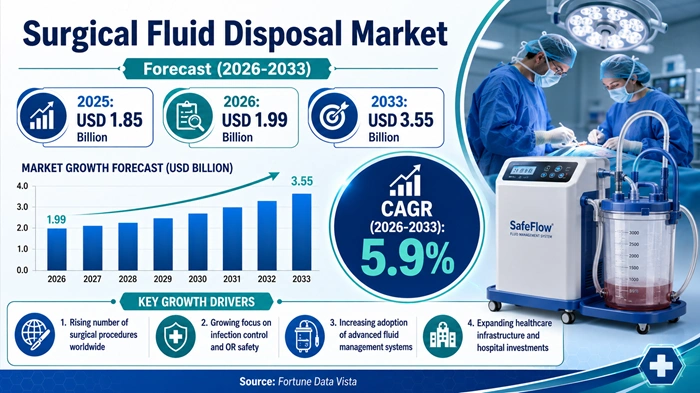
The global surgical fluid disposal market size is valued at USD 1.85 billion in 2025 and is predicted to increase from USD 1.99 billion in 2026 to approximately USD 3.55 billion by 2033, growing at a CAGR of 5.9% from 2026 to 2033.
This robust growth is driven by rising global surgical procedure volumes, increasing regulatory requirements for safe medical waste management, growing adoption of single-use fluid disposal products for infection prevention, and accelerating healthcare infrastructure investment in emerging economies. The surgical fluid disposal market plays an essential role in protecting both patients and healthcare workers from biohazardous fluid exposure — handling blood, irrigation fluids, bodily secretions, and other surgical waste generated across all major surgical specialties in hospitals, ambulatory surgery centers, and outpatient surgical facilities worldwide.
AI Impact on the Surgical Fluid Disposal Industry
Artificial Intelligence Is Transforming Automated Fluid Volume Monitoring, Predictive Waste Management Scheduling, Smart Infection Control Alert Systems, and Regulatory Compliance Documentation Across the Global Surgical Fluid Disposal Market*
Artificial intelligence is beginning to reshape how healthcare facilities manage surgical fluid collection, measurement, and disposal — transitioning from manual, error-prone fluid tracking to intelligent automated systems that provide real-time volume measurement, biohazard status monitoring, and automated disposal scheduling. AI-powered closed-loop fluid management systems — such as those incorporated into Stryker's Neptune series and Cardinal Health's Fluid Management platforms — use sensor fusion and machine learning algorithms to continuously monitor surgical fluid volume accumulation within collection canisters, predict when containers will reach capacity before overflow occurs, and automatically alert circulating nurses and surgical teams to perform canister changes at the optimal time — eliminating the distraction and disruption of manual canister monitoring during active surgical procedures. These real-time AI monitoring capabilities are particularly valuable in procedures with high fluid volumes — including arthroscopy, laparoscopy, urological resection, and gynecological procedures — where large volumes of irrigation fluid are used and where accurate fluid accounting is essential for both safety and regulatory documentation.
At the operational management level, AI-enabled fluid waste management platforms are now being integrated with hospital operating room management software to optimize disposal scheduling, automated regulatory reporting, and environmental compliance documentation. Machine learning models analyze historical surgical scheduling data, fluid volume per procedure type, and disposal container utilization patterns to predict total fluid waste generation by OR suite by day — enabling hospital environmental services departments to plan disposal container replenishment, biohazardous waste pickup scheduling, and staff allocation more efficiently than was possible with manual tracking systems. AI-driven image recognition systems in newer automated fluid management consoles are also enhancing the detection of blood-fluid ratios in collected surgical effluent — providing more accurate intraoperative blood loss estimation that supports anesthesia and surgical decision-making while simultaneously improving the accuracy of biohazard classification for regulatory waste disposal compliance purposes.
Growth Factors
Rising Global Surgical Volume, Stringent Healthcare Waste Regulations, Growing Infection Prevention Awareness, and the Accelerating Shift to Ambulatory Surgery Are the Four Structural Drivers Fueling the Surgical Fluid Disposal Market*
The most fundamental growth driver in the surgical fluid disposal market is the consistent increase in global surgical procedure volumes — driven by aging populations requiring more orthopedic, cardiovascular, urological, and cataract surgeries, the growing global burden of cancer requiring surgical resection procedures, rising road traffic accidents and trauma surgeries, and expanding healthcare access in developing economies that is bringing millions of previously unserved patients into surgical care. The Association of periOperative Registered Nurses (AORN) and the WHO estimate that over 300 million major surgical procedures are performed globally each year — each generating biohazardous fluid waste that must be safely collected, managed, and disposed of through compliant fluid disposal products and systems. Every incremental surgical case added to the global healthcare system's annual throughput represents direct demand growth for the containers, waste bags, tubing sets, and automated fluid management systems that constitute the surgical fluid disposal market.
The second major growth driver is the tightening of healthcare waste management regulations globally — with regulatory bodies including OSHA, EPA, The Joint Commission in the United States, and equivalent bodies in the European Union, Japan, India, and China imposing increasingly stringent requirements on healthcare facilities for the safe handling, labeling, treatment, and disposal of biohazardous liquid surgical waste. Healthcare facilities that fail to comply with these regulations face substantial financial penalties, accreditation risks, and reputational damage — creating a powerful institutional incentive to invest in compliant, validated surgical fluid disposal systems. The growing awareness of healthcare-associated infection (HAI) risks — including the consequences of fluid spill events, splash exposure, and aerosol generation from improperly handled surgical fluid waste — is also driving hospital infection prevention and control committees to mandate the adoption of enclosed, single-use, spill-proof fluid disposal solutions that minimize occupational exposure risks for OR staff and environmental services personnel.

Market Outlook
North America's Dominant Healthcare Infrastructure, Europe's Stringent Waste Regulations, Asia Pacific's Surgical Volume Growth, and the Ongoing Transition From Open to Closed Fluid Management Systems Are Defining the Long-Term Trajectory of the Surgical Fluid Disposal Market Through 2033*
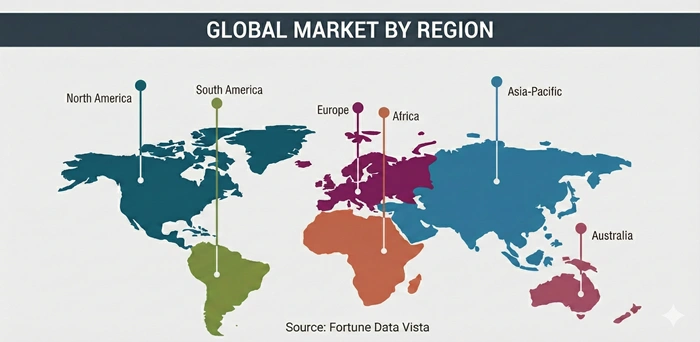
The long-term outlook for the surgical fluid disposal market is consistently positive, underpinned by structural demand drivers that are largely immune to cyclical economic fluctuations — as surgical procedures, infection control requirements, and regulatory compliance obligations continue regardless of macroeconomic conditions. North America currently leads the global market with approximately 41.3% of global revenue in 2025, supported by the United States' world-leading surgical procedure volumes, the highest per-facility investment in automated fluid management infrastructure of any global region, and the most comprehensive regulatory framework requiring compliant biohazardous liquid waste management in all accredited healthcare facilities. Major market participants including Stryker Corporation, Cardinal Health, Baxter International, and Medtronic are all North American headquartered and generate their largest revenue streams from U.S. and Canadian healthcare system customers.
Asia Pacific represents the most dynamic long-term growth region within the surgical fluid disposal market — where China, India, South Korea, Japan, and Southeast Asian markets are expanding their surgical procedure volumes at consistently high rates as healthcare access improves, aging populations grow, and cancer prevalence rises. China's healthcare infrastructure modernization program is adding thousands of new OR suites to hospital facilities annually — each requiring standard and advanced fluid disposal equipment. India's growing private hospital sector and government-funded Ayushman Bharat insurance program are bringing millions of new patients into surgical settings that will need to be equipped with compliant fluid disposal solutions. The ongoing transition in developed markets from open, manually handled fluid disposal systems to fully closed automated fluid management consoles — which minimize biohazardous splash risk, improve fluid accounting accuracy, and reduce OR staff exposure to surgical waste — represents a high-value technology adoption opportunity that is expected to drive significant average revenue per OR upgrade in North America and Europe through the 2026–2033 forecast period.
Expert Speaks
-
"Stryker's fluid management portfolio — anchored by our Neptune Waste Management System — continues to lead the surgical fluid disposal market in delivering the most comprehensive closed-loop solution for managing and disposing of surgical fluid waste safely and efficiently. The market is growing consistently as hospitals globally recognize that proper fluid management is not just a regulatory compliance obligation — it is a fundamental component of patient safety, OR staff protection, and surgical efficiency. We remain committed to expanding our fluid management capabilities through product innovation, platform integration with broader OR systems, and continued investment in clinical evidence that demonstrates the patient and economic value of closed-loop fluid disposal solutions." — Kevin Lobo, Chairman & CEO, Stryker Corporation
-
"Cardinal Health's role in the surgical fluid disposal market is built on our deep understanding of the complete OR supply chain — from fluid collection consumables through waste management systems and regulatory-compliant disposal services. The growing complexity of infection control requirements and the increasing volume of minimally invasive procedures that generate large fluid volumes are both driving healthcare facilities to look for more integrated and reliable fluid disposal partnerships. Cardinal Health is investing in expanded fluid disposal product portfolios, enhanced single-use canister solutions, and digital tracking tools that support our hospital customers in maintaining the highest standards of biohazardous liquid waste compliance." — Jason Hollar, CEO, Cardinal Health Inc.
-
"Baxter International's fluid management and surgical waste disposal solutions address one of healthcare's most consistently critical safety and compliance needs — the safe, reliable, and efficient management of the large volumes of biohazardous liquid waste generated in operating rooms globally every day. The surgical fluid disposal market is expanding steadily as procedure volumes grow, single-use product adoption rises, and healthcare systems in emerging economies build the infrastructure to meet international infection control standards. Baxter is committed to leading in this market through product innovation, clinical evidence generation, and global supply chain capabilities that ensure our hospital customers have access to the highest-quality fluid disposal solutions wherever they operate." — **José E. Almeida, Chairman & CEO, Baxter International Inc.*
Key Report Takeaways
-
North America dominates the global surgical fluid disposal market with approximately 41.3% of global revenue in 2025, driven by the United States' world-leading annual surgical procedure volume exceeding 50 million inpatient and outpatient procedures, the most rigorous OSHA and EPA biohazardous liquid waste regulations of any global market, the highest per-OR investment in closed-loop automated fluid management systems globally, and the commercial headquarters and primary revenue concentration of the market's four largest companies — Stryker, Cardinal Health, Baxter International, and Medtronic.
-
Asia Pacific is the fastest-growing regional market in the surgical fluid disposal market, projected to expand at a CAGR of approximately 6.8% from 2026 to 2033, driven by China and India's rapidly expanding surgical procedure volumes, aggressive hospital construction programs in both countries, rising healthcare expenditure, increasing enforcement of medical waste management regulations, and the growing adoption of single-use surgical consumables to minimize cross-contamination risks in newly built and upgraded surgical facilities.
-
Containers are the dominant product type, accounting for approximately 48.6% of global product type revenue in 2025, as rigid and semi-rigid fluid collection canisters remain the most widely deployed standard solution for intraoperative fluid collection across OR suites worldwide — valued for their reliability, affordability, established clinical workflow integration, and availability in standardized sizes that meet the volume requirements of the majority of routine surgical procedures.
-
Hospitals are the dominant end-user segment, contributing approximately 62.4% of global surgical fluid disposal market revenue in 2025, as inpatient hospitals perform the highest volume and most complex surgical procedures — including major cardiovascular, neurological, orthopedic, and oncological surgeries — that generate the largest quantities of fluid waste per case and require the most comprehensive fluid disposal infrastructure of any healthcare setting.
-
Laparoscopy and minimally invasive surgery is the fastest-growing application segment, expected to grow at a CAGR of approximately 7.2% from 2026 to 2033, as the global surgical trend toward minimally invasive approaches — which use large volumes of insufflation gas and irrigation fluid while operating through small incisions — generates growing volumes of surgical fluid waste per procedure and drives demand for compact, efficient fluid collection systems designed for the space-constrained environment of MIS-equipped OR suites.
-
Automated fluid management systems are the fastest-growing product type in the surgical fluid disposal market, projected to expand at a CAGR of approximately 7.8% from 2026 to 2033, driven by growing hospital recognition of the clinical safety, staff protection, regulatory compliance, and operational efficiency advantages of closed-loop automated fluid management over open manual collection systems — with major technology investment in this segment by Stryker (Neptune), Medtronic, and Olympus driving awareness and adoption among hospital procurement decision-makers globally.
Market Scope
| Parameter | Details |
|---|---|
| Market Size by 2033 | USD 3.55 Billion | Market Size by 2026 | USD 1.99 Billion | Market Size by 2025 | USD 1.85 Billion | Market Growth Rate from 2026 to 2033 | CAGR of 5.9% | Dominating Region | North America | Fastest Growing Region | Asia Pacific | Segments Covered | By Product Type, By Application, By End User | Regions Covered | North America, Europe, Asia Pacific, Latin America, Middle East & Africa |
Market Dynamics
Drivers Impact Analysis
Rising Surgical Volume, Infection Control Mandates, Single-Use Product Adoption, Regulatory Enforcement, and Healthcare Infrastructure Investment Are the Five Core Forces Driving Consistent Growth in the Surgical Fluid Disposal Market*
| Driver | ≈ % Impact on CAGR Forecast | Geographic Relevance | Impact Timeline |
|---|---|---|---|
| Rising global surgical procedure volumes across all specialties | ~32% | Global — especially Asia Pacific, North America | Short to Long Term |
| Stringent OSHA, EPA, and international biohazardous waste regulations | ~27% | North America, Europe, Asia Pacific | Short to Long Term |
| Growing adoption of single-use fluid disposal products for infection control | ~22% | Global — especially North America, Europe | Short to Long Term |
| Healthcare infrastructure expansion in emerging economies | ~14% | Asia Pacific, Latin America, MEA | Short to Long Term |
| Shift from open to closed automated fluid management systems | ~5% | North America, Europe | Short to Medium Term |
The consistent and growing volume of surgical procedures performed globally is the most direct and reliable demand driver in the surgical fluid disposal market. With over 300 million major surgical procedures performed worldwide annually — and this figure growing year over year as populations age, cancer incidence rises, and healthcare access expands in developing economies — the total volume of biohazardous fluid waste generated in operating rooms globally is substantial and growing. Major surgical specialties including orthopedics, urology, gynecology, laparoscopy, cardiovascular surgery, and general surgery all generate significant volumes of blood, irrigation fluid, and bodily secretions that must be safely collected and disposed of through validated fluid disposal products. The direct correlation between surgical procedure volume and fluid disposal product consumption means that every new hospital built, every OR suite added, and every incremental case added to a facility's surgical throughput translates into predictable incremental demand for surgical fluid disposal containers, bags, tubing sets, and management systems.
The infection control and occupational safety regulatory environment is the second defining demand driver, as healthcare facilities globally are subject to increasingly stringent requirements regarding the safe handling of biohazardous liquid waste. In the United States, OSHA's Bloodborne Pathogens Standard mandates that healthcare employers protect workers from occupational exposure to blood and other potentially infectious materials — a standard that directly governs the handling of surgical fluid waste and requires the use of appropriate containment, handling, and disposal procedures. The Joint Commission's accreditation standards for U.S. hospitals include detailed requirements for biohazardous waste management compliance — creating institutional pressure for hospitals to invest in validated, compliant fluid disposal systems. In the European Union, the Directive on the Management of Healthcare Waste and the EU Workplace Health and Safety directives are creating equivalent regulatory compliance pressure for European hospitals — driving investment in compliant single-use fluid disposal products and systems across the region's healthcare facilities.

Restraints Impact Analysis
High Capital Cost of Automated Systems, Environmental Concerns Over Single-Use Plastic Waste, Budgetary Constraints in Developing Markets, and Limited Awareness of Advanced Disposal Technologies Are the Primary Barriers Constraining the Surgical Fluid Disposal Market*
| Restraint | ≈ % Impact on CAGR Forecast | Geographic Relevance | Impact Timeline |
|---|---|---|---|
| High initial capital cost of automated fluid management systems | ~38% | Emerging markets, smaller hospitals | Short to Long Term |
| Environmental concerns over single-use plastic surgical waste generation | ~28% | Europe, North America | Short to Long Term |
| Budgetary constraints limiting advanced product adoption in developing markets | ~22% | Latin America, MEA, South Asia | Short to Medium Term |
| Limited awareness and training barriers for advanced system adoption | ~12% | Emerging markets globally | Short to Medium Term |
The high capital investment required for automated closed-loop fluid management systems is the most significant adoption barrier in the surgical fluid disposal market — particularly for smaller community hospitals, ambulatory surgery centers, and healthcare facilities in emerging markets operating under tight capital equipment budgets. Premium automated fluid management consoles from leading vendors including Stryker's Neptune system and Cardinal Health's integrated fluid management platforms require capital investments that can range from USD 30000 to over USD 100000 per installation — a cost level that is challenging for facilities that are weighing fluid management investment against other competing capital priorities including imaging equipment, surgical robots, and facility renovation. This cost barrier means that the advanced automated segment of the surgical fluid disposal market is primarily accessible to well-resourced large hospitals and healthcare systems — with smaller and resource-limited facilities remaining dependent on more affordable manual collection products.
Growing environmental sustainability concerns about the volume of single-use plastic waste generated by surgical fluid disposal products represent an emerging and increasingly significant restraint on the market's long-term growth dynamics — particularly in Europe, where hospital sustainability mandates and EU plastic waste reduction regulations are creating pressure on healthcare facilities to reduce per-procedure disposable product consumption. The surgical fluid disposal market is heavily reliant on single-use disposable containers, waste bags, and tubing sets that are discarded after each surgical case — generating substantial plastic and biohazardous waste volumes per facility per year. The inherent tension between infection control best practices (which favor single-use products to prevent cross-contamination) and sustainability goals (which favor reusable or reduced-plastic solutions) is creating a challenging product development and regulatory environment for surgical fluid disposal manufacturers who must balance these competing imperatives.
Opportunities Impact Analysis
Emerging Market Healthcare Infrastructure Expansion, Development of Eco-Friendly Disposal Solutions, OR Workflow Integration Technology, and Outpatient Surgery Center Growth Are Creating Significant Long-Term Opportunities*
| Opportunity | ≈ % Impact on CAGR Forecast | Geographic Relevance | Impact Timeline |
|---|---|---|---|
| Emerging market healthcare expansion driving basic and advanced adoption | ~33% | Asia Pacific, Latin America, MEA | Short to Long Term |
| Development of sustainable and eco-friendly surgical fluid disposal solutions | ~28% | Europe, North America | Short to Long Term |
| Ambulatory surgery center and outpatient facility growth | ~24% | North America, Europe, Asia Pacific | Short to Long Term |
| Integrated digital OR systems incorporating fluid management tracking | ~15% | North America, Europe | Medium to Long Term |
The expansion of healthcare infrastructure across emerging markets — particularly in India, China, Southeast Asia, Latin America, and Africa — represents the single largest addressable market development opportunity in the surgical fluid disposal market over the 2026–2033 forecast period. These regions are simultaneously building new hospitals, upgrading existing facilities, and establishing ambulatory surgery centers at a pace that is generating rapidly growing demand for the full spectrum of surgical fluid disposal products — from basic disposable canisters and waste bags to more advanced closed-loop collection systems as facility quality standards improve. Healthcare organizations including private hospital chains such as Apollo Hospitals, Fortis Healthcare, and IHH Healthcare in Asia are applying international best practice standards to their new facility designs — creating procurement demand for the same advanced fluid management products that North American and European hospitals use — and representing a growing high-quality customer segment within the emerging market opportunity.
The rapid global growth of ambulatory surgery centers (ASCs) and outpatient surgical facilities represents a structurally important and commercially attractive opportunity segment within the surgical fluid disposal market. ASCs are performing an increasing proportion of surgical procedures globally — including complex orthopedic, laparoscopic, urological, and ophthalmological procedures — driven by demonstrated cost efficiency, patient preference for outpatient settings, advances in anesthesia and minimally invasive technique that enable safe same-day discharge, and payer policy in the U.S. and internationally that incentivizes outpatient over inpatient surgical care. Each new ASC that opens requires a complete surgical fluid disposal product inventory — and the growing number of ASCs in North America, Europe, and Asia Pacific is creating a growing installed base of incremental facilities that purchase fluid disposal products on recurring supply contract cycles — a durable recurring revenue opportunity for market participants with established ASC distribution channel relationships.

Segment Analysis
By Product Type: Containers
Containers Dominate the Surgical Fluid Disposal Market as the Most Universally Used and Clinically Established Fluid Collection Solution, Anchored by Their Reliability, Affordability, and Universal Compatibility With Standard OR Fluid Management Workflows*
Containers — including rigid canisters, semi-rigid collection vessels, and soft-walled containers — hold the dominant position in the surgical fluid disposal market by product type, accounting for approximately 48.6% of global revenue in 2025 and growing at a CAGR of approximately 5.4% from 2026 to 2033. Surgical fluid collection containers are the foundational product of every operating room's fluid management system — used across virtually all surgical specialties to collect blood, irrigation fluid, and bodily secretions during surgical procedures, providing the primary containment barrier between biohazardous surgical waste and the operating room environment. Standard rigid collection canisters are pre-lined with solidifying agent or antimicrobial chemicals that solidify collected fluid, deactivate pathogens, and convert liquid waste into a solid manageable form for compliant biohazardous waste disposal — reducing both the odor and the spillage risk associated with liquid biohazardous waste handling. North America leads the container segment, accounting for approximately 42.1% of global product segment revenue in 2025, where companies including Stryker Corporation, Cardinal Health, and Medline Industries supply the vast majority of the U.S. hospital and ASC canister procurement market through distributor and direct supply channel relationships.
Asia Pacific is the fastest-growing regional market for surgical fluid disposal containers, expanding at a CAGR of approximately 6.6% from 2026 to 2033 — driven by the region's rapidly expanding surgical procedure volumes and growing adoption of standardized, compliant fluid waste management practices in hospitals across China, India, and Southeast Asia that are upgrading from informal or non-standardized waste collection methods to international best-practice disposable container systems. In China, domestic manufacturers as well as international brands including B. Braun Melsungen, Baxter International, and Cardinal Health are competing for the growing hospital procurement contracts for surgical fluid collection containers — creating an increasingly competitive market dynamic that is improving product availability and price competitiveness across the region's rapidly growing hospital market. The container segment benefits from consistent consumable replenishment demand that generates highly predictable recurring revenue for distributors and manufacturers — as each surgical facility using disposable canisters purchases replacement stock regularly based on its surgical case volume — making this segment among the most commercially stable in the surgical fluid disposal product portfolio.
By End User: Hospitals
Hospitals Are the Dominant End-User Segment in the Surgical Fluid Disposal Market, Driving the Majority of Product Revenue Through the Highest Volume, Most Complex, and Most Fluid-Intensive Surgical Case Mix of Any Healthcare Facility Type*
Hospitals hold the commanding position in the surgical fluid disposal market by end user, contributing approximately 62.4% of global end-user revenue in 2025 and growing at a CAGR of approximately 5.7% from 2026 to 2033. Hospitals perform the highest volume and most complex surgical procedures of any healthcare setting — including major cardiovascular surgeries, organ transplants, complex orthopedic reconstruction, oncological resections, and neurological procedures — each of which generates substantial volumes of fluid waste requiring comprehensive collection, management, and disposal infrastructure. Large academic medical centers, multi-specialty hospital systems, and Level I trauma centers are the highest-intensity consumers of surgical fluid disposal products — with major facilities performing thousands of surgical cases per year and consuming enormous volumes of canisters, waste bags, tubing sets, and automated fluid management consumables as part of their routine OR supply procurement. North America leads the hospital end-user segment, accounting for approximately 43.2% of global segment revenue in 2025, where the United States' approximately 6000 hospitals — performing more than 50 million inpatient and outpatient surgical cases annually — represent the world's single largest aggregate demand base for surgical fluid disposal products.
Europe is the second-largest regional market for hospital-based surgical fluid disposal procurement, where the United Kingdom's NHS, Germany's hospital network, France's public and private hospital sector, and Italy's national health system collectively represent a major recurring demand base for compliant fluid disposal products. European hospital procurement is characterized by increasing standardization on closed-system and single-use products — driven by EU healthcare-associated infection reduction initiatives and national infection prevention programs that mandate best-practice fluid management. Asia Pacific is the fastest-growing regional hospital end-user market, expanding at a CAGR of approximately 7.0% from 2026 to 2033, as China's hospital modernization program adds substantial new surgical capacity annually — with the National Health Commission's hospital development targets requiring thousands of new and upgraded hospitals to be equipped with international standard surgical infrastructure including proper fluid disposal systems. Leading Asia Pacific hospital groups including IHH Healthcare, Raffles Medical Group, Max Healthcare, and Apollo Hospitals are investing in advanced OR infrastructure that includes closed-loop fluid management solutions from global leaders such as Stryker and Medtronic — bringing premium fluid disposal system technology to the region's most advanced hospital facilities.
Regional Insights
North America: The Global Leader in the Surgical Fluid Disposal Market
North America Dominates the Surgical Fluid Disposal Market With the World's Highest Surgical Procedure Volumes, the Most Stringent Biohazardous Waste Regulations, and the Commercial Headquarters of All Leading Fluid Disposal System Providers*
North America holds the dominant position in the global surgical fluid disposal market, accounting for approximately 41.3% of global revenue in 2025 and expected to maintain a CAGR of approximately 5.5% through 2033. The United States is the world's single largest country market — where over 50 million surgical procedures are performed annually across approximately 6000 hospitals and over 6000 ambulatory surgery centers, generating massive aggregate demand for fluid disposal canisters, waste bags, automated management systems, and associated consumables that must be purchased, replenished, and replaced continuously across the nation's surgical facilities. Key commercial leaders driving North American market performance include Stryker Corporation (Neptune Waste Management System), Cardinal Health (fluid management product portfolio), Medtronic (integrated fluid management solutions), Baxter International, Becton Dickinson (BARD division), and Medline Industries — each of whom maintains major U.S. commercial operations and generates substantial North American healthcare system revenue from surgical fluid disposal product lines.
Canada mirrors U.S. market characteristics in terms of regulatory standards, product adoption, and healthcare facility quality — with the country's universal healthcare system operating large hospital and ambulatory surgery networks that purchase surgical fluid disposal products under provincial health authority supply contracts. The North American market is the global leader in adoption of automated closed-loop fluid management systems — with Stryker's Neptune, Cardinal Health's Fluid Management Console, and Medtronic's integrated surgical systems deployed across hundreds of major U.S. hospital operating room suites — and in the development and application of digital OR integration tools that incorporate fluid volume tracking data into surgical workflow management systems. This technology leadership generates the highest average revenue per OR suite in the global surgical fluid disposal market and positions North America as the primary market for product innovation commercialization by leading vendors.
Asia Pacific: The Fastest-Growing Region in the Surgical Fluid Disposal Market
Asia Pacific Is the Fastest-Growing and Most Strategically Important Long-Term Market for Surgical Fluid Disposal, Powered by China's and India's Massive Healthcare Infrastructure Expansion and Rapidly Rising Surgical Procedure Volumes*
Asia Pacific is the fastest-growing regional market in the global surgical fluid disposal market, projected to expand at a CAGR of approximately 6.8% from 2026 to 2033, the highest growth rate of any major global region. The region accounts for approximately 25.2% of global surgical fluid disposal market revenue in 2025 and is expected to progressively increase its global revenue share as healthcare infrastructure investment in China, India, Japan, South Korea, and Southeast Asia drives sustained expansion in surgical capacity and procedure volumes. China is the primary regional growth engine — where the government's national health reform agenda is adding thousands of new hospital beds, upgrading surgical facilities across the country, and strengthening medical waste management regulatory enforcement through the updated Medical Waste Management Regulations — all of which are generating growing demand for both basic and advanced surgical fluid disposal products from both domestic and international suppliers including Stryker, Baxter, Cardinal Health, and domestic Chinese manufacturers.
India represents the most rapidly evolving individual country market within Asia Pacific for the surgical fluid disposal market — where the Ayushman Bharat Pradhan Mantri Jan Arogya Yojana (PM-JAY) health insurance scheme is expanding access to surgical care for hundreds of millions of previously underserved citizens, driving enormous growth in the volume of surgical procedures performed in both government and private hospital settings. Private hospital chains including Apollo Hospitals, Fortis Healthcare, Max Healthcare, and Narayana Health are aggressively expanding their OR capacity and are adopting international best-practice fluid management standards — creating growing demand for compliant, high-quality surgical fluid disposal products in the Indian market. South Korea and Japan maintain mature and technology-advanced surgical fluid disposal markets — with high adoption of closed-system and automated fluid management products driven by domestic infection prevention regulations and the world-leading quality standards of Korean and Japanese hospital sectors, while both countries also host significant medical device manufacturing activity serving regional and global surgical fluid disposal product supply chains.
Top Key Players
-
Stryker Corporation (United States)
-
Cardinal Health Inc. (United States)
-
Baxter International Inc. (United States)
-
Medtronic plc (Ireland / United States)
-
B. Braun Melsungen AG (Germany)
-
Becton Dickinson and Company (BARD) (United States)
-
Smith & Nephew plc (United Kingdom)
-
Olympus Corporation (Japan)
-
Medline Industries Inc. (United States)
-
Skyline Medical Inc. (United States)
-
Ecolab Inc. (United States)
-
ConvaTec Group plc (United Kingdom)
Recent Developments
-
In February 2026, Stryker Corporation launched the upgraded Neptune 4 Waste Management System — featuring AI-assisted real-time fluid volume monitoring, automated canister-full alerts, enhanced closed-loop suction performance, and a redesigned user interface optimized for high-case-volume OR environments — strengthening Stryker's position as the North American market leader in closed-loop automated surgical fluid disposal with a next-generation system designed specifically to address the fluid management demands of minimally invasive and robotic-assisted surgical procedures.
-
In October 2025, Cardinal Health expanded its Presource Fluid Management procedure pack portfolio — introducing customized fluid collection and disposal kit configurations for laparoscopic and robotic surgery specialties — enabling hospital and ASC customers to consolidate their OR fluid management consumable procurement into standardized procedure-specific packs that reduce per-case setup time, minimize waste, and improve compliance with infection prevention protocols for surgical fluid disposal.
-
In December 2025, Baxter International received FDA 510(k) clearance for its next-generation integrated fluid management and surgical fluid disposal system featuring an updated closed-canister design with enhanced solidification chemistry for improved biohazardous liquid deactivation — a development that positions Baxter's fluid management portfolio for share gains in both U.S. hospital and ambulatory surgery center market segments where regulatory compliance and infection control performance are primary procurement decision criteria.
-
In August 2025, Medtronic completed the strategic integration of Intersect ENT's surgical fluid management portfolio into Medtronic's ENT division surgical products line — expanding Medtronic's presence in ENT surgical fluid collection and disposal by combining Intersect's specialized ENT drainage and fluid management products with Medtronic's broader ENT surgical instrument distribution network across North American and European hospital markets.
-
In March 2026, Olympus Corporation announced a technology partnership with a leading Japanese hospital OR management software developer to integrate Olympus endoscopic surgical fluid monitoring data directly into digital OR workflow platforms — creating a connected surgical fluid disposal and documentation ecosystem for endoscopy suites that provides real-time fluid volume reporting, automatic biohazardous waste volume data capture, and simplified regulatory compliance reporting for hospital infection control and environmental services departments.
Market Trends
The Rapid Shift From Open Manual Fluid Collection to Closed Automated Fluid Management Systems and the Growing Demand for Single-Use Products That Reduce HAI Risk Are the Two Defining Commercial Trends in the Surgical Fluid Disposal Market*
The most strategically significant commercial trend in the surgical fluid disposal market is the accelerating transition from open, manually handled fluid collection approaches — where suction canisters are replaced by nurses during surgery and fluid waste is handled directly — to fully closed automated fluid management systems that confine biohazardous fluid waste within sealed containers from the point of suction to the point of disposal, eliminating healthcare worker exposure to surgical fluid aerosols, splash events, and biohazardous liquid contact. This transition is being driven by a powerful combination of OSHA regulatory pressure, hospital infection prevention committee mandates, growing healthcare worker safety awareness, and the compelling clinical and operational case made by closed-system vendors including Stryker, Cardinal Health, and Medtronic — whose automated fluid management systems demonstrably reduce occupational exposure events, OR cleanup time, and regulatory compliance documentation burden compared to traditional open canister approaches. The growing body of clinical evidence demonstrating the patient safety and operational efficiency benefits of closed-loop fluid management is accelerating adoption even in cost-sensitive markets where the premium price of automated systems had previously been a barrier.
The second defining market trend is the growing global preference for single-use, disposable surgical fluid disposal products — driven by hospital infection prevention programs, Joint Commission and CMS survey requirements, and the demonstrated HAI risk reduction benefits of avoiding reprocessed fluid management components in surgical settings. Disposable fluid collection systems — including pre-filled solidifying agent canisters, single-use suction tubing and collection bags, and procedure-specific fluid management kit packs — are replacing reusable components across a growing proportion of global OR suites as healthcare facilities prioritize infection control evidence and regulatory compliance over the per-unit cost savings of reusable products. This single-use adoption trend is generating strong and growing recurring consumable revenue streams for surgical fluid disposal market leaders who have built comprehensive disposable product portfolios — and is creating an important commercial differentiation opportunity between vendors who can offer complete single-use fluid management ecosystems and those with more limited disposable product ranges.
Segments Covered in the Report
-
By Product Type:
-
Containers
-
Rigid Canisters
-
Semi-Rigid Containers
-
Soft-Walled Containers
-
-
Waste Bags
-
Biohazard Waste Bags
-
Fluid Collection Bags
-
-
Tubing Sets
-
Standard Tubing Sets
-
Anti-Kink Tubing Sets
-
-
Automated Fluid Management Systems
-
Closed Suction Systems
-
Integrated Fluid Management Consoles
-
-
Other Product Types
-
-
By Application:
-
Gastroenterology
-
Urology
-
Gynecology
-
Laparoscopy
-
Orthopedic Surgery
-
Cardiovascular Surgery
-
General Surgery
-
Other Applications
-
-
By End User:
-
Hospitals
-
Ambulatory Surgery Centers (ASCs)
-
Outpatient & Day Surgery Clinics
-
Specialty Surgical Clinics
-
Other End Users
-
-
By Region:
-
North America (U.S., Canada, Mexico)
-
Europe (Germany, UK, France, Italy, Spain, Rest of Europe)
-
Asia Pacific (China, India, Japan, South Korea, Australia, Rest of Asia Pacific)
-
Latin America (Brazil, Argentina, Rest of Latin America)
-
Middle East & Africa (UAE, Saudi Arabia, South Africa, Rest of MEA)
-
"Built for Every Level — From Startups to Industry Giants"
Here Is Exactly How This Report Works for You
-
For Tier 1 global medical device manufacturers, Fortune 500 healthcare supply companies, hospital group procurement executives, private equity investors in healthcare, and senior strategy executives, this report provides comprehensive competitor revenue analysis by product type, application, and geography; granular intelligence on how geopolitical factors — including U.S. trade policy impacts on medical disposable supply chains, China's medical device market access regulations, EU single-use plastics reduction policy impacts on surgical disposable product strategies, and India's Make in India incentives for medical device manufacturing — are reshaping competitive advantage and investment decisions in the surgical fluid disposal market, equipping leadership teams with the actionable market intelligence needed to make confident decisions on product portfolio investment, geographic expansion, M&A targeting, and supply chain strategy.
-
For Tier 2 and Tier 3 regional medical device distributors, contract manufacturers of surgical consumables, specialty healthcare GPO (Group Purchasing Organization) partners, mid-market hospital supply companies, and regional fluid disposal service providers, this report delivers detailed segment-level demand forecasts, product adoption velocity analysis, end-user procurement priority mapping, and supply-demand balance intelligence that identifies precisely where the most commercially accessible revenue opportunities exist in the expanding global surgical fluid disposal market — enabling targeted investment in product range development, distribution channel expansion, and customer industry specialization aligned with the fastest-growing market segments.
-
For startup medical device companies developing novel fluid management technologies, eco-friendly surgical waste solution innovators, digital OR technology platforms, healthcare technology investors, and new market entrants at any scale, this report delivers actionable intelligence on competitive white space within the surgical fluid disposal market, regulatory pathway assessment for new product approvals in key global markets, detailed analysis of how revenue models, pricing strategies, and distribution channel approaches of the market's established leaders compare — and forward-looking segment forecasts that identify precisely where innovative new entrants can most effectively build differentiated positions against larger incumbents across the global surgical fluid disposal ecosystem.
Frequently Asked Questions:
Answer: The global surgical fluid disposal market is valued at USD 1.85 billion in 2025 and is projected to reach USD 3.55 billion by 2033, growing at a CAGR of 5.9% from 2026 to 2033. This growth is driven by rising surgical procedure volumes worldwide, increasing infection control requirements, and the growing adoption of closed-loop automated fluid management systems.
Answer: The surgical fluid disposal market is primarily driven by the consistent global increase in surgical procedure volumes across all major specialties, supported by aging populations and expanding healthcare access in emerging economies. Stringent OSHA and international biohazardous waste regulations, growing infection prevention awareness, and the accelerating transition from open manual fluid collection to closed automated management systems are equally important structural demand contributors.
Answer: North America dominates the surgical fluid disposal market with approximately 41.3% of global revenue in 2025, supported by the world's highest surgical procedure volumes, the most comprehensive regulatory framework, and the headquarters of market leaders including Stryker and Cardinal Health. Asia Pacific is the fastest-growing region at a CAGR of approximately 6.8% from 2026 to 2033, driven by China's and India's rapidly expanding healthcare infrastructure.
Answer: The surgical fluid disposal market includes rigid and semi-rigid collection canisters, biohazard waste bags, suction tubing sets, and advanced automated closed-loop fluid management consoles from companies including Stryker (Neptune), Cardinal Health, and Medtronic. Automated fluid management systems are the fastest-growing product type, while containers remain the highest-volume product category due to their universal use across all surgical settings.
Answer: Key players in the surgical fluid disposal market include Stryker Corporation, Cardinal Health, Baxter International, Medtronic, B. Braun Melsungen, Becton Dickinson (BARD), Smith & Nephew, Olympus Corporation, Medline Industries, and Skyline Medical. These companies compete on product quality, closed-system safety performance, single-use portfolio breadth, digital OR integration capabilities, and global distribution network reach across hospital and ambulatory surgery center customer segments.