
Vehicle-to-Grid Technology Market Overview
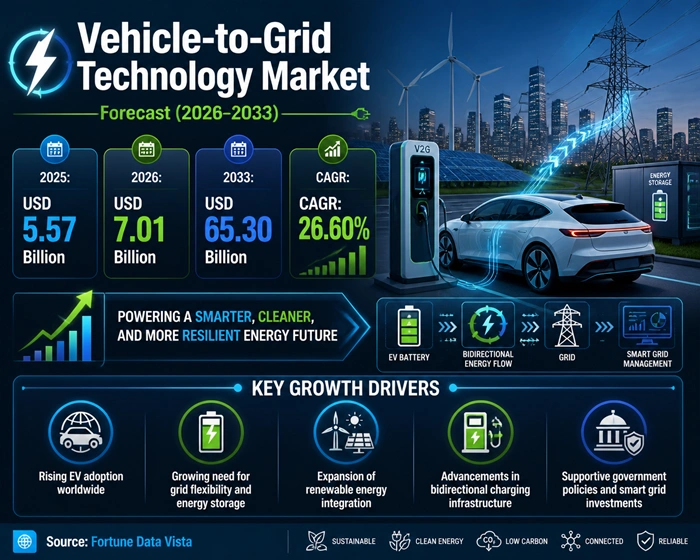
The global vehicle-to-grid technology market size is valued at USD 5.57 billion in 2025 and is predicted to increase from USD 7.01 billion in 2026 to approximately USD 65.30 billion by 2033, growing at a CAGR of 26.60% from 2026 to 2033.
Vehicle-to-grid technology represents a transformative approach to energy management that allows electric vehicles to communicate with power grids and transfer electricity back when needed. This bidirectional energy flow creates a mobile energy storage network that supports grid stability while providing financial benefits to EV owners. The technology utilizes advanced charging infrastructure equipped with smart communication systems that monitor real-time energy demand and supply conditions. As global electric vehicle adoption accelerates and renewable energy integration becomes critical, the vehicle-to-grid technology market is positioned for substantial expansion across residential, commercial, and utility-scale applications.
AI Impact on the Vehicle-to-Grid Technology Industry
Transforming Electric Vehicles into Dynamic Energy Assets for Grid Modernization
Artificial intelligence is revolutionizing the vehicle-to-grid technology market by enabling predictive analytics and intelligent energy management systems. AI-powered algorithms optimize charging and discharging schedules based on grid demand patterns, electricity pricing fluctuations, and individual vehicle usage behaviors. Machine learning models analyze vast datasets from connected electric vehicles to forecast energy availability and predict peak demand periods with remarkable accuracy. These intelligent systems automatically adjust energy flows between vehicles and the grid, maximizing revenue opportunities for EV owners while maintaining battery health through optimized charge cycles.
Advanced AI platforms are also enhancing communication protocols between charging infrastructure and grid management systems. Natural language processing and computer vision technologies improve user interfaces and enable seamless integration with smart home energy management systems. AI-driven demand response programs identify optimal times for energy discharge, balancing renewable energy intermittency and supporting grid resilience. As artificial intelligence capabilities continue advancing, the vehicle-to-grid technology market will experience enhanced efficiency, reduced operational costs, and improved user experiences that accelerate widespread adoption across multiple market segments.
Growth Factors
Accelerating Market Momentum Through Technological Innovation and Policy Support
The vehicle-to-grid technology market is experiencing robust expansion driven by rapidly increasing electric vehicle penetration across global automotive markets. Governments worldwide are implementing ambitious electrification targets and offering substantial incentives for EV adoption, creating a massive potential fleet of mobile energy storage units. Rising electricity costs and growing consumer awareness about energy independence are motivating vehicle owners to participate in V2G programs that generate additional income streams. Utility companies are actively seeking flexible energy resources to manage peak demand without expensive infrastructure upgrades, making vehicle-to-grid technology an attractive solution for grid stabilization and load balancing.
Technological advancements in battery chemistry, charging infrastructure, and communication protocols are eliminating previous barriers to V2G implementation. Modern lithium-ion batteries demonstrate improved cycle life and degradation resistance, addressing earlier concerns about battery longevity under bidirectional charging conditions. Smart grid modernization initiatives are creating the digital infrastructure necessary for seamless vehicle-to-grid integration, while standardization efforts are improving interoperability across different EV models and charging networks. The convergence of renewable energy expansion, distributed energy resource management, and electric mobility is creating unprecedented opportunities for vehicle-to-grid technology market growth across residential, commercial, and industrial applications.
Market Outlook
Strategic Positioning for Sustainable Energy Transition
The vehicle-to-grid technology market outlook remains exceptionally positive as energy transition priorities align with transportation electrification strategies. Major automotive manufacturers are increasingly incorporating bidirectional charging capabilities as standard features in new electric vehicle models, expanding the addressable market significantly. Pilot programs and commercial deployments across North America, Europe, and Asia Pacific are demonstrating tangible benefits including reduced energy costs, improved grid reliability, and enhanced renewable energy utilization. Regulatory frameworks are evolving to accommodate V2G participation in energy markets, establishing compensation mechanisms that create sustainable business models for all stakeholders.
Investment activity in the vehicle-to-grid technology market is intensifying as utilities, technology companies, and automotive manufacturers recognize the strategic importance of grid-interactive electric vehicles. Fleet electrification initiatives present particularly compelling opportunities for V2G deployment, as commercial vehicles with predictable usage patterns can provide reliable grid services. Energy storage capacity from connected electric vehicles is projected to reach multiple gigawatt-hours within the next decade, creating a distributed energy resource network of unprecedented scale. As battery costs decline and charging infrastructure expands, the vehicle-to-grid technology market will transition from early adoption to mainstream implementation, fundamentally transforming both transportation and energy sectors.
Expert Speaks
-
Jim Robo, former CEO of NextEra Energy, stated that integrating electric vehicles with renewable energy infrastructure through V2G technology represents one of the most promising pathways to achieving carbon neutrality while maintaining grid reliability. The convergence of these technologies will accelerate the clean energy transition significantly.
-
Mary Barra, CEO of General Motors, emphasized that bidirectional charging capabilities will become standard in future electric vehicles, transforming them from simple transportation tools into valuable energy assets. This evolution will create new revenue opportunities for customers while supporting grid stability during peak demand periods.
-
Herbert Diess, former CEO of Volkswagen Group, highlighted that vehicle-to-grid technology will play a crucial role in maximizing the value proposition of electric vehicles. The ability to participate in energy markets will reduce total ownership costs and accelerate EV adoption across consumer segments.
Key Report Takeaways
-
Asia Pacific leads the vehicle-to-grid technology market with the largest regional share due to massive electric vehicle adoption in China, Japan, and South Korea, combined with aggressive government policies supporting smart grid modernization and renewable energy integration across these nations.
-
North America is emerging as the fastest-growing region with a CAGR exceeding 28% as the United States and Canada implement substantial infrastructure investments, utility pilot programs, and regulatory frameworks that facilitate V2G market expansion and commercial deployment.
-
The hardware segment dominates the market with approximately 61% market share, driven by critical demand for bidirectional chargers, inverters, communication devices, and grid integration equipment that enable efficient energy transfer between electric vehicles and power distribution networks.
-
Commercial applications contribute the most significant revenue portion as fleet operators, logistics companies, and public transportation agencies recognize substantial cost savings and operational benefits from participating in V2G programs and grid service markets.
-
DC charging infrastructure remains the most popular charging type due to superior power transfer capabilities, faster charging speeds, and enhanced efficiency for bidirectional energy flows, accounting for nearly 58% of charging infrastructure installations.
-
The software segment will experience the fastest future growth with a projected CAGR of 29.2%, driven by increasing demand for advanced energy management platforms, predictive analytics, real-time monitoring solutions, and virtual power plant aggregation services.
Market Scope
| Parameter | Details |
|---|---|
| Market Size by 2033 | USD 65.30 Billion | Market Size by 2026 | USD 7.01 Billion | Market Size by 2025 | USD 5.57 Billion | Market Growth Rate from 2026 to 2033 | CAGR of 26.60% | Dominating Region | Asia Pacific | Fastest Growing Region | North America | Segments Covered | Component Type, Vehicle Type, Charging Type, Application, Service Type, Regions | Regions Covered | North America, Europe, Asia Pacific, Latin America, Middle East & Africa |
Market Dynamics
Drivers Impact Analysis
Accelerating Adoption Through Environmental and Economic Imperatives
| Driver | (≈) % Impact on CAGR Forecast | Geographic Relevance | Impact Timeline |
|---|---|---|---|
| Rapid Electric Vehicle Adoption | 35-40% | Global (Strong in China, Europe, USA) | 2025-2033 |
| Renewable Energy Integration Needs | 25-30% | Europe, North America, Asia Pacific | 2026-2033 |
| Grid Modernization Initiatives | 20-25% | North America, Europe | 2026-2030 |
| Government Incentives and Policies | 15-20% | Global | 2025-2033 |
The vehicle-to-grid technology market is experiencing unprecedented growth driven by the explosive adoption of electric vehicles across global automotive markets. As EV sales continue breaking records annually, the cumulative fleet of potential V2G-enabled vehicles is expanding exponentially, creating a massive distributed energy storage network. This growth directly correlates with government policies mandating vehicle electrification and phasing out internal combustion engines in major economies. Electric vehicles equipped with bidirectional charging capabilities can serve dual purposes as transportation assets and mobile energy storage units, maximizing their utility and value proposition for consumers.
The increasing penetration of renewable energy sources into electricity grids creates substantial demand for flexible energy storage solutions that address intermittency challenges. Solar and wind power generation fluctuates based on weather conditions, requiring responsive energy storage systems to maintain grid stability and reliability. The vehicle-to-grid technology market benefits directly from this dynamic, as connected electric vehicles provide distributed storage capacity that absorbs excess renewable generation during low-demand periods and discharges energy during peak consumption hours. This symbiotic relationship between EV adoption and renewable energy expansion creates powerful growth momentum for V2G market development across residential, commercial, and utility-scale applications.
Restraints Impact Analysis
Navigating Technical and Standardization Challenges
| Restraint | (≈) % Impact on CAGR Forecast | Geographic Relevance | Impact Timeline |
|---|---|---|---|
| Battery Degradation Concerns | 25-30% | Global | 2025-2028 |
| Lack of Standardization | 30-35% | Global (Particularly North America) | 2025-2030 |
| High Infrastructure Costs | 20-25% | Developing Markets | 2025-2027 |
| Limited V2G-Compatible Vehicles | 15-20% | Global | 2025-2027 |
The vehicle-to-grid technology market faces significant restraints related to battery degradation concerns among consumers and automotive manufacturers. Frequent bidirectional charging cycles potentially accelerate battery wear, reducing vehicle range and requiring earlier battery replacement, which impacts total ownership costs. Although recent research demonstrates that intelligently managed V2G operations can actually minimize battery degradation through optimized charging algorithms, consumer perceptions remain influenced by earlier studies showing negative effects. Addressing these concerns requires comprehensive education initiatives, transparent battery health monitoring systems, and manufacturer warranties that explicitly cover V2G participation without voiding guarantees.
Standardization challenges represent another critical restraint limiting vehicle-to-grid technology market expansion across different regions and manufacturer ecosystems. The absence of universal charging protocols, communication standards, and grid interconnection requirements creates fragmented markets with limited interoperability between vehicle models and charging infrastructure. Different regions have adopted competing technical standards, complicating international market development and increasing deployment costs for manufacturers and infrastructure providers. Resolving these standardization issues requires coordinated efforts among automotive manufacturers, utility companies, technology providers, and regulatory bodies to establish common frameworks that enable seamless V2G implementation across diverse vehicle platforms and electricity markets.
Opportunities Impact Analysis
Emerging Opportunities in Distributed Energy Resources
| Opportunity | (≈) % Impact on CAGR Forecast | Geographic Relevance | Impact Timeline |
|---|---|---|---|
| Fleet Electrification Programs | 30-35% | North America, Europe, China | 2026-2033 |
| Virtual Power Plant Integration | 25-30% | Europe, North America | 2027-2033 |
| Residential Energy Management | 20-25% | Global (Developed Markets) | 2026-2030 |
| Emergency Backup Services | 15-20% | North America, Japan | 2025-2028 |
The vehicle-to-grid technology market presents exceptional opportunities through commercial fleet electrification programs that provide ideal conditions for V2G implementation. Fleet vehicles typically operate on predictable schedules with centralized parking facilities, enabling reliable energy discharge during peak demand periods while maintaining sufficient charge for operational requirements. Logistics companies, delivery services, public transportation agencies, and corporate vehicle fleets represent substantial addressable markets for V2G solutions that generate additional revenue streams while supporting sustainability objectives. These fleet applications demonstrate clear return on investment calculations that accelerate adoption decisions and provide compelling case studies for broader market expansion.
Virtual power plant aggregation platforms create transformative opportunities for the vehicle-to-grid technology market by combining thousands of individual electric vehicles into coordinated energy resources. These sophisticated software systems optimize collective charging and discharging behaviors across distributed vehicle fleets, participating in wholesale energy markets and providing grid services at scale. Vehicle owners benefit from automated energy trading that maximizes revenue opportunities without requiring active management, while utilities gain access to flexible capacity that rivals traditional power generation facilities. As virtual power plant technologies mature and regulatory frameworks accommodate aggregated distributed energy resources, the vehicle-to-grid technology market will unlock unprecedented value creation opportunities across residential and commercial segments.

Segment Analysis
By Component Type: Hardware Segment
Hardware Components Enable Bidirectional Energy Infrastructure
The hardware segment commands dominant market share at approximately 61% within the vehicle-to-grid technology market, driven by fundamental infrastructure requirements for bidirectional energy transfer between electric vehicles and power grids. Bidirectional chargers represent the critical hardware component, incorporating sophisticated power electronics that manage AC-to-DC conversion, voltage regulation, and communication protocols necessary for safe and efficient energy flows in both directions. These chargers must meet stringent safety standards, provide reliable performance across varying grid conditions, and support multiple vehicle models with different battery configurations and charging specifications. Manufacturing advancements are progressively reducing hardware costs while improving power conversion efficiency and charging speeds.
Vehicle-side bidirectional electronics and grid integration hardware are experiencing rapid technological evolution as the vehicle-to-grid technology market expands across global regions. North America demonstrates particularly strong hardware segment growth, supported by substantial infrastructure investments from utilities and government programs targeting charging network expansion. Leading manufacturers including ABB, Hitachi, and Wallbox are establishing production facilities and distribution networks across key markets to meet accelerating demand from commercial and residential installations. The hardware segment is projected to grow at a CAGR of 25.8% through 2033, with Asia Pacific representing the largest regional market due to massive EV charging infrastructure buildouts in China, Japan, and South Korea that incorporate V2G capabilities as standard features.
By Component Type: Software Segment
Software Platforms Optimize Energy Management and Trading
The software segment within the vehicle-to-grid technology market is positioned for explosive growth with the highest projected CAGR of 29.2% during the forecast period, reflecting critical importance of intelligent energy management systems for V2G operations. Advanced software platforms orchestrate complex interactions between electric vehicles, charging infrastructure, electricity grids, and energy markets through real-time data analytics and predictive algorithms. These systems monitor grid conditions, electricity pricing, weather forecasts, and individual vehicle usage patterns to optimize charging and discharging schedules that maximize financial returns while preserving battery health and meeting transportation requirements. Cloud-based architectures enable scalable deployment across distributed vehicle fleets and facilitate continuous software updates that enhance functionality.
Europe leads software segment development within the vehicle-to-grid technology market, driven by sophisticated energy markets, mature smart grid infrastructure, and regulatory frameworks that support distributed energy resource participation. Companies including The Mobility House, Nuvve, and Virta are pioneering virtual power plant platforms that aggregate thousands of electric vehicles into coordinated energy resources capable of providing frequency regulation, demand response, and wholesale market participation. These software solutions generate recurring revenue streams through subscription models and energy trading commissions, creating attractive business models that support market expansion. North American markets are experiencing rapid software adoption acceleration as utilities launch pilot programs and commercial deployments that demonstrate tangible benefits for grid operators and vehicle owners across residential and fleet applications.
Regional Insights
Asia Pacific
Dominance Through Massive EV Fleet and Policy Support
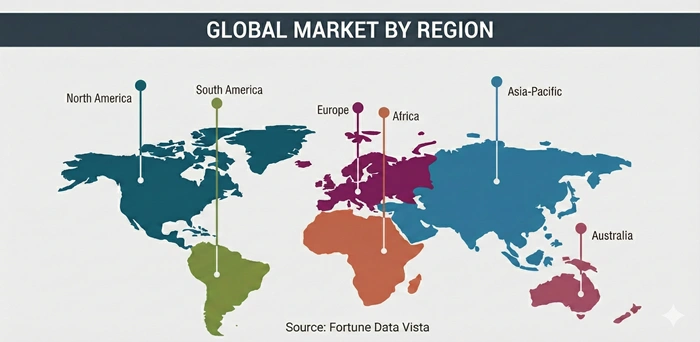
Asia Pacific maintains dominant leadership in the vehicle-to-grid technology market with approximately 52% regional market share and projected valuation exceeding USD 34 billion by 2033, driven by unprecedented electric vehicle adoption rates and aggressive government policies supporting clean energy transition. China represents the primary growth engine within this region, accounting for nearly 60% of global EV sales annually and implementing comprehensive smart grid modernization programs that integrate bidirectional charging infrastructure as standard components. Japanese automotive manufacturers including Nissan and Mitsubishi pioneered V2G technology development and continue advancing bidirectional capabilities across their EV portfolios, supporting domestic market maturity and international technology exports.
South Korea is rapidly emerging as a significant vehicle-to-grid technology market within Asia Pacific, supported by substantial government investments in charging infrastructure and renewable energy integration initiatives. Leading companies including Hyundai Motor Company and LG Energy Solution are headquartered in South Korea and are developing advanced V2G systems for domestic and international markets. The region demonstrates a CAGR of 25.4% through 2033, with strong growth momentum sustained by favorable policy environments, declining battery costs, and increasing consumer acceptance of smart charging technologies. Government mandates requiring V2G capability in public charging stations and fleet vehicles are accelerating market penetration across commercial and residential segments throughout Asia Pacific nations.
North America
Fastest Expansion Through Infrastructure Investment and Market Liberalization
North America represents the fastest-growing region for the vehicle-to-grid technology market with an exceptional CAGR of 28.3% during the forecast period, reflecting substantial infrastructure investments, supportive regulatory developments, and increasing utility engagement in V2G programs. The United States leads regional growth with multiple state-level initiatives incentivizing bidirectional charging installations and EV participation in demand response programs. California, Massachusetts, and New York have implemented progressive policies that establish compensation mechanisms for V2G services and mandate V2G readiness in new charging infrastructure projects. Federal infrastructure legislation includes significant funding allocations for smart charging technology deployment that accelerates market development across residential and commercial applications.
Major North American companies including Fermata Energy, Nuvve Holding Corp, and Ford Motor Company are advancing vehicle-to-grid technology market penetration through pilot programs, commercial deployments, and strategic partnerships with utilities. Canada demonstrates strong growth potential with provinces including Quebec, Ontario, and British Columbia implementing electric vehicle incentives and grid modernization initiatives that support V2G integration. The region's market value is projected to exceed USD 18 billion by 2033, with fleet electrification representing a particularly dynamic growth segment. School bus electrification programs incorporating V2G capabilities are expanding rapidly across North American districts, providing grid services during daytime hours when vehicles are idle and generating revenue that offsets operational costs for educational institutions.
Top Key Players
-
Nuvve Holding Corp (USA)
-
The Mobility House (Germany)
-
Fermata Energy (USA)
-
ABB Ltd (Switzerland)
-
Nissan Motor Corporation (Japan)
-
Hyundai Motor Company (South Korea)
-
Honda Motor Co Ltd (Japan)
-
Mitsubishi Corporation (Japan)
-
Renault Group (France)
-
Wallbox NV (Spain)
-
Virta Ltd (Finland)
-
EDF Energy (UK)
-
Enel X (Italy)
-
Hitachi Ltd (Japan)
-
AC Propulsion Inc (USA)
-
NRG Energy Inc (USA)
-
BMW Group (Germany)
-
Ford Motor Company (USA)
-
Tata Motors (India)
-
Toyota Motor Corporation (Japan)
Recent Developments
-
Nuvve Holding Corp introduced an advanced product line of bidirectional and unidirectional chargers ranging from 20 kW to 360 kW in January 2025, specifically designed for fleet operations, public charging infrastructure, and microgrid applications to support diverse market segments.
-
Eaton and ChargePoint jointly launched the ChargePoint Express Grid high-power DC V2X charging solution in August 2025, supporting up to 600 kW for passenger electric vehicles and megawatt-scale capabilities for heavy-duty commercial fleet applications.
-
Mercedes-Benz announced a new line of V2G-ready electric vehicles in September 2025, enabling vehicle owners to supply stored energy back to power grids while supporting renewable energy integration and grid stability across global markets.
-
Hyundai Motor Company formed a strategic partnership with European utility companies in June 2025 to deploy bidirectional charging infrastructure across multiple countries, expanding V2G market presence and demonstrating commercial viability of grid services.
-
Nissan Motor Corporation expanded its V2G pilot programs into North American markets in March 2025, collaborating with utilities in California and Texas to demonstrate peak demand management capabilities and evaluate customer acceptance of bidirectional charging technologies.
Market Trends
Convergence of Mobility, Energy, and Digital Technologies
The vehicle-to-grid technology market is experiencing transformative trends centered on the integration of artificial intelligence and machine learning algorithms that optimize energy management across distributed electric vehicle fleets. Advanced predictive analytics platforms are analyzing massive datasets including weather patterns, electricity pricing, grid conditions, and individual driving behaviors to autonomously schedule charging and discharging activities that maximize financial returns while maintaining battery health. These intelligent systems are evolving beyond simple time-of-use optimization to participate in sophisticated energy trading strategies across wholesale electricity markets, frequency regulation services, and capacity markets. Virtual power plant platforms are aggregating thousands of electric vehicles into coordinated resources that provide grid services comparable to traditional generation facilities, creating new revenue opportunities for vehicle owners and supporting grid reliability.
Automotive manufacturers are increasingly incorporating bidirectional charging as standard equipment rather than optional features in new electric vehicle models, dramatically expanding the addressable vehicle-to-grid technology market. This strategic shift reflects recognition that V2G capabilities enhance vehicle value propositions and differentiate products in competitive automotive markets. Fleet electrification initiatives represent another significant trend, with logistics companies, delivery services, and public transportation agencies implementing large-scale V2G programs that generate substantial cost savings and support sustainability objectives. Residential energy management integration is accelerating as homeowners combine electric vehicles with solar panels and battery storage systems to create comprehensive energy independence solutions. These converging trends are establishing vehicle-to-grid technology as a fundamental component of future energy systems rather than niche applications.
Segments Covered in the Report
By Component Type
-
Hardware
-
Bidirectional Chargers (AC Chargers, DC Chargers)
-
Vehicle-side Bidirectional Electronics
-
Grid Integration Hardware
-
Communication Devices and Smart Meters
-
-
Software
-
Smart Charging and Energy Management Platforms
-
Aggregator and Virtual Power Plant Platforms
-
Connectivity and Cloud Services
-
Predictive Analytics and AI Solutions
-
-
Services
-
Installation and Commissioning
-
Operations and Maintenance Services
-
Energy Trading and Grid Services Revenue
-
Consulting and Advisory Services
-
By Vehicle Type
-
Battery Electric Vehicles (BEVs)
-
Plug-in Hybrid Electric Vehicles (PHEVs)
-
Fuel Cell Electric Vehicles (FCEVs)
By Charging Type
-
AC Charging
-
DC Charging
-
Hybrid Charging Systems
By Application
-
Commercial Applications
-
Individual/Residential Applications
-
Fleet Operations
-
Public Transportation
By Service Type
-
Time Shifting
-
Frequency Response and Reserve
-
Distribution Services
-
Emergency Backup
-
Energy Arbitrage
By Region
-
North America (USA, Canada, Mexico)
-
Europe (Germany, UK, France, Netherlands, Spain, Italy, Rest of Europe)
-
Asia Pacific (China, Japan, South Korea, India, Australia, Rest of Asia Pacific)
-
Latin America (Brazil, Argentina, Rest of Latin America)
-
Middle East & Africa (UAE, Saudi Arabia, South Africa, Rest of MEA)
Frequently Asked Questions:
Answer: The vehicle-to-grid technology market is projected to reach approximately USD 65.30 billion by 2033, growing at a CAGR of 26.60% from 2026 to 2033. This substantial growth reflects increasing electric vehicle adoption and renewable energy integration requirements globally.
Answer: Asia Pacific dominates the vehicle-to-grid technology market with the largest regional share, driven by massive EV adoption in China, Japan, and South Korea. Government policies supporting smart grid modernization and renewable energy integration sustain this regional leadership position.
Answer: Rapid electric vehicle adoption, increasing renewable energy integration needs, grid modernization initiatives, and supportive government incentives represent the primary drivers. These factors create strong demand for bidirectional charging infrastructure and intelligent energy management solutions across multiple market segments.
Answer: The vehicle-to-grid technology market enables EV owners to generate additional income by selling stored energy back to electricity grids during peak demand periods. This participation reduces total ownership costs while supporting grid stability and renewable energy utilization across power distribution networks.
Answer: Battery degradation concerns, lack of charging protocol standardization, high infrastructure costs, and limited V2G-compatible vehicle availability represent primary challenges. Addressing these obstacles requires coordinated efforts among automotive manufacturers, utilities, technology providers, and regulatory bodies to establish universal frameworks.